
Professional Whitening or At-Home Kits: Compare the Costs

Updated: 2 days ago
A dentist-provided take-home kit can offer a middle ground between in-chair whitening and products bought off the shelf. When comparing professional teeth whitening vs at home kits, consider the level of dental guidance, how treatment fits your routine and how quickly you want to work towards a brighter smile.
It’s understandable to weigh convenience and cost against the result you want. Dentist-supervised whitening can be tailored to your teeth, while take-home treatment lets you whiten gradually. Store-bought kits are another option, but they don’t include the same personalised dental oversight.
This guide compares how each approach works, what affects its cost and how dentist-provided kits differ from store-bought products. It also explains when intrinsic stains may call for a different cosmetic approach, helping you discuss which option suits your teeth and goals.
Table of Contents
Why Whiten Your Teeth?
Whitening can reduce discolouration and brighten your smile, but the right treatment depends on the type of stain and your oral health. In-clinic treatment and at-home whitening differ in speed, supervision and how they fit into your routine.
At-home whitening convenience and results
Store-bought whitening kits and strips suit people who prefer gradual treatment at home. Visible changes may take 2 to 4 weeks, and at-home kits typically improve tooth shade by 1 to 3 shades. Results can vary, and the effect may last several months with appropriate care.
New Zealand-specific peroxide concentration rules can’t be established from the facts presented here. According to the European Commission, products containing 0.1 to 6% hydrogen peroxide should be used with a dentist’s approval and supervision to limit potential risks; this is European Commission guidance, not a statement of New Zealand regulation. A dentist can assess your oral health before you start a kit.
In-clinic whitening treatment and results
In-clinic whitening is a dentist-supervised treatment, usually completed in one visit. It may brighten teeth by up to 8 shades, although the full effect can take a couple of days to appear. Compared with at-home products, it offers a more concentrated treatment in a shorter timeframe, with dental supervision during the process.
Whitening may not suit everyone straight away. Untreated cavities or gum disease should be addressed first, and significant tooth sensitivity may also need attention. Sensitivity is a common side effect and typically fades after treatment ends. Crowns, veneers and fillings don’t change colour with whitening, so existing dental restorations may remain a different shade.
Pregnancy calls for an individual discussion with a dentist before whitening; these facts don’t establish a pregnancy-specific prohibition. A dentist can also assess sensitive teeth and restorations, and explain how whitening may affect the appearance of your smile.
Whitening results and ongoing maintenance
In-clinic results may last 1 to 2 years with proper aftercare, while at-home whitening effects can last several months. The difference reflects treatment and upkeep, rather than a guaranteed lifespan for either option. Drinks and foods that stain teeth can affect how long the brighter appearance lasts.
To maintain the effect, keep up regular oral hygiene and follow the care advice for your treatment. Whitening toothpaste may need repeated use over weeks to months before results become visible. Avoid unproven home remedies such as lemon juice, which can erode enamel, and use whitening products carefully to reduce the risk of sensitivity or gum irritation.
Choose by weighing the type of stain, your oral health, desired pace and preference for dentist supervision.
Intrinsic stains and alternative treatments
Whitening is designed to lighten natural tooth colour, but intrinsic stains sit within the tooth rather than on its surface. A darker area within a tooth may respond less predictably to bleaching than surface discolouration. A dental assessment can identify the type of stain before you choose a cosmetic treatment.
Surface stains can build up through everyday exposure, such as coffee or red wine. Intrinsic discolouration may look deeper or uneven across a tooth. The cause and location influence whether whitening is likely to create a brighter, more even appearance. Crowns, veneers and fillings also won’t change colour during whitening, which can leave a visible shade mismatch.
For intrinsic stains, alternatives may include dental bonding, crowns or veneers. Bonding can change the appearance of a selected tooth, while crowns and veneers are other cosmetic options for changing how teeth look. Unlike whitening, these treatments alter or cover the visible tooth surface rather than bleaching natural tooth colour. The choice depends on the tooth, the stain and the appearance you want.
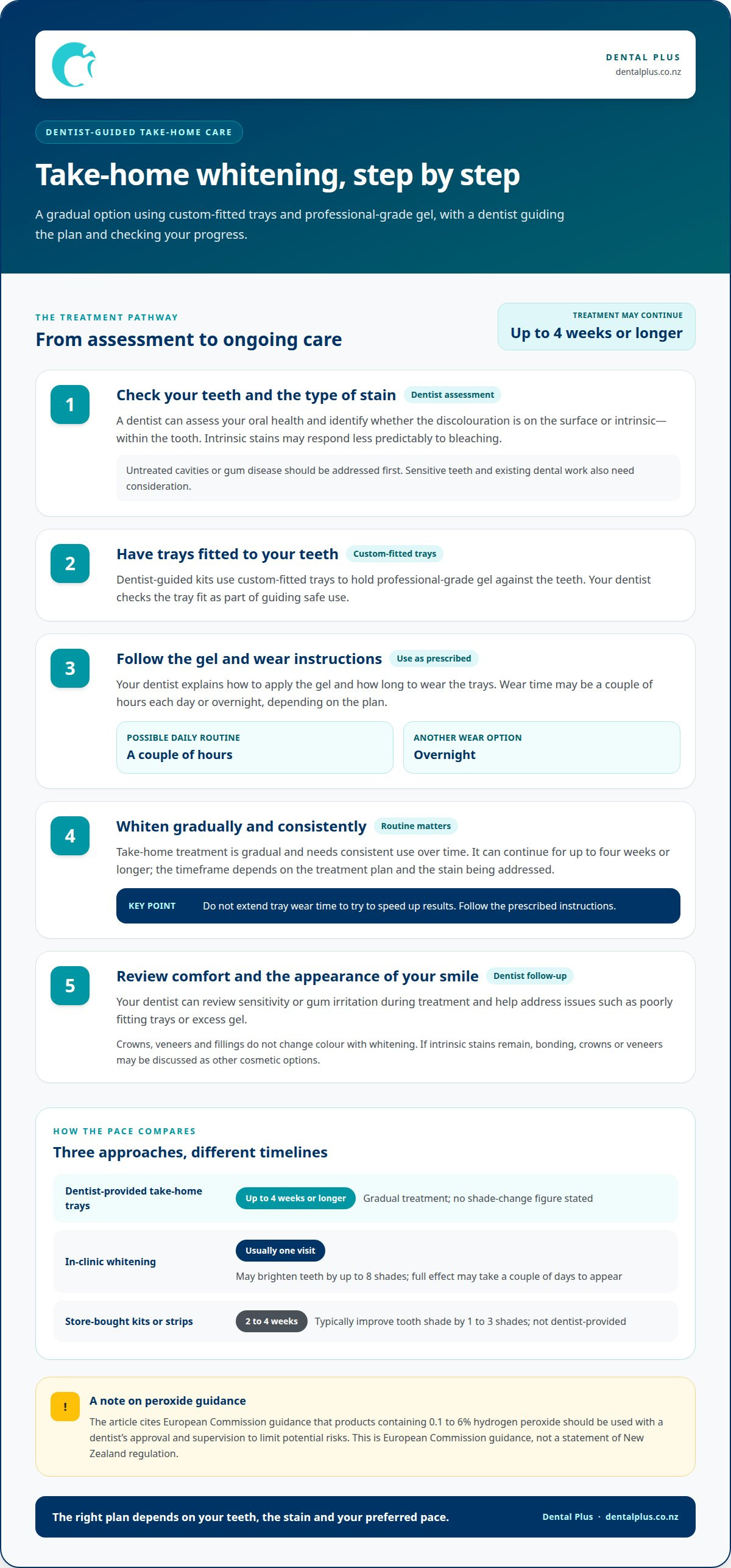
Dentist-guided take-home whitening is more gradual than an in-clinic visit. Custom-fitted trays hold professional-grade gel against the teeth, and wear time may be a couple of hours daily or overnight. Treatment can continue for up to four weeks or longer. This approach suits people who prefer to fit treatment around their routine, but it requires consistent use over time.
In-clinic whitening is the faster option for people seeking treatment in a single visit. It may brighten teeth by up to 8 shades, with the full effect taking a couple of days to appear. By comparison, at-home whitening can take 1 to 2 hours per day over a series of days or weeks. The right timeframe depends on the treatment plan and the stain being addressed.
A dentist guides safe kit use by assessing oral health, checking tray fit and explaining the gel’s application and wear schedule. They can also review sensitivity or gum irritation during treatment, helping prevent uneven whitening from poorly fitting trays or excess gel. Follow the prescribed instructions carefully, rather than extending wear time to speed up whitening results.
If intrinsic stains remain after whitening, a conversation about cosmetic dentistry options can help clarify whether bonding or another approach better suits your teeth. Whitening may be useful for natural tooth discolouration, but it won’t alter restorations, so the desired final shade should be considered across the whole smile.
Professional and at-home whitening costs
Whitening costs depend on whether treatment is dentist-dispensed or bought over the counter. In New Zealand, compare what each option includes, not just its price. A professional assessment, custom trays and bleaching gel can distinguish a dentist-guided kit from a retail product.
Dentist-dispensed home kit costs
A dentist-dispensed kit combines professional guidance with at-home treatment. Its cost reflects the dental assessment, custom-fitted trays and bleaching gel, rather than the product alone. This differs from a shop-bought kit, where trays may not be individually fitted and dental guidance isn’t part of the purchase.
Ask what the quoted treatment includes, such as trays, gel and follow-up advice. This makes it easier to compare the complete course with a single retail purchase.
Over-the-counter product costs
Over-the-counter options include products such as whitening strips and kits. Their cost depends on the product and what comes in the pack, so compare the format and amount supplied. Unlike dentist-dispensed treatment, the purchase doesn’t include a personalised dental assessment or custom trays.
A lower upfront price doesn’t show whether a product suits sensitive teeth, fillings or your whitening goals. That matters because bleaching doesn’t change the colour of fillings, crowns or veneers.
In-office whitening costs
In-office whitening is carried out during a dental appointment, rather than supplied as a product for repeated home use. The cost relates to the professional service and treatment provided at the clinic, so it isn’t a like-for-like comparison with a retail kit or dentist-dispensed take-home option.
Before comparing quotes, note whether the proposed treatment involves one appointment or additional sessions. The condition of your teeth, existing dental work and sensitivity can also affect which approach is appropriate.
Whitening costs in Australia and New Zealand
Australian price comparisons use Australian dollars, so they aren’t New Zealand dollar estimates. For a New Zealand comparison, keep local costs separate and compare the same type of product or treatment, rather than converting an overseas figure into a local price.
There isn’t one set cost for every at-home whitening kit in New Zealand. The price varies depending on whether it’s bought over the counter or supplied by a dentist, and on what the kit includes. Check these differences when weighing a retail kit against professional treatment.
To compare options clearly, list the treatment type, included items and any dental assessment or guidance. Then consider whether the kit format suits your routine and oral health. For example, someone with sensitive teeth may value professional oversight, while someone comparing retail products may focus on the product format and included supplies. The lowest initial cost may not represent the same treatment or level of support.
Whitening can also involve costs beyond the kit or appointment if dental concerns need attention first. Untreated cavities or gum disease may need care before whitening, and existing fillings won’t lighten with bleaching. A dental assessment helps distinguish costs related to whitening from those related to other oral health needs.
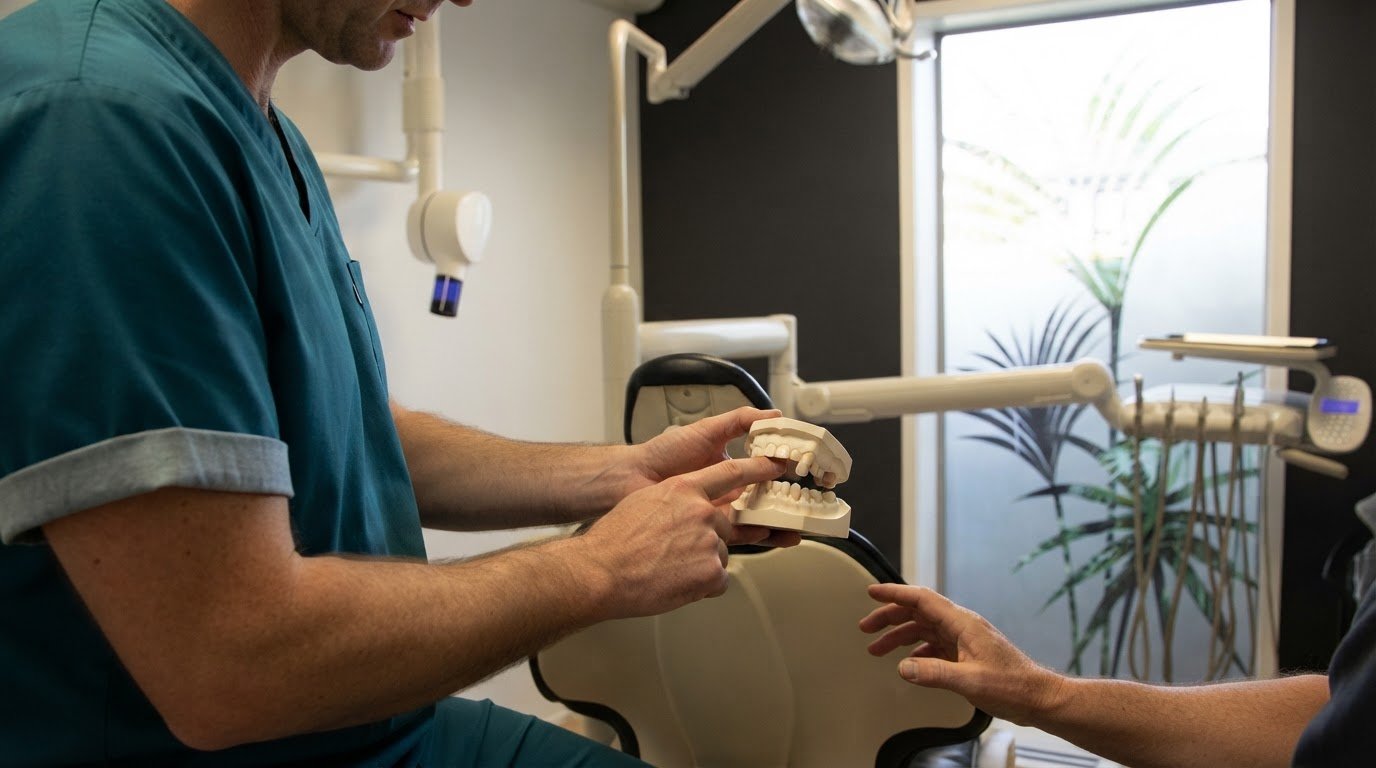
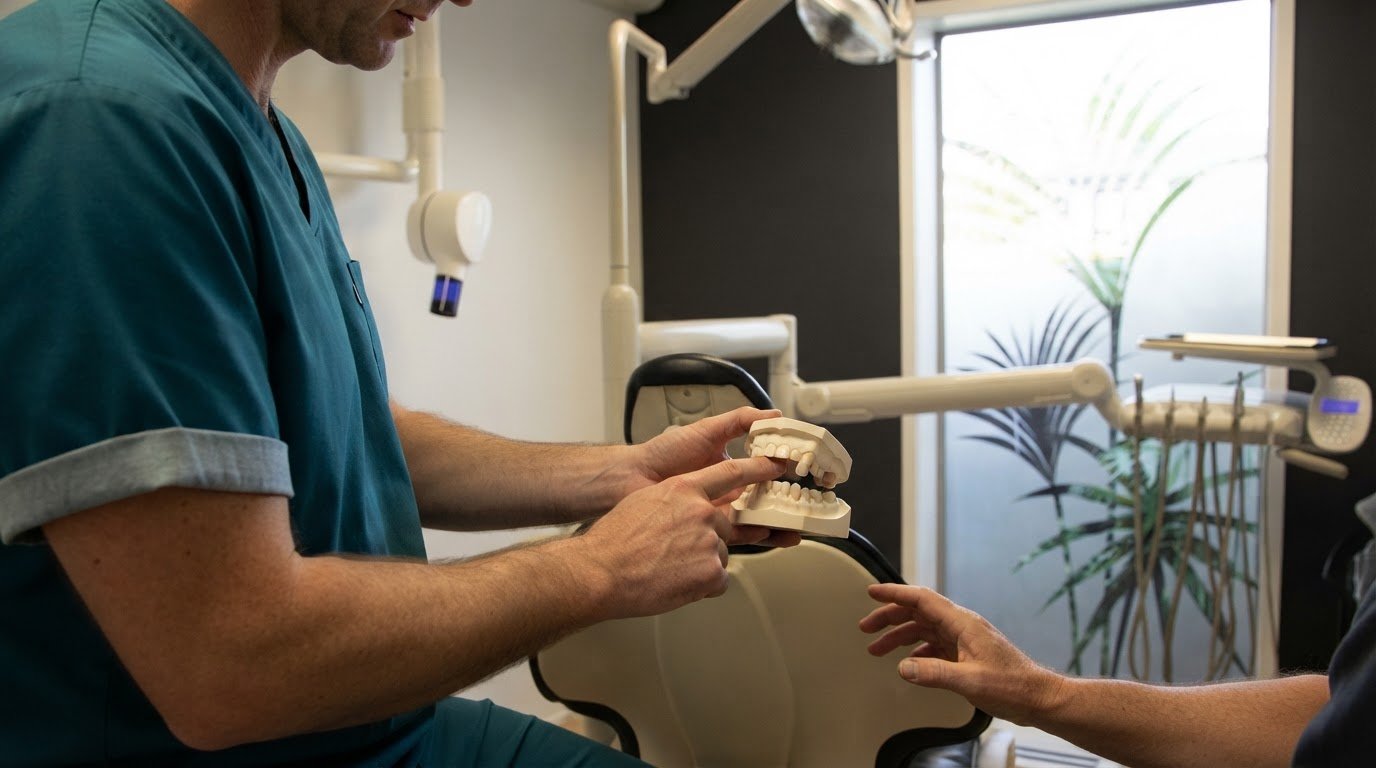
How professional in-office whitening works
In-office whitening is dentist-supervised and carried out during a clinic visit. In New Zealand, professional whitening also includes dentist-provided take-home kits, which use a different pace and setting.
In-office whitening procedure
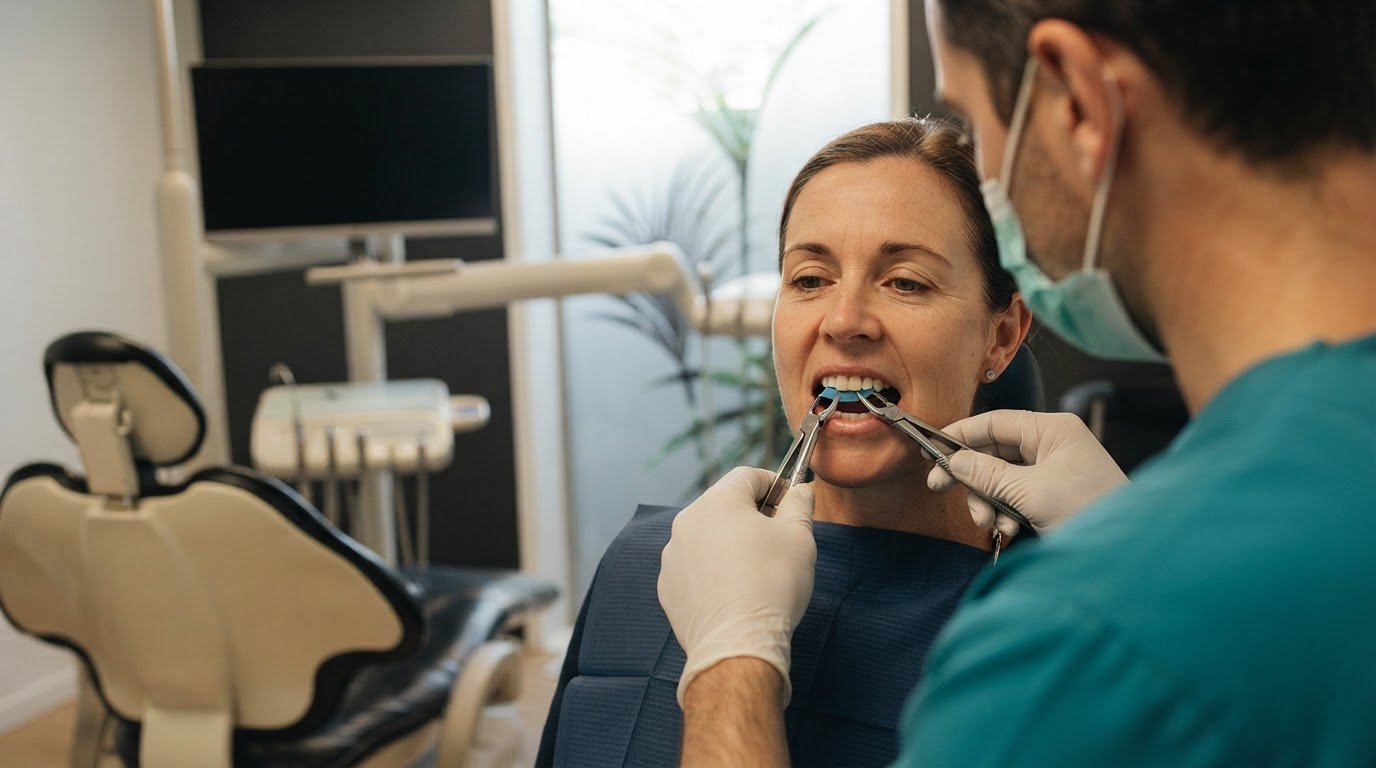
An in-office appointment typically takes 1 to 2 hours. The dentist applies hydrogen peroxide gel to the teeth, leaving it in place for 15 to 30 minutes per application. Depending on the treatment, a special light or laser may be used to enhance the whitening effect.
Gel may be applied more than once during the visit, and multiple sessions may be needed for optimal results. The dentist supervises the process, rather than leaving you to manage the bleaching schedule at home. The full effect may take a couple of days to become visible, so the shade immediately after treatment may not show the final result.
Types of professional whitening
The main professional options are in-office whitening and dentist-provided take-home kits. In-office treatment concentrates the whitening process into a clinic appointment. Dentist-provided kits use custom-fitted trays and professional-grade gel for treatment at home.
Take-home trays may be worn for a couple of hours daily or overnight, with treatment continuing for up to four weeks or longer. This approach is more gradual than an in-office visit, but it requires regular use over the prescribed course. Both options involve professional dental guidance, but differ in timing and setting.
Before whitening, a dental assessment can identify oral health concerns that may need attention first. Untreated cavities or gum disease should be addressed before whitening, and significant tooth sensitivity may also affect the treatment plan. The assessment helps distinguish general discolouration from issues that need separate care.
Existing dental work matters too. Whitening gel changes the colour of natural teeth, but crowns, veneers and fillings do not lighten with treatment. If a restoration is visible beside natural teeth, the dentist can explain how the shade difference may look after whitening. This applies to both in-office and take-home approaches.
Tooth sensitivity is a common side effect of whitening and typically fades after treatment ends. During an in-office procedure, the dentist can supervise gel applications and respond to sensitivity as it occurs. With take-home treatment, the dentist’s instructions set the wear schedule and help avoid overuse that could irritate gums or increase discomfort.
Choose between the two professional options by weighing how quickly you want treatment completed, whether you prefer a clinic visit or gradual home use, and your oral health needs. In-office whitening is typically completed in one visit, while dentist-provided trays spread treatment across days or weeks.
Dentist-provided take-home whitening kits
A dentist-provided take-home kit combines custom-fitted trays with professional-grade bleaching gel. These kits are often packaged in durable cases to protect fragile syringes and trays during storage and transit, with suppliers frequently utilising custom-cut inserts from Foam Packaging Direct for safe handling. It offers a gradual alternative to whitening during a clinic visit, with dental guidance shaping the treatment plan. This middle ground can suit people who want to whiten at home without choosing a standard retail kit.
The dentist assesses your teeth and oral health before recommending this method. Tray fit matters because the gel needs to contact the teeth without spilling onto the gums. The dentist also considers existing restorations, sensitivity and the type of discolouration. Crowns, veneers and fillings won’t whiten, so their shade can affect the overall cosmetic result.
Treatment is spread over time rather than completed in one appointment. Trays may be worn for a couple of hours each day or overnight, and treatment can continue for up to four weeks or longer. Your dentist explains the schedule and how it fits your needs. The gradual approach requires consistency, but can be easier to fit around work and daily routines.
Tooth sensitivity is a common whitening side effect and typically fades after treatment ends. Ill-fitting trays or incorrect gel use can cause gum irritation, sensitivity or uneven whitening. Your dentist’s instructions help reduce these risks and explain what to do if discomfort develops. Don’t extend wear time or use extra gel to try to speed up the effect.
According to the European Commission, tooth-whitening products containing 0.1 to 6% hydrogen peroxide should be used with a dentist’s approval and supervision to limit potential risks. This is European Commission guidance, not a statement of New Zealand regulations. The dentist can explain the product and supervised treatment plan in the context of your oral health.
Tray use also affects how much bleaching agent reaches the gums. The European Commission says overfilling trays or biting down excessively can release additional bleaching agent. A properly fitted tray and clear instructions help avoid these problems. If sensitivity or gum irritation appears, the dentist can advise how to proceed rather than leaving you to guess.
Compared with a shop-bought kit, the key differences are individual assessment, custom trays and professional guidance. Compared with in-office whitening, the take-home method is more gradual and requires repeated wear. Coffee and other staining habits can influence how long a brighter appearance lasts, so discuss realistic expectations and ongoing care with your dentist.
For a personalised discussion about dentist-guided whitening options, book an appointment.
Dental Plus: Professional Dental Hygiene
Dental Plus can help you consider whitening alongside your wider oral health needs in Tauranga. A Routine Check Up is a useful next step if you’re unsure whether your teeth are ready for whitening, or if sensitivity, gum concerns or existing dental work affect your decision. Professional Dental Hygiene supports a clean, healthy foundation, while Smile Whitening is a professional option to discuss when you want a brighter smile. These services can help clarify whether whitening or another approach better suits your teeth and goals.
Contact Dental Plus to discuss your teeth-whitening options and next steps.
Choose a whitening path that fits your smile
Choosing between professional teeth whitening and at-home kits is also a chance to think beyond shade alone. First, understand what’s affecting your tooth colour and how your oral health, dental work and preferred treatment routine shape your options. That gives you a clearer basis for deciding what outcome feels right for you.
Dental Plus in Tauranga can support that conversation through Routine Check Ups, Digital X-Rays and Professional Dental Hygiene, alongside Smile Whitening. These services bring oral health and cosmetic goals into the same discussion, helping you make an informed choice about your next step.
If you’d like to discuss whitening options with the team, contact Dental Plus. A considered plan can help you move towards a brighter smile with confidence.
Frequently Asked Questions
Which Whitening Option Is Right for You?
The right option depends on your oral health, the type of discolouration and how you prefer treatment to fit your routine. A clinic appointment may suit someone seeking dentist-supervised treatment in a shorter timeframe, while a dentist-provided take-home kit spreads treatment across days or weeks. For example, sensitivity or visible fillings are reasons to discuss your teeth and desired shade with a dentist before choosing.
What Causes Teeth Discolouration?
Teeth can become discoloured through surface staining or changes within the tooth. Coffee and red wine can stain the outer surface over time; intrinsic discolouration occurs within the tooth and may look deeper or less even. The distinction matters because whitening may affect surface staining differently from intrinsic stains. A dental examination in Tauranga can help identify the pattern and guide suitable cosmetic options.
Will whitening work on crowns, veneers, or fillings?
No. Whitening changes the colour of natural teeth, but crowns, veneers and fillings retain their existing shade. For example, whitening natural teeth beside a front crown may make the colour difference more noticeable. If you have visible restorations, discuss your desired shade and their position before treatment. A dentist can explain whether whitening alone fits your goal or whether another cosmetic approach is worth considering.
How does professional teeth whitening compare with at-home whitening kits in effectiveness and results?
Professional in-clinic whitening may brighten teeth by up to 8 shades in one appointment, while store-bought kits typically offer a 1 to 3 shade improvement over time. Dentist-provided take-home kits use custom-fitted trays and professional-grade gel, with treatment spread across days or weeks. Results depend on the starting tooth colour and stain type, so shade changes can differ between people and methods.
How much does in-chair teeth whitening cost in New Zealand?
The price depends on the treatment plan and is provided after a quote request. Factors include the whitening method, the condition of your teeth, any oral health treatment needed beforehand and whether the plan involves further sessions. These details affect what the appointment includes, so an overseas price or retail kit price isn’t a like-for-like guide to professional in-chair treatment in New Zealand.
How long do professional and at-home teeth whitening results last?
In-clinic whitening results may last 1 to 2 years with proper aftercare, while at-home whitening effects can last several months. Staining habits, including regular coffee or red wine, can influence how long teeth maintain a brighter appearance. Keeping up oral hygiene and following the care advice for your treatment supports maintenance. Whitening toothpaste can take weeks to months of repeated use to show visible results.
What are the risks and side effects of professional and at-home teeth whitening?
Tooth sensitivity is a common side effect and typically fades after treatment ends. At-home whitening can also irritate gums or create uneven results if trays don’t fit well or gel is used incorrectly. Excessive or improper use of whitening agents can damage enamel. Follow product instructions and your dentist’s guidance, and address untreated cavities or gum disease before starting whitening.
Does teeth whitening work on crowns, veneers, fillings, or stained teeth?
Whitening doesn’t change the colour of crowns, veneers or fillings, but it can lighten discoloured natural teeth. Surface and intrinsic stains may respond differently, so the stain’s location and cause matter. For instance, a deep stain within one tooth may not lighten like general surface staining. A dentist can assess your teeth and discuss options such as bonding or other cosmetic treatments if bleaching isn’t suitable.
Comments