
Preventing Gum Disease in Tauranga: A Practical Guide to Healthier Gums

Bleeding gums can be a sign to review your cleaning routine, rather than something to brush off. Gum problems can develop without obvious pain, and general advice does not always explain which habits matter most. This practical guide to preventing gum disease Tauranga residents can use explains how gum disease develops and what you can do to care for your gums at home.
You’ll learn how to build a manageable daily routine, recognise changes that deserve dental advice and understand how professional care can support your efforts. We’ll cover brushing, cleaning between your teeth and routine check-ups, so you can feel more confident about your next steps. Dental Plus in Mount Maunganui provides routine check-ups and professional dental hygiene to complement the care you provide each day. Consistency matters, but no routine can guarantee gum disease won’t occur. Knowing what to watch for can help you seek support when a concern persists.
Table of Contents
Preventing gum disease in Tauranga starts with recognising early changes
Gum disease describes inflammation or damage to the tissues that support your teeth. Plaque, a sticky film of bacteria, can collect on teeth and contribute to gum problems when it is not removed effectively. Plaque is not the only possible factor, so a dental professional will assess your gums in the context of your health and oral-care habits.
A useful distinction is that gingivitis is inflammation confined to the gums, while periodontitis affects the deeper tissues that support teeth and can damage the bone around them. This plain-language summary reflects the stages described in the overview of Periodontal disease. It explains why early signs deserve attention, but it cannot tell you which condition you have. That requires a dental assessment.
What early gum disease can look and feel like
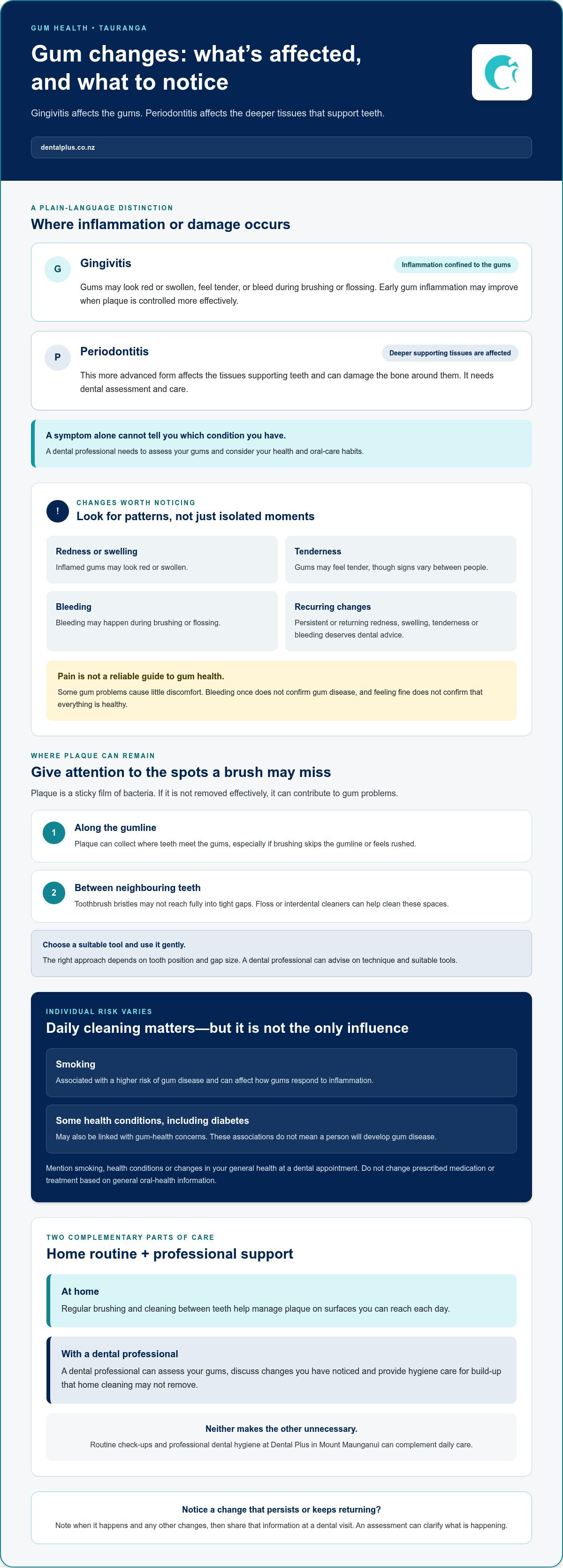
Inflamed gums may look red or swollen, feel tender, or bleed during brushing or flossing. Signs vary between people and can be easy to miss, particularly if you do not look closely at the gumline. Bleeding once does not confirm gum disease, but bleeding that persists or keeps returning deserves attention. Note when it happens and whether you have noticed other changes, then share that information at a dental visit.
Pain is not a reliable guide to gum health. Some gum problems cause little discomfort, so feeling fine does not confirm that everything is healthy. A change in appearance or recurring bleeding can still be worth discussing, even if brushing and eating are comfortable. Avoid diagnosing yourself from one symptom. A dentist can examine your gums and explain what they find.
Why early attention matters
Early gum inflammation may improve when plaque is controlled more effectively. Professional advice can help you address areas that are difficult to clean and assess whether the signs have another explanation. Mention recurring bleeding rather than waiting for soreness or discomfort to appear.
Periodontitis is more advanced. It affects the tissues supporting the teeth and needs dental assessment and care. That does not mean every episode of bleeding or redness signals lasting damage, but persistent or recurring changes should not be ignored. In Tauranga, preventing gum disease starts with noticing what is different and getting guidance when a concern continues. A routine check-up at Dental Plus in Mount Maunganui gives you an opportunity to discuss what you have observed and have your gum health assessed.
Pay attention to patterns, not just isolated moments. If redness, swelling, tenderness or bleeding continues or returns, arrange dental advice. An assessment can clarify what is happening and help you decide on a suitable next step.
How plaque, daily habits and health factors affect gum disease risk
Plaque can gather where your toothbrush does not reach well, especially along the gumline and in the narrow spaces between teeth. If it stays there, it may irritate the gums. The American Dental Association’s gum disease guidance explains plaque’s role in gum inflammation. Plaque is a common contributor, but it is not the only influence on gum health.
Where plaque can remain after brushing
Teeth have several surfaces, including the sides that face neighbouring teeth. A toothbrush cleans many areas, but its bristles may not reach fully into tight gaps. Plaque can also collect where teeth meet the gums, particularly if brushing skips the gumline or feels rushed. A clean-feeling mouth does not always mean every surface has been reached.
Cleaning between teeth helps reach those missed spaces. Floss and interdental cleaners are common options, but the right approach depends on how your teeth are positioned and the size of the gaps. Gentle, consistent cleaning is more useful than forcing a tool into a space or giving up because one option feels awkward. A dental professional can advise on technique and suitable tools.
Factors that can change individual risk
Daily cleaning matters, but other factors can also influence gum health. Smoking is associated with a higher risk of gum disease and can affect how the gums respond to inflammation. Some health conditions, including diabetes, may also be linked with gum-health concerns. These associations do not mean a person will develop gum disease, and they cannot diagnose the cause of a particular symptom.
Risk differs from person to person. If you smoke, have a health condition or experience a change in your general health, mention it during a dental appointment. This context can help a dental professional assess your gums and tailor guidance to your situation. Do not change prescribed medication or treatment based on general oral-health information. Discuss health questions with the appropriate clinician.
For preventing gum disease Tauranga residents can focus on, the practical aim is to clean the gumline and the spaces between teeth regularly, while recognising that oral care is not one-size-fits-all. If you are unsure whether your technique reaches the areas that need attention, a routine check-up is a useful opportunity to ask for personalised advice. Dental Plus offers routine check-ups and professional dental hygiene in Mount Maunganui to support your daily efforts. Learn about routine dental care at Dental Plus.
Home and professional dental care: what each contributes
Home care and professional dental care have complementary roles. Brushing and cleaning between your teeth regularly helps manage plaque on the surfaces you can reach each day. A dental professional can assess your gums, discuss changes you have noticed and provide hygiene care for build-up that home cleaning may not remove. Neither makes the other unnecessary.
What a consistent home-care routine can do
Gentle, thorough brushing helps clean the tooth surfaces and gumline, while floss or an appropriate interdental cleaner can reach between teeth. Brushing harder is not the same as brushing more effectively, and forcing a tool into a tight space can make cleaning uncomfortable. If your gums bleed, do not scrub more vigorously. Continue cleaning gently and arrange dental advice if the bleeding persists or recurs.
Cleaning between teeth can take practice, and a tool that works well for one person may not suit another. If it causes discomfort or you are unsure whether you are reaching the right areas, ask for personalised technique guidance. A small adjustment to how you hold or move a brush or cleaner can make the routine more comfortable and easier to maintain.
When professional assessment adds value
A dental professional can examine your gums and consider your symptoms, cleaning habits and individual needs. An assessment is useful if you are concerned about bleeding, tenderness or other changes. It helps clarify what may be happening rather than leaving you to guess, and gives you an opportunity to ask how to adapt your home routine.
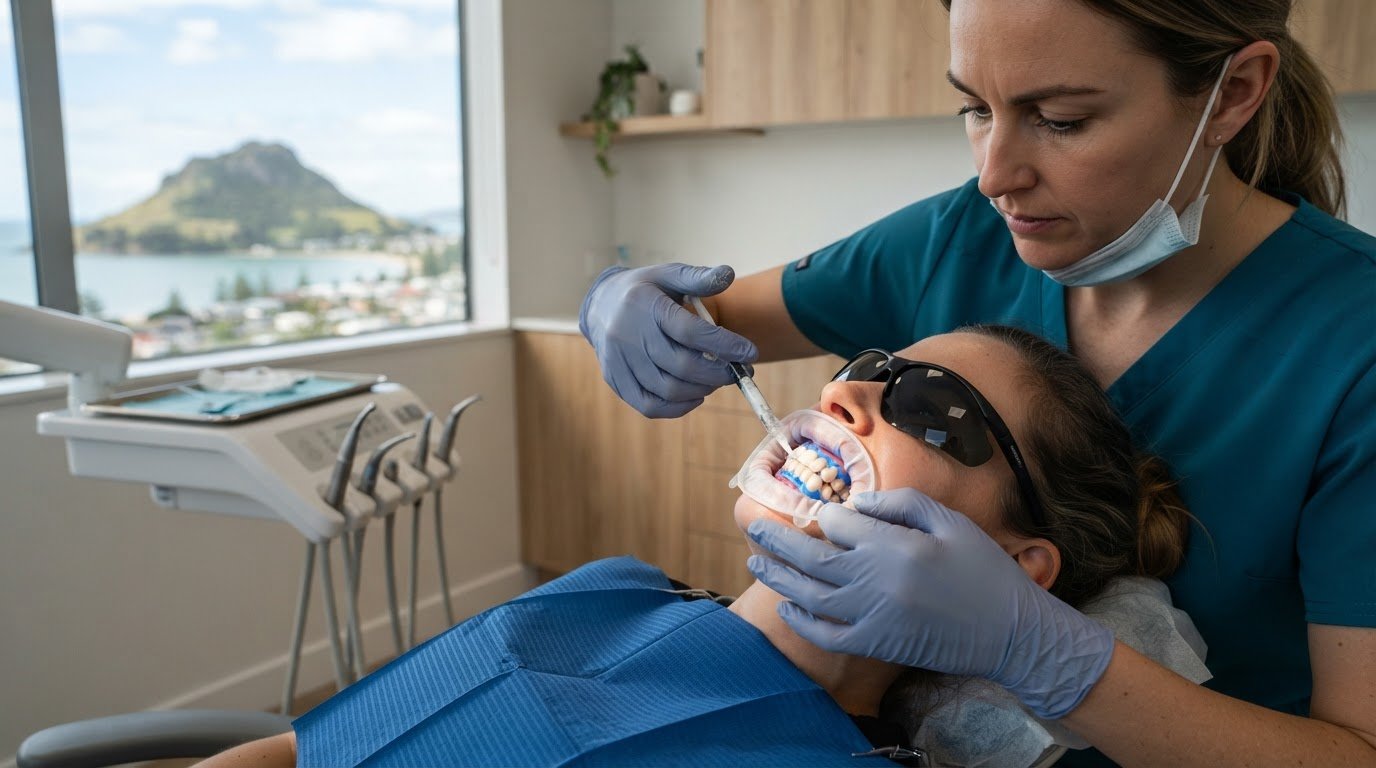
Professional dental hygiene can complement daily cleaning by addressing plaque and tartar that you cannot remove at home. The care needed depends on what an assessment finds. A hygiene appointment alone should not be treated as a solution for every stage or cause of gum disease. Daily care still matters between visits.
A routine dental exam in Tauranga gives you an opportunity to discuss gum changes and understand the assessment process. At Dental Plus in Mount Maunganui, routine check-ups and professional dental hygiene support a prevention-focused approach without promising to prevent gum disease completely.
There is no need to wait until discomfort is severe to raise a concern. If you are working on preventing gum disease Tauranga, combine consistent, gentle care at home with professional assessment when changes persist or you would like guidance. Explore Dental Plus dental care.
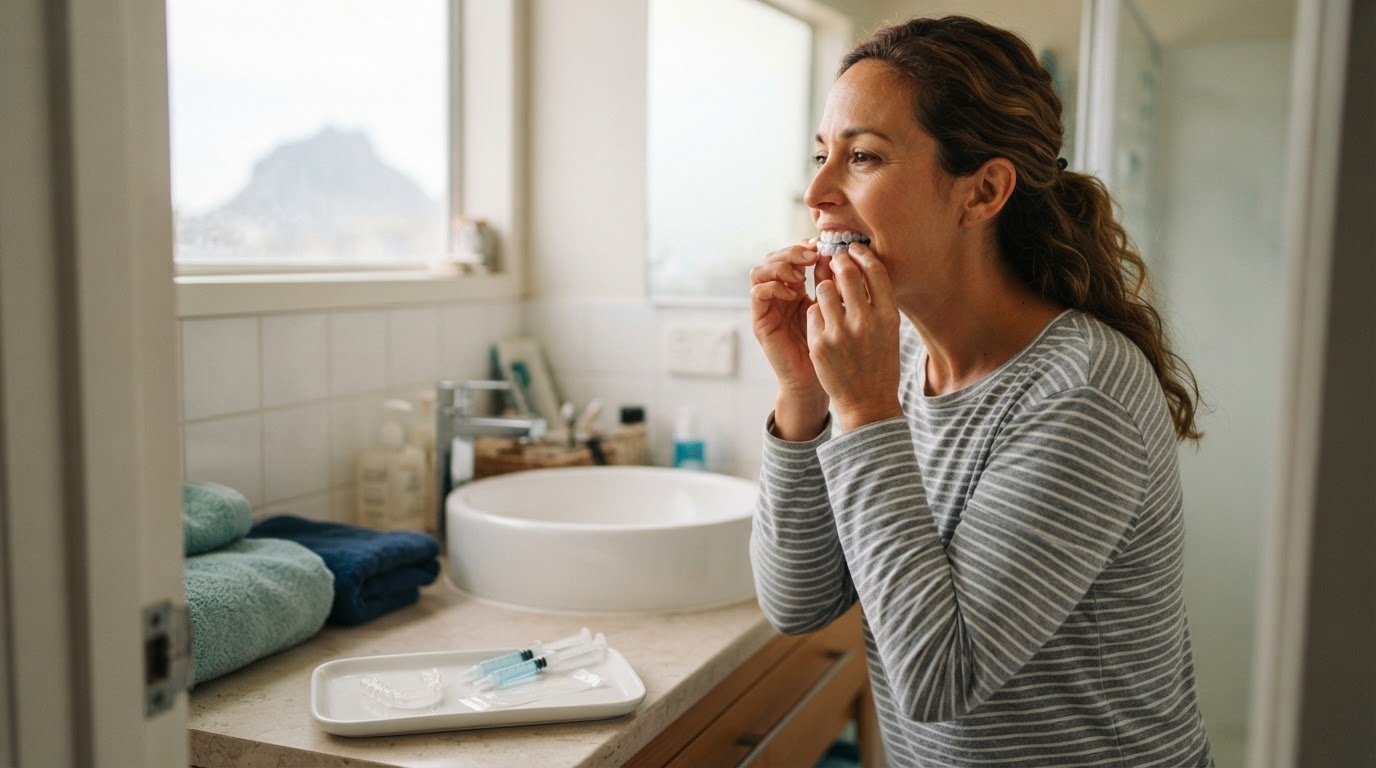
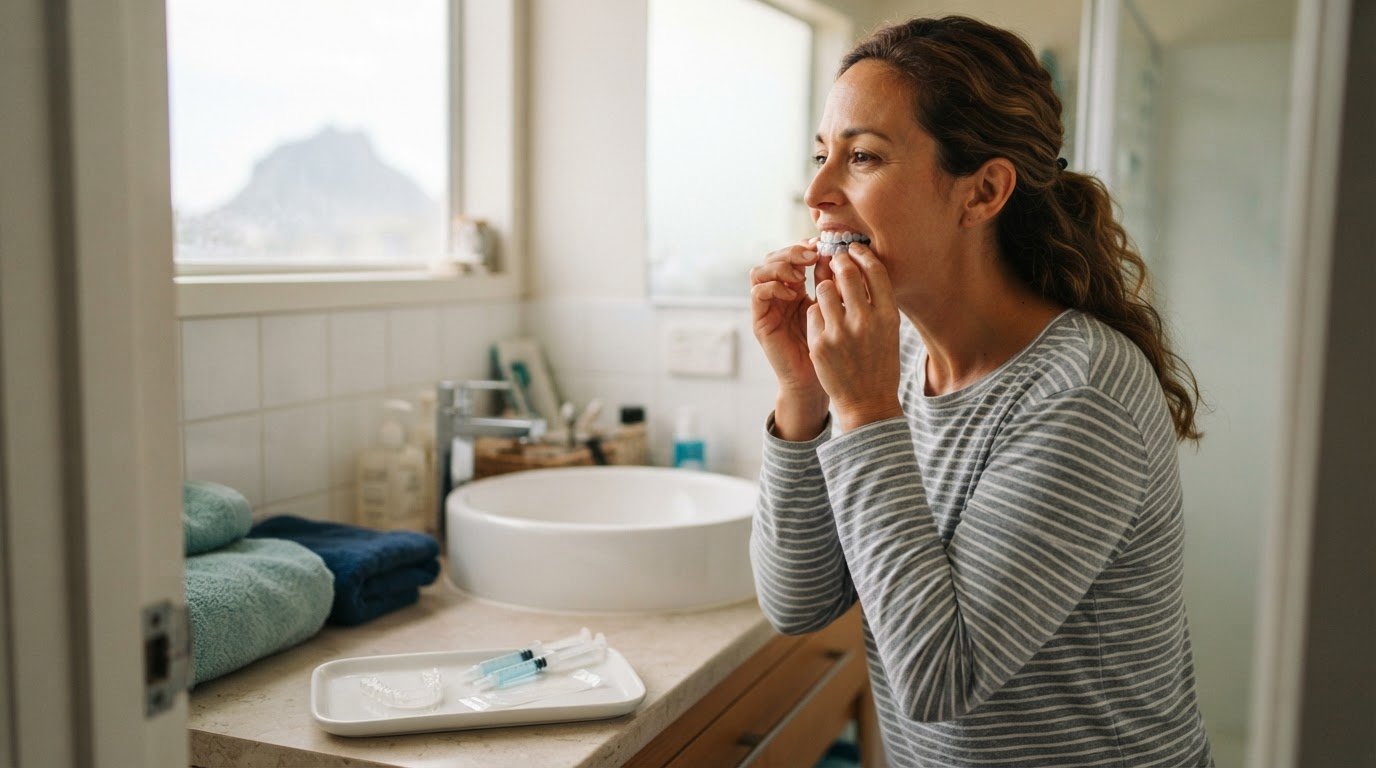
A practical daily routine for preventing gum disease in Tauranga
A gum-care routine does not need to be complicated to be useful. Aim for a repeatable morning and evening rhythm, with extra attention to areas that are easy to miss. New Zealand dental guidance recommends brushing twice daily with fluoride toothpaste and cleaning between your teeth daily. Use the steps below as a simple framework, not a guarantee against gum disease or a substitute for advice tailored to your mouth.
Build a repeatable brushing and interdental-cleaning habit
Choose a soft-bristled toothbrush and fluoride toothpaste. Brush gently around each tooth, including where it meets the gums, rather than scrubbing hard. Then clean between your teeth with floss or an interdental brush that fits comfortably. No single tool or size suits every mouth, so ask a dental professional for guidance if you are unsure what to use.
Link the routine to habits you already have, such as getting ready for the day and winding down at night. Keep your toothbrush and interdental cleaner somewhere easy to reach, and check that you have not skipped the back teeth or gumline. If hand movement, sensitivity or an awkward area makes cleaning tricky, do not force it. Adjust your grip or ask for advice on an approach that feels manageable.
Morning: Brush gently with fluoride toothpaste, covering the tooth surfaces and gumline.
Between teeth: Use floss or a suitable interdental cleaner to reach the spaces a toothbrush may miss.
Evening: Repeat the brushing and interdental-cleaning routine before bed.
Notice changes: Pay attention to recurring bleeding, redness, swelling or tenderness as part of your regular routine.
Know when a change needs attention
Look for patterns, not just one isolated moment. If bleeding keeps returning, or you see ongoing swelling, redness or tenderness, arrange a dental assessment rather than trying to diagnose the cause yourself. You do not need to wait for severe pain before asking for advice. A dental professional can assess what is happening and help you adjust your routine if needed.
If cleaning causes discomfort or remains difficult despite a gentle approach, mention that too. A different tool or technique may make daily care easier. Personalised advice can help you avoid pressing harder in an effort to reach a difficult spot. Small, repeatable steps are more realistic than an elaborate routine that is hard to maintain.
Brush gently twice a day, clean between your teeth daily and seek advice about changes that persist. For preventing gum disease Tauranga residents can build into everyday life, consistency is a practical starting point, while check-ups help assess gum health. If you would like personalised guidance or an assessment, book a routine check-up with Dental Plus in Mount Maunganui.
How Dental Plus supports gum-health prevention in Mount Maunganui
Keeping an eye on gum health is easier when you have a place to discuss changes and get advice suited to your needs. Dental Plus in Mount Maunganui provides routine check-ups and professional dental hygiene. At a check-up, you can raise concerns, ask about your cleaning technique and have your gums assessed as part of your oral health.
Professional hygiene care complements the work you do at home. It does not replace daily cleaning or guarantee that gum disease will not develop. It adds a professional perspective to your ongoing care and helps you understand what next steps may be appropriate.
What to discuss at a preventive dental visit
Before your appointment, think about what you have noticed. You do not need to arrive with a diagnosis. A clear description of changes can help the dental team understand your concern and decide what to assess.
Whether bleeding happens during brushing or cleaning between your teeth, and if it keeps recurring.
Any tenderness, swelling, redness or other change in how your gums look or feel.
Changes to your cleaning routine, or areas you find difficult to reach comfortably.
Relevant changes in your health or information about a health condition that may affect your care.
Recommendations depend on your individual oral-health assessment. They may include practical guidance, professional dental hygiene or further discussion about your concerns. Digital X-rays are available at Dental Plus, but they are not automatically needed for every gum concern. A dental professional can determine whether they are appropriate for your assessment.
Make prevention part of ongoing care
It is understandable to feel uncertain about an appointment, especially if you are worried that a symptom might mean something serious. Start by explaining what you have noticed and asking questions. The purpose of a check-up is to assess your oral health and discuss suitable care, not to expect you to know the answer beforehand.
Home care and professional reviews work together over time. Keep up the daily routine you can manage, and raise persistent or concerning changes rather than waiting for severe pain. A check-up can help review your gum health, while professional hygiene care supports your efforts at home. The advice you receive can reflect your needs rather than a one-size-fits-all schedule.
If you are considering preventing gum disease Tauranga, a calm first step is to talk through any changes and learn what care may suit you. Dental Plus welcomes patients seeking preventive dental care in Mount Maunganui. Book a visit with Dental Plus to discuss your gum health and ongoing care.
Take a confident next step for your gum health
You do not need to have every answer before seeking advice. If you have noticed a change, or would feel more confident with professional guidance, a conversation can help you decide what to do next. Preventing gum disease Tauranga is easier to approach when you focus on steady care and seek support when something does not feel right.
Dental Plus in Mount Maunganui provides routine check-ups and professional dental hygiene to support your ongoing oral care. A visit is an opportunity to discuss your concerns and understand what may suit your needs, without expecting a particular diagnosis or outcome in advance.
Book a preventive dental visit with Dental Plus and take a considered step towards caring for your gums. You can start with one question and build from there.
Frequently Asked Questions
Can gum disease be prevented completely?
No daily routine or dental visit can guarantee that gum disease will never develop. Consistent cleaning and appropriate professional care can help reduce risk, while individual health and other factors may also influence gum health. Think of preventing gum disease Tauranga as ongoing risk reduction, not a promise of certainty. If your gums change despite a steady routine, discuss it with a dental professional rather than assuming you have done something wrong.
Is bleeding when I brush a sign of gum disease?
Bleeding can be associated with gum inflammation, but it does not confirm gum disease or reveal the cause by itself. Notice whether it happens repeatedly and whether you have also seen changes such as swelling or tenderness. Do not try to stop bleeding by brushing harder, as extra pressure is not a substitute for assessment. If it persists or worries you, arrange a dental visit and describe when you first noticed it.
How often should I clean between my teeth to help prevent gum disease?
Include cleaning between your teeth once a day as part of your regular oral-care routine. Floss or an interdental brush may help, but the most suitable option depends on your teeth, the spaces between them and your dexterity. If you are unsure, ask a dental professional to show you how to use a suitable tool. A demonstration can make the habit feel more comfortable and effective.
Can brushing alone prevent gum disease?
No. Brushing cleans tooth surfaces but may not reach every space between teeth, so interdental cleaning is an important part of home care. Professional assessment has a separate role: it lets a dental professional consider your gum health and personal needs. If a crowded area is difficult to clean, for example, ask for advice rather than relying on brushing alone or forcing a tool into the gap.
What happens if gum disease is left untreated?
It is not possible to predict the outcome for an individual from symptoms alone. Gum inflammation can have different causes and levels of severity. Some cases may improve with effective plaque control and appropriate care, while more advanced disease needs professional assessment. If bleeding, swelling or tenderness continues, seek dental advice rather than waiting for pain. An assessment can clarify what is happening and what care may be suitable.
Should I see a dentist in Tauranga for bleeding gums?
Arrange an assessment if bleeding keeps recurring, persists or occurs alongside other changes. A dental professional can consider your symptoms and oral health together, rather than drawing conclusions from one sign. Dental Plus provides routine check-ups and professional dental hygiene in Mount Maunganui, Tauranga. Before your visit, note when the bleeding occurs and whether anything has changed in your health or cleaning routine.
Do I need a professional teeth cleaning to prevent gum disease?
Not everyone needs the same professional care, and a clean cannot guarantee that gum disease will not occur. Professional dental hygiene may support your oral care, while brushing and cleaning between teeth remain part of your everyday routine. At a check-up, discuss any gum concerns and ask what care fits your assessment. This helps you understand the role of a professional clean without treating it as a replacement for home care.
Comments