
How to Manage Pain and Care for Your Crown After Placement

A crown’s recovery is about more than waiting for discomfort to fade. Recovery after dental crown placement typically takes a few days, although your mouth can take up to two weeks to fully adjust. Mild sensitivity to hot or cold and a slightly tender gumline can be part of the settling-in period.
It’s understandable to feel cautious about eating, brushing or flossing around a new crown, especially a temporary one. A few gentle adjustments can help you stay comfortable while keeping the tooth and surrounding gums clean.
Here, you’ll learn how to ease sensitivity, protect a temporary crown, brush and floss carefully, and recognise when it’s time to contact a dentist. The focus is on practical oral hygiene during recovery, so you can care for your crown with greater confidence as your mouth adjusts.
Table of Contents
Managing post-procedure pain and sensitivity
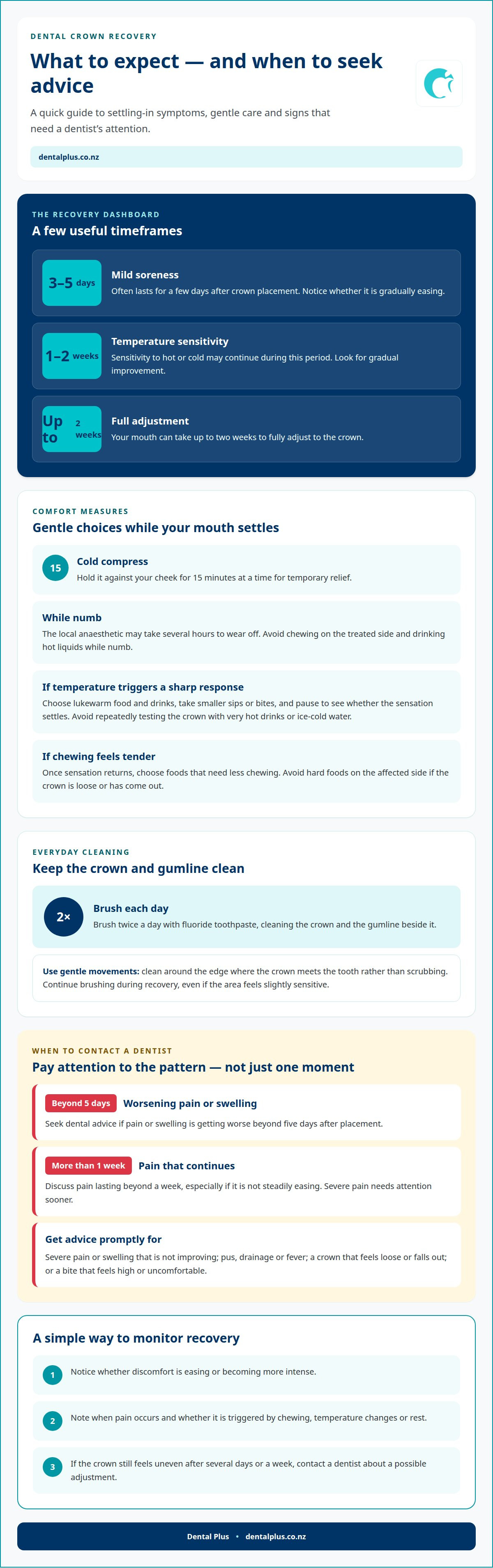
Mild soreness after crown placement often lasts three to five days. Sensitivity to hot or cold may continue for one to two weeks, and your mouth can take up to two weeks to adjust fully.
Manage initial discomfort and sensitivityTake care while the local anaesthetic wears off, which may take several hours. Avoid chewing on the treated side or drinking hot liquids while numb, as you may not accurately feel heat or biting pressure. Once sensation returns, choose foods that need less chewing if your tooth or jaw feels tender.For temporary relief, hold a cold compress against your cheek for 15 minutes at a time. Mild soreness, gum tenderness, or slight inflammation near the injection site can occur after the procedure. Bruising or injection-site inflammation should ease over several days. Notice whether discomfort is gradually settling rather than becoming more intense.
Address temperature sensitivityChoose lukewarm food and drinks if hot or cold triggers a sharp response. Sensitivity may be more noticeable if the crowned tooth still has a live nerve, and a brief temperature reaction can occur during the first few days. Take smaller sips or bites and pause to see whether the sensation settles.Avoid repeatedly testing the crown with ice-cold water or very hot drinks. This can trigger sensitivity without helping you judge whether it is improving. Instead, notice whether ordinary meals become more comfortable. Mild temperature sensitivity may last one to two weeks, so look for gradual improvement rather than judging by a single reaction.
Understand how long pain may lastTrack discomfort during the first week, including when it occurs and whether it is easing. A new crown can feel different when you bite for up to a week, while minor pressure sensitivity may settle as your mouth adjusts. The gums around the crown may also feel tender during the first week. These changes should gradually become more comfortable, not intensify.Give your bite time to feel familiar, but don’t ignore a persistent high spot. If the crown still feels uneven after several days or a week, contact a dentist about a possible adjustment. Pain that continues beyond a week, becomes severe or worsens also needs attention. A crown should feel comfortable in everyday use, so don’t simply tolerate ongoing pain.
When to contact a dentist
Contact a dentist if pain worsens, swelling develops or your crown feels loose. The timing and pattern of symptoms can help show when healing needs attention.
Recognise warning signsContact a dentist promptly for severe pain or swelling that isn’t improving. Also seek advice if you notice pus, drainage or fever, as these can signal infection around the crown. Worsening pain or swelling beyond five days after placement is another reason to call instead of waiting for it to resolve.Act if the crown becomes loose or falls out. Avoid chewing hard foods on that side while arranging advice, and don’t try to refit a crown yourself. If it comes away during a meal with sticky foods, stop chewing and take care not to swallow it. Keep up gentle hygiene around the area without disturbing the tooth.
Raise pain or bite problems with your dentistTell your dentist if the crown feels high or uncomfortable when you bite. A bite that feels off may need adjustment, particularly if one tooth seems to meet first or pressure repeatedly lands on the crown. Don’t keep testing it with hard foods; describe what you notice during normal eating instead.Contact your dentist if your bite still feels wrong after several days or a week. Pain lasting more than a week also deserves dental advice, especially if it isn’t steadily easing. Severe pain needs attention sooner. Note whether discomfort occurs when chewing, at rest or with temperature changes, so you can explain the pattern clearly.
Notice how symptoms change each day. Mild gum tenderness can occur during the first week, but increasing swelling, persistent pain or new discharge calls for dental advice. Record when pain began, what triggers it and whether it is worsening to help your dentist assess the issue.Don’t wait for a scheduled check-up if the crown shifts, your bite remains uncomfortable or signs of infection appear. A timely assessment can determine whether the crown needs adjustment or the surrounding tooth and gums need attention. If symptoms settle but return, report that change too, as it helps explain how you’re healing.
Notice whether discomfort is settling or becoming more pronounced. If it is worsening, contact your dentist rather than assuming it will pass. Pain or swelling that worsens beyond five days after crown placement needs dental advice. Severe pain or swelling that does not improve also calls for professional attention; both symptoms do not need to occur together. Discuss pain lasting more than a week with your dentist, even if it is not severe. Persistent or intensifying pain also warrants attention, particularly if it is not improving.
Describe how the crown feels when you bite and whether the discomfort is changing. If it feels high or uncomfortable when biting, contact your dentist promptly, as it may need adjustment. A bite that feels off after crown placement is also a reason to get in touch. Explain whether one tooth seems to meet first or pressure repeatedly lands on the crown, and avoid testing the bite with hard foods while you arrange advice.
Brushing and flossing around a crown
Keep cleaning the crowned tooth and gumline as part of your daily routine. Gentle, consistent brushing and flossing help protect the surrounding tooth, which can still develop decay.
Brush around the crownBrush twice a day with fluoride toothpaste, cleaning the crown and the gumline beside it. Use gentle movements around the edge where the crown meets the tooth rather than scrubbing. This removes plaque while reducing irritation to tender gums. Angle your brush towards the gumline and clean each surface of the crowned tooth.Keep brushing during recovery, even if the area feels slightly sensitive. If your gum is tender, use lighter pressure rather than skipping that part of your mouth. Consistent cleaning helps keep the tooth beneath the crown and the surrounding gums clean.
Floss around the crownFloss carefully between the crowned tooth and its neighbours, guiding the floss gently along each tooth surface. Avoid snapping it against the gum, which can irritate tender tissue. Move slowly around the crown’s edge to clean the gumline without pulling forcefully.Make flossing part of your twice-daily brushing routine. If the floss catches, ease it out rather than tugging sharply. This is particularly important beside a temporary crown, which can be dislodged by lifting floss upwards. Slide the floss out sideways instead.
Clean around the crown as well as across its top. Decay can develop along the gumline of the supporting tooth, so brushing only the visible biting surface leaves an important area uncleaned. Carefully brush along the crown’s edge, where plaque can collect.Maintain these cleaning habits after the initial tenderness settles. A crown restores the tooth, but it doesn’t make the underlying tooth or surrounding gum immune to decay. Daily brushing and flossing support oral hygiene and help preserve the crown.
Give your mouth time to adjust while maintaining your routine. Recovery after dental crown placement typically lasts a few days, though full adjustment can take up to two weeks. Mild tenderness is no reason to stop cleaning: use gentle pressure around the gumline and floss carefully.Eating can resume after waiting at least an hour following the procedure. Choose soft foods for the first day or two, and avoid sticky foods for the first 24 hours after permanent crown placement. These steps make eating more manageable while you continue cleaning around the crown.
Return to work or normal activities when you feel ready and the local anaesthetic has worn off. Numbness may last several hours, so avoid chewing until normal sensation returns. Continue brushing and flossing gently as usual instead of avoiding the crowned area.Careful cleaning helps support your crown over time. If brushing or flossing causes persistent pain, or the crown shifts during cleaning, stop disturbing the area and contact a dentist for advice.
Caring for a temporary crown
A temporary crown protects the prepared tooth between appointments while the permanent crown is made. Careful eating, cleaning and chewing can help keep it in place.
Chew mainly on the opposite side while wearing a temporary crown to reduce pressure during meals. Choose soft foods that need little chewing, such as eggs or yoghurt, especially during the first day or two. Avoid biting firm foods with the crowned tooth, even if it feels comfortable.
Avoid sticky, chewy and hard foods that could pull a temporary crown out of position. Leave foods such as taffy, toffee, nuts and ice aside while the temporary is in place. Hard or sticky foods can also damage a crown. During the first week, choose foods that don’t cling or require forceful biting.
Brush gently around the temporary crown as part of your usual twice-daily routine. Use fluoride toothpaste and take care at the gumline where the crown meets the tooth. If the area feels tender, use lighter pressure rather than skipping brushing. Cleaning helps remove plaque without forcefully scrubbing the edges.
Floss beside the temporary crown carefully, sliding the floss out sideways instead of lifting it upwards. Pulling floss up through the contact can catch the crown’s edge and dislodge it. Ease the floss between the teeth, clean each side gently, then release it sideways. This helps maintain hygiene without tugging on the temporary crown.
Keep track of your next appointment and follow the planned crown procedure through to the permanent crown. A temporary crown is commonly replaced in 1-3 weeks, depending on lab work and the treatment plan. It protects the prepared tooth during that interval, so avoid delaying the appointment without discussing the timing with your dentist.
Contact your dentist if the temporary crown becomes loose or falls out. Don’t chew on that side while it feels unstable or try to force the crown back into place. A loose temporary can leave the prepared tooth exposed, so prompt dental advice can help determine what to do next.
Return to your usual food choices gradually as comfort allows, but keep hard, crunchy and sticky foods away from the temporary crown. Choose a soft meal instead of crusty bread that needs a strong bite. Continue careful brushing and sideways floss removal until the temporary is replaced, then follow your dentist’s care instructions for the permanent crown.
Oral hygiene during recovery
Care for a new crown by brushing twice daily with fluoride toothpaste and flossing gently around its edges. Keep the gumline clean, follow your dentist’s instructions, and avoid sticky foods for the first 24 hours after permanent crown placement.
Rinse gently with warm salt water during the first day after your dental crown appointment. Let the water move around your mouth without vigorous swishing, which may irritate tender gums. This simple rinse can help keep the area comfortable while you continue careful brushing and flossing.
Brush twice a day, including the crown’s biting surface and the surrounding gumline. Use fluoride toothpaste and light pressure, especially if your gums feel tender. A soft-bristled brush and small, controlled movements can clean the crown’s edges without aggravating the surrounding tissue.
Floss gently between the crowned tooth and its neighbours every day. Guide the floss down carefully, curve it around each tooth and move it out without snapping against the gums. With a temporary crown, slide floss sideways out of the gap instead of pulling upwards, which could dislodge it.
Keep cleaning consistently, even if the tooth feels different for a few days. A crown covers the visible part of a tooth, but the supporting tooth and gumline still need care. Plaque left where the crown meets the gum can affect surrounding tissues.
Choose foods that are easy to manage while your mouth adjusts, and avoid sticky foods during the first 24 hours after a permanent crown is placed. Once comfortable, return to your usual meals gradually. Careful eating supports recovery, while brushing and flossing remain important regardless of what you eat.
Keep regular dental check-ups so your crown and surrounding teeth can be monitored. Check-ups every six months are recommended for people with crowns. Mention any changes in comfort or cleaning, such as floss catching at the crown’s edge or gums that remain tender.
Make these steps part of your everyday hygiene routine, not just a short-term task. If brushing or flossing around the crown becomes painful, or the gumline looks increasingly swollen, contact a dentist. Professional dental hygiene can also support a clean, healthy mouth around your crown.
Brushing, flossing, and routine dental check-ups support oral hygiene after dental crown placement. Keep these practices together as part of your ongoing oral-care routine, rather than relying on any one of them alone. Continued attention to all three keeps crown care connected to the broader habits that support oral hygiene.
Dental Plus: Crowns & Veneers
Dental Plus offers Crowns & Veneers for people considering a crown or needing care related to an existing one. If pain persists, your bite feels uneven, or a crown becomes loose, contact a dentist for advice rather than waiting for routine healing.
Professional Dental Hygiene can support cleaning around the crown and surrounding gums. Dental Plus also offers Digital X-Rays as part of its dental services. These complement daily brushing and flossing.
If you’re considering crown treatment or have concerns about a crown, contact Dental Plus in Tauranga to discuss your needs.
Make crown care part of your ongoing wellbeing
A crown is a reason to pay attention to your overall oral health, not just the treated tooth. As you recover after dental crown placement, consider the habits and support that can help you care for your smile over time.
Dental Plus offers Professional Dental Hygiene, Digital X-Rays and Routine Check Ups to support your ongoing dental care in Tauranga. Discuss changes in comfort, cleaning or the way your crown feels with the dental team, and ask what to focus on next.
If you have a concern about your crown or want guidance on your next step, contact Dental Plus for guidance. A considered approach to care can help you move forward with confidence.
Frequently Asked Questions
What symptoms are normal after getting a dental crown?
Mild soreness, slight gum tenderness, brief sensitivity to hot or cold, and an unfamiliar bite can occur after placement. Numbness from local anaesthetic may last several hours. These sensations should generally ease as your mouth adjusts. Notice whether discomfort is improving and whether it follows a trigger, such as a cold drink or chewing. If symptoms intensify or persist, contact a dentist for advice.
What are signs of infection or other complications after crown placement?
Swelling, pus, drainage or fever after crown placement can indicate infection and warrant dental advice. Worsening pain or swelling, a crown that shifts, or a bite that remains uncomfortable can also need assessment. Pay attention to changes, such as increasing swelling or new discharge, and contact a dentist rather than trying to diagnose the cause yourself.
What should you do if a new crown feels high, loose, or falls off?
If the crown feels high, stop testing your bite with repeated hard chewing and contact your dentist about an adjustment. Report a crown that feels uneven during ordinary eating. If it becomes loose or falls off, contact a dentist and avoid chewing on that side in the meantime. Explain whether the crown is temporary or permanent and what you noticed before it shifted.
When should you contact a dentist after getting a crown?
Contact a dentist for severe pain, increasing swelling, pus, drainage, fever, or a crown that loosens or falls off. Seek advice if pain lasts more than a week, or pain or swelling worsens beyond five days after placement. A bite that still feels wrong after several days or a week also merits assessment. When you call, describe when symptoms began, what triggers them and how they have changed.
Comments