
How to Make Invisalign Retainers Comfortable: Practical Tips

If you’re searching for how to make Invisalign retainers comfortable, start with gentle handling and the wear and care instructions provided for your appliance. A new retainer can feel snug, and mild pressure or tenderness may take a little time to settle. Rubbing against your cheeks, tongue or gums, or uncertainty about whether it fits properly, can make wearing it feel worrying.
Simple, careful habits can help you get used to a retainer without affecting its fit or your treatment. This guide explains how to ease into wearing it, keep it clean and avoid common DIY fixes, such as forcing it into place or reshaping it yourself.
You’ll also learn what a comfortable fit should feel like and when to contact your dentist or orthodontic provider. Sharp, worsening or persistent pain, or a retainer that won’t seat properly, is a good reason to ask for advice. Getting help doesn’t mean something has gone wrong. A personalised assessment can clarify what’s happening and help you feel more confident about your retainer.
Table of Contents
Why Invisalign retainers can feel uncomfortable at first
Comfort varies from person to person, and an unfamiliar appliance can take some getting used to. A little pressure when you put a retainer in may feel different from wearing no appliance at all, but that doesn’t mean every kind of pain is expected. General information can help you understand what to look for, but it can’t diagnose symptoms or confirm whether your retainer fits correctly.
An Invisalign retainer is a removable appliance designed to help maintain tooth positions after active orthodontic treatment. Active aligners apply planned forces to move teeth during treatment, while a retainer’s role is to help preserve the result. Both are forms of Clear aligners, but they have different purposes. Follow your dentist or orthodontic provider’s instructions for your particular appliance.
What is an Invisalign retainer, and how is it different from an aligner?
Retainers can differ in design, and their wear instructions can vary too. Don’t assume another person’s schedule or experience applies to you. Follow the directions you were given, and check with your provider if you’re unsure whether you’re using a retainer or an active treatment aligner.
What can cause pressure, rubbing or tenderness?
A retainer may feel snug or create mild pressure when you seat it. You may also notice the appliance touching your tongue, cheeks or gums as you adjust to wearing it. These sensations alone can’t tell you whether the fit is right, so note how they feel and whether they settle or continue.
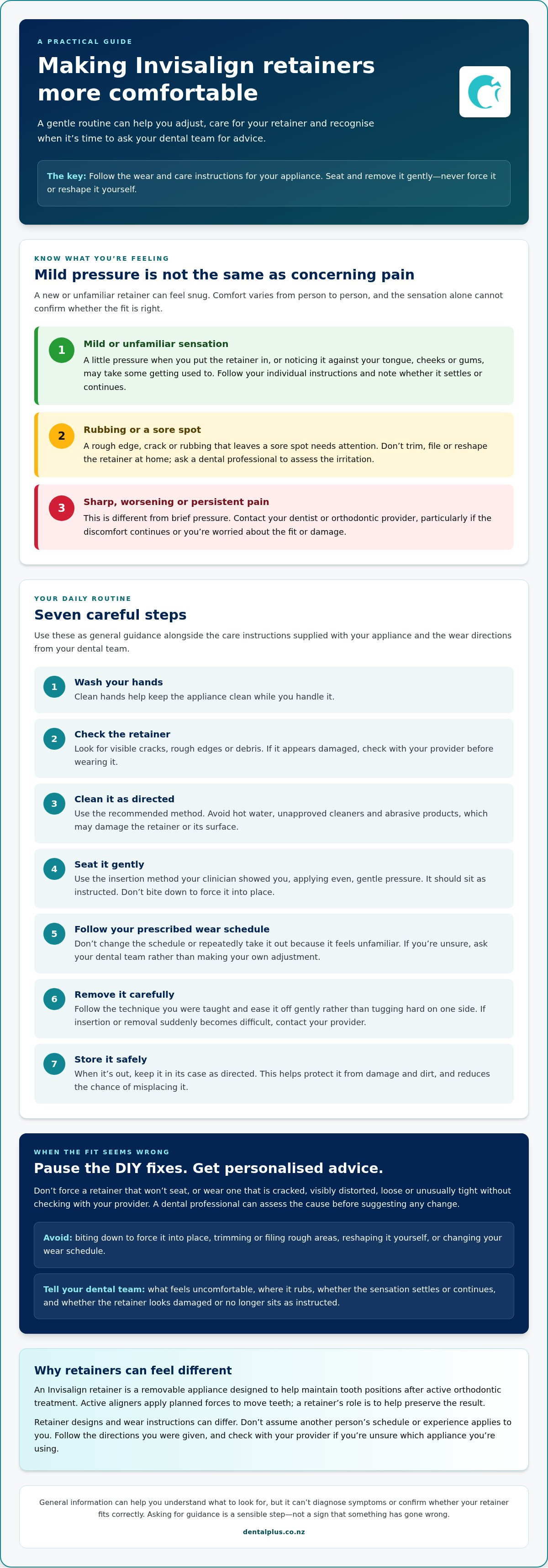
Sharp, worsening or persistent pain is different from brief pressure. So is rubbing that leaves a sore spot. If the retainer is cracked, visibly distorted, loose or unusually tight, or won’t sit in place as instructed, don’t force it. A poorly fitting, damaged or incorrectly seated appliance needs review by a dental professional, who can assess the cause before suggesting any change.
If you’re looking for how to make Invisalign retainers comfortable, start by following your individual wear instructions rather than trying to push through concerning pain. Contact your provider if discomfort continues, the fit has changed or you’re worried about damage. Asking for guidance is a sensible step, not a sign that something has gone wrong.
How to make Invisalign retainers comfortable with a safe daily routine
A calm, consistent routine can make wearing a retainer feel more manageable and help you spot problems early. Use the steps below as general guidance, and follow the care instructions supplied with your appliance and the wear directions from your dental team. Designs and recommendations can differ.
A simple routine for wearing your retainer
Step 1: Wash your hands. Clean hands help keep the appliance clean while you handle it.
Step 2: Check the retainer. Look for visible cracks, rough edges or debris. If it appears damaged, check with your provider before wearing it.
Step 3: Clean it as directed. Use the cleaning method recommended for your appliance. Avoid hot water, unapproved cleaners and abrasive products, which may damage the retainer or its surface.
Step 4: Seat it gently. Use the insertion method your clinician showed you, applying even, gentle pressure. The retainer should sit as instructed. Don’t bite down to force it into place.
Step 5: Follow your prescribed wear schedule. Don’t change the schedule or repeatedly take the retainer out because it feels unfamiliar. If you’re unsure what to do, ask your dental team rather than making your own adjustment.
Step 6: Remove it carefully. Follow the removal technique you were taught and ease it off gently rather than tugging hard on one side. If it suddenly becomes difficult to insert or remove, contact your provider.
Step 7: Store it safely. When it’s out, keep it in its case as directed. This helps protect it from damage and dirt, and reduces the chance of misplacing it.
Everyday habits that help prevent irritation
Before putting your retainer in, check that it’s clean and that nothing is trapped against the plastic. Debris can feel irritating, while a rough edge or crack may need professional attention. Don’t trim, file or reshape the appliance at home, even if one area seems to rub. Altering it can affect the fit, so let a clinician assess the source of irritation first.
For mild unfamiliar sensations, follow your individual instructions rather than repeatedly taking the retainer out. However, don’t push through sharp pain or force an appliance that won’t seat. If you have concerns about fit or handling, a dental professional can advise you based on your retainer and situation. For readers in Tauranga, Invisalign care in Mount Maunganui is one option for discussing persistent retainer concerns with a dental team.
Is retainer discomfort normal, or could the fit be wrong?
A retainer may feel snug or create mild pressure, but that isn’t the same as ongoing pain. How it feels can’t confirm whether the appliance fits correctly. Notice the type of discomfort, whether it’s getting worse and whether the retainer sits as instructed. If you’re unsure, your treating dental professional can assess the fit and advise you on what to do.
What symptoms may settle, and what should not be ignored?
Brief, mild pressure may happen when you put your retainer in. It shouldn’t be sharp or increasingly painful. Contact your provider if discomfort persists or worsens, causes mouth sores or seems linked to a rough or damaged edge. Severe or rapidly worsening symptoms need prompt assessment. Don’t try to diagnose the cause or adjust the appliance yourself.
What if your retainer feels loose or will not fit?
First, check that you have the correct appliance and look for visible damage. Don’t bite down hard or push it into place if it won’t seat comfortably. A loose fit or sudden difficulty inserting or removing the retainer is worth discussing with your treating provider, as the cause can’t be reliably identified at home.
Until you receive advice, don’t change your wear schedule or make adjustments yourself. Ask your dental professional what to do with the appliance, especially if the fit has changed or discomfort is getting worse. If you’re wondering how to make Invisalign retainers comfortable, knowing when a sensation needs checking is as important as following your usual care routine.
What to do when Invisalign retainers rub or cause sore spots
A retainer that rubs can make everyday wear uncomfortable, but cutting or reshaping it yourself may affect its fit. Instead, check for an obvious cause, avoid altering the appliance and ask your dental team for guidance if irritation continues.
How can you respond to rubbing without damaging the retainer?
Remove and inspect it gently. With clean hands, check for trapped debris, visible cracks or a rough edge. Don’t bend the retainer or try to smooth anything down.
Keep unapproved materials away. Avoid putting household products or materials against the retainer or sore area unless your dental professional has recommended them.
Follow your wear instructions. Ask your provider whether to keep wearing the retainer while you wait for advice. Don’t change your schedule based on guesswork, and don’t force the appliance into place if it no longer fits as instructed.
Get the area assessed if rubbing persists. Tell your provider where the irritation occurs and what you’ve noticed about the appliance.
A rough edge or pressure point can be difficult to assess by sight alone. What feels like a small snag may relate to the appliance’s fit or condition, so a clinician should check it before deciding whether an adjustment is appropriate. Trimming, filing or heating it at home can change the shape of the retainer and make the problem worse.
Don’t cut, file, bend or heat your retainer at home. Don’t use hot water to soften it, either. These DIY fixes can distort or damage the appliance, making it harder to wear as intended. Leave any assessment or adjustment to your dental professional.
When should you contact your dental team?
Get in touch if pain continues, a sore spot develops, the retainer no longer fits properly, or it becomes difficult to insert or remove. Contact your provider promptly if the appliance is cracked, warped or lost, and ask what to do about your wear schedule while you wait for advice. You don’t need to decide on your own whether the issue is serious enough to raise.
If you’re unsure how to make Invisalign retainers comfortable because of ongoing rubbing or tenderness, a personalised assessment can help clarify what’s happening. For persistent discomfort, discuss your retainer with Dental Plus, based in Mount Maunganui, Tauranga.
Getting comfortable with Invisalign retainers: when to seek personalised advice
Good daily care can help you check your retainer, but it can’t confirm why it hurts or whether the fit is right. Follow your provider’s instructions, look for obvious debris or damage without altering the appliance, and seek professional advice if discomfort continues, worsens or affects how the retainer sits. You don’t need to wait until you’re certain there’s a problem before asking a question. If you are planning further smile improvements after alignment, you can explore Fee-for-service dental procedures and consultations with providers such as Dental Essence to see how options like veneers fit alongside your retention plan.
What should you tell your dentist about retainer discomfort?
A few clear details can help your dental team understand what has changed. Note when the discomfort began, how often it happens and where you feel it, such as along the gum, cheek or tongue. Mention whether it occurs when inserting the retainer, while wearing it or when removing it.
Bring the retainer with you, especially if you’ve noticed a crack, rough edge or change in fit.
Describe any changes to your wear or cleaning routine, or whether the appliance has been out of use.
Ask whether you should continue wearing it while waiting for advice or an assessment.
These details are more useful than trying to adjust the appliance yourself. Don’t cut, file, heat or force a retainer that doesn’t fit as instructed.
How can a dental review help you feel more confident?
A dental professional can examine the retainer’s condition and fit, and consider possible sources of irritation. They can then match their guidance to your appliance and treatment plan rather than relying on a general rule that may not suit your situation. This can help clarify what to do next if you’ve been unsure how to make Invisalign retainers comfortable.
Dental Plus provides Invisalign in Mount Maunganui, Tauranga. If you’re experiencing ongoing discomfort, poor fit or retainer damage, you’re welcome to talk with Dental Plus about Invisalign care. Getting advice is a sensible part of looking after your comfort and retainer, not a sign that you’ve done anything wrong.
Wear your retainer with greater confidence
Knowing how to make Invisalign retainers comfortable starts with a gentle routine: handle the appliance with clean hands, check it for visible damage, and follow your dental team’s wear and care instructions. Mild pressure may feel unfamiliar, but sharp, worsening or persistent pain, sore spots, damage or a retainer that won’t seat properly should be checked rather than managed with DIY adjustments.
If discomfort continues, note when it began, where you feel it and whether the retainer’s fit or your routine has changed. These details can help your dental professional assess your concerns and advise on a suitable next step. Asking for help doesn’t mean you’ve done anything wrong.
Dental Plus offers Invisalign and traditional braces at its practice in Mount Maunganui, Tauranga. If you’d like to discuss a retainer concern with the team, talk with Dental Plus about Invisalign care. Contact Dental Plus to discuss your Invisalign care and retainer concerns with the team.
Frequently Asked Questions
Is it normal for Invisalign retainers to feel uncomfortable?
Mild pressure or an unfamiliar snug feeling can happen with a retainer, but sharp, worsening or ongoing pain shouldn’t be dismissed as normal. A retainer that rubs enough to cause sores, appears damaged or won’t sit as instructed also needs professional advice. These symptoms don’t confirm the cause, so contact your treating dentist or orthodontic provider if you’re concerned about the fit or your discomfort continues.
How long does it take to get used to Invisalign retainers?
It varies, but mild unfamiliar pressure or tenderness may ease over several days as you adjust to wearing the appliance. There’s no single adjustment period that applies to everyone. If discomfort is getting worse, doesn’t begin to settle, or includes sharp pain or sore spots, ask your dental provider for advice rather than waiting for a set number of days. Follow your own prescribed wear instructions.
Can I use warm water to make my Invisalign retainer more comfortable?
Don’t use warm or hot water to heat or soften your retainer. Heat can distort the plastic and affect how it fits. For cleaning, use cool or lukewarm water, following the care instructions for your appliance. If you’re hoping warmth will ease pressure or pain, check with your dental provider instead. A retainer that hurts or won’t seat properly shouldn’t be reshaped at home.
What should I do if my Invisalign retainer hurts one tooth?
If one tooth hurts, don’t assume the retainer is fitting correctly or try to force it into place. Check that you’re using the correct appliance and look for visible damage, without bending or altering it. Contact your treating provider if the pain is sharp, persists or worsens, or the retainer doesn’t seat as instructed. Explain which tooth hurts and when you notice the discomfort, such as during insertion or wear.
Can I file or trim an Invisalign retainer that is rubbing?
No. Don’t file, cut, trim, bend or heat a retainer at home, even if you can see a rough edge. Changing its shape may damage it or affect its fit. Check gently for trapped debris or obvious damage, then contact your dental provider if rubbing continues or causes a sore spot. They can assess the appliance and advise whether it needs attention. Avoid placing unapproved materials against the retainer or sore area.
Should I keep wearing my retainer if it feels uncomfortable?
Follow the wear instructions your dental team gave you, and don’t change your schedule based on guesswork. Mild pressure may feel unfamiliar, but sharp or worsening pain, sores, damage or a retainer that won’t seat properly calls for professional advice. Contact your treating provider and ask whether to keep wearing it while you wait for guidance. Don’t force it into place or repeatedly remove it to manage ongoing discomfort.
How do I clean an Invisalign retainer without affecting its fit?
Follow the care instructions provided for your retainer. The American Association of Orthodontists recommends daily brushing with a soft toothbrush and dish soap, and rinsing in lukewarm rather than hot water. Avoid abrasive toothpaste, which can scratch the surface, and don’t use unapproved cleaners. Handle the appliance gently, check it for damage and store it as directed. If you’re in Mount Maunganui or Tauranga and have concerns about its fit, ask your dental provider for personalised guidance.


Comments