
How to Fix a Crooked Front Tooth: Compare Your Options

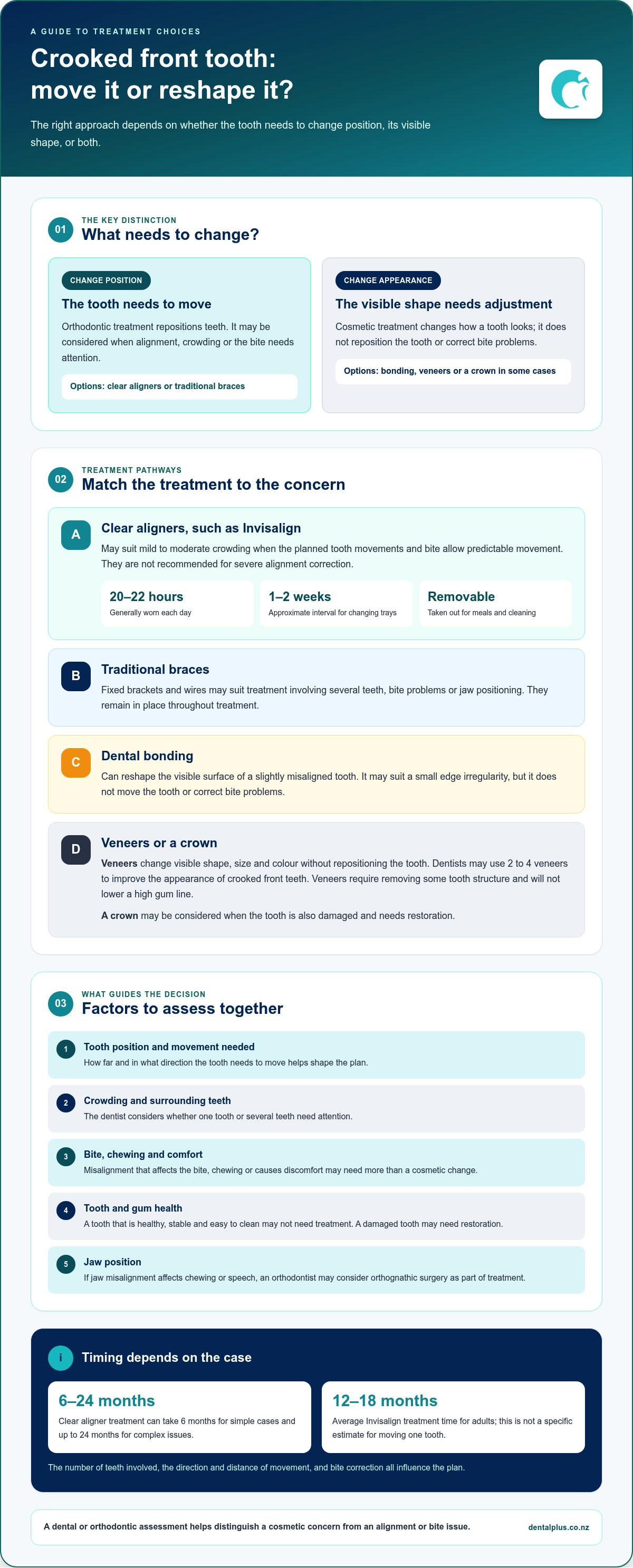
Braces aren’t the only way to improve a crooked front tooth. How to fix a crooked front tooth depends on whether it needs to move or simply look more even: Invisalign or traditional braces can reposition it, while dental bonding can reshape its visible surface without moving it.
It’s understandable to want a straightforward answer, especially when a front tooth affects how your smile looks or feels. The right option depends on what’s causing the crookedness, how it affects your bite, and whether the tooth is healthy and easy to clean.
This guide explains possible causes and what to expect at a dental consultation, then compares orthodontic treatment with cosmetic options such as bonding. You’ll learn when reshaping the tooth may be suitable, when moving it is more appropriate, and which factors help distinguish between the two.
Table of Contents
Is a Crooked Front Tooth a Dental Problem or Just Cosmetic?
A crooked front tooth can affect appearance, cleaning and the way your teeth meet. Its cause and impact help distinguish a cosmetic concern from an issue that may need treatment.
For one front tooth, straightening time depends on how far it must move and the treatment used. Invisalign treatment for adults averages 12 to 18 months, but that figure isn’t a specific estimate for moving one tooth.
When treatment may be needed
Treatment may be worth considering when misalignment makes a tooth difficult to clean, affects your bite or causes discomfort. Plaque can collect in hard-to-reach areas, while uneven biting pressure may contribute to tooth wear over time.
Genetics can influence jaw size and tooth position, so crowding may appear as permanent teeth come through. Uneven loss of baby teeth, delayed eruption or an injury can also affect alignment. A front tooth that shifts, becomes more prominent or feels uncomfortable should be assessed by a dentist.
A healthy, stable tooth that’s easy to clean and causes no bite problems may not need treatment. “Quick straight teeth” and “instant smile” describe desired results, not a substitute for assessing the tooth’s health and position. A cosmetic change can improve appearance without correcting the cause of misalignment.
Cosmetic treatments for front teeth
Cosmetic treatments change a tooth’s visible shape, while orthodontic treatment works to move teeth. Veneers can alter a tooth’s shape, size and colour, creating a straighter appearance without repositioning it. Dentists may use 2 to 4 veneers to improve the appearance of crooked front teeth.
Dental bonding can reshape the visible surface of a slightly misaligned front tooth. It doesn’t move the tooth or correct bite problems. A crown may be considered if the tooth is also damaged and needs restoration; more significant misalignment may call for orthodontic treatment instead.
Veneers require removing some tooth structure, whereas orthodontics can move an existing tooth without drilling. A veneer also won’t lower a high gum line. These differences matter when the concern involves tooth position, gum line or chewing function, rather than visible shape alone.
For example, a small edge irregularity may suit bonding, while a rotated tooth may need Invisalign or traditional braces to change its position. The right approach depends on the tooth’s condition, surrounding teeth and bite. Comparing these factors helps distinguish a cosmetic adjustment from treatment that addresses alignment.
What causes crooked teeth?
Genetics, childhood development and changing bite forces can all contribute to crooked teeth. Invisalign or traditional braces can address some alignment problems, but the right approach depends on whether one tooth or the wider bite needs movement.
Yes, Invisalign or traditional braces can move a single crooked front tooth when the surrounding teeth and bite allow predictable movement. If crowding is severe or jaw position is involved, treatment may need to address more than that tooth.
Inherited jaw size and tooth position can leave less room for permanent teeth as they come through. During childhood, uneven loss of baby teeth or delayed eruption can also affect where adult teeth settle. These developmental changes may cause crowding or a tooth to rotate away from its expected position.
Tooth position can also change after an injury or as bite contacts shift. Tongue posture, lip seal and swallowing patterns may influence alignment over time. For example, pressure from surrounding teeth can make a front tooth move or rotate, even after earlier orthodontic treatment.
Clear aligners are removable trays that apply planned pressure to move teeth gradually. Invisalign aligners are changed approximately every one to two weeks, with each new tray guiding teeth towards the next position. They’re generally worn for 20 to 22 hours daily, removed for meals and cleaning, then placed back in.
For mild to moderate crowding, Invisalign may be an option if the required tooth movements are suitable. Clear aligners can reposition a front tooth when surrounding teeth and bite relationships allow predictable movement. They aren’t recommended for severe alignment correction, where the movement required may be too extensive.
Traditional braces use fixed brackets and wires to move teeth and may suit cases involving several teeth, bite problems or jaw positioning. Unlike removable aligners, braces stay in place throughout treatment. The choice depends on the movement required, how the teeth meet and whether misalignment affects chewing.
When jaw misalignment affects chewing or speech, an orthodontist may consider orthognathic surgery as part of treatment. This differs from correcting an isolated crooked tooth, which may need orthodontic movement without jaw surgery. A dental assessment can help distinguish a tooth-position concern from a wider jaw issue.
Clear aligner treatment can take 6 months for simple cases and up to 24 months for complex issues. The number of teeth involved, the direction and distance of movement, and bite correction all influence the treatment plan. A dentist or orthodontist assesses these factors before recommending aligners or braces.
What to expect at a dental or orthodontic consultation
A consultation assesses the tooth, surrounding teeth, bite and gums before comparing treatment options. The findings help show whether alignment, appearance or both need attention.
Choosing a suitable treatment
A dentist chooses treatment by assessing tooth position, crowding, bite, gum health and the amount of movement required. These details matter because veneers change appearance, while orthodontic treatment moves teeth.
The assessment may include checking how your teeth meet when you bite and whether misalignment affects chewing. If several teeth are crowded, your bite is affected or jaw positioning needs attention, orthodontic treatment may be appropriate. A single, slightly rotated tooth with a healthy bite may have different options.
To decide which treatment suits a crooked tooth, the dentist considers its condition and position, how it affects your bite, and your goals. The discussion can compare orthodontic movement with cosmetic options, including bonding or veneers, and explain what each approach changes.
At a consultation, describe when you noticed the tooth changing and whether cleaning or chewing feels different. Mention previous braces and whether you wear a retainer, as front teeth can shift after orthodontic treatment if retainers aren’t worn consistently. The dentist can relate your history to your current alignment.
Age alone doesn’t rule out braces. Many people begin straightening at around twelve, when all adult teeth have come through, but braces may suit people of any age if their teeth and gums are strong enough to support treatment. For adults, the condition of the supporting teeth and gums is relevant to planning.
In New Zealand, public dental care and private insurance have different eligibility criteria and policy terms. Don’t assume adult orthodontic treatment is covered: public support depends on eligibility, while insurance coverage depends on the individual policy.
Treatment risks and aftercare
Risks and aftercare differ by treatment, so discuss them alongside the expected result. Braces and aligners move teeth, while bonding reshapes a tooth’s surface and veneers cover it. Each option needs care suited to the appliance or restoration.
With braces or aligners, follow the cleaning and wear instructions provided for your treatment. Bonding can chip, and veneers involve removing some tooth structure. After orthodontic treatment, a retainer or lingual bar may help prevent a tooth from rotating again, so include retention in the treatment discussion.
Age, bite and oral health also shape ongoing care. For example, a crowded tooth may need orthodontic movement, while a chipped front tooth may need its restoration maintained. Ask how cleaning, follow-up and retention apply to the option being considered.
A front tooth that shifts, becomes more prominent, affects comfort or is difficult to clean should be assessed. Seek prompt dental care if an injury suddenly changes its position or it becomes painful or loose. These changes need an examination, not cosmetic planning alone.
Who may be a candidate for cosmetic straightening
Cosmetic straightening suits people whose main concern is how a front tooth looks, rather than how it functions. It can make a tooth appear straighter, but veneers, crowns and bonding don’t move teeth into new positions. That distinction matters: a rotated tooth affecting the bite may need orthodontic treatment, such as metal braces, instead.
A dentist considers the tooth’s health and position, your bite and the change you want. Cosmetic options are most relevant when misalignment is mild and tooth movement isn’t needed to improve bite or function. For example, a slightly uneven edge may be reshaped, while a crowded tooth may need moving before cosmetic work is considered.
Tooth sculpting, also called contouring, removes small amounts of enamel to smooth minor irregularities. It may suit a tooth with a small uneven edge, but it can’t reposition a rotated tooth or correct crowding. Because enamel removal is permanent, how much can be reshaped depends on the tooth’s existing shape and condition.
Dental bonding adds tooth-coloured material to reshape a visible area. It may suit a mildly misaligned front tooth when a small change to its outline can improve the smile without changing the tooth’s position. For instance, bonding can add material to an uneven edge, but it won’t straighten a tooth that sits forward of its neighbour.
Porcelain veneers cover the front surface of a tooth and can change its shape, size and colour. They may create a straighter appearance for mild misalignment when bite correction isn’t required. Veneers don’t physically straighten teeth, and placing them involves removing some tooth structure. Discuss the difference between a cosmetic result and orthodontic movement.
A crown covers more of a tooth than a veneer and may be considered when the tooth is damaged as well as crooked. It restores the tooth’s visible shape but doesn’t move its root or correct the position of neighbouring teeth. A healthy tooth with minor unevenness therefore presents a different cosmetic decision from a damaged tooth that needs restoration.
Compare the options by asking what each changes: contouring removes a small amount of enamel, bonding adds material, and a veneer or crown covers the tooth. Orthodontic treatment, by contrast, aims to move teeth. The appropriate route depends on whether the concern is shape, damage, tooth position or bite, not simply on which treatment seems quickest.
Cosmetic treatment is less suitable as a substitute for orthodontics when teeth are crowded, the bite is affected or substantial movement is needed. In those cases, straightening first may address the underlying position rather than disguise it. A dental assessment of the tooth and bite helps clarify whether a cosmetic change can meet your goal and preserve a natural-looking result.
Dental bonding for minor crookedness
Dental bonding can make a mildly crooked front tooth look more even without moving it. A dentist applies tooth-coloured composite material to reshape the visible surface, then shapes and polishes it to blend with surrounding teeth. The key distinction is simple: bonding changes appearance, not the tooth’s position.
This approach may suit adults whose front tooth has a small uneven edge or looks slightly narrow beside its neighbour. For example, adding composite to one side can create a more balanced outline. It won’t correct a rotated tooth, significant crowding or a bite problem, because the tooth itself stays where it is.
The procedure usually takes 30 to 60 minutes per tooth and can be completed in 1 to 2 appointments. The dentist first assesses the tooth and the way it meets the opposing teeth. They then select a composite shade, apply the material, shape it to the planned outline and polish the surface.
Shade and proportion matter. A front tooth that’s too bright, wide or long may stand out even if its edge looks straighter. Comparing the proposed shape with nearby teeth helps keep the result balanced and natural-looking. If several teeth need changes, the plan considers how their outlines work together across the smile.
Bonding is most useful when a small surface adjustment can meet your goal. It isn’t an alternative to orthodontic correction if tooth position affects chewing or makes cleaning difficult. A dentist assesses the tooth, gums and bite to distinguish a cosmetic concern from alignment that needs movement.
Before choosing bonding, clarify what the material can and can’t change. Consider whether the concern is an uneven edge, a small gap or the tooth’s actual position. The first two may be addressed by reshaping the visible surface; a tooth that sits forward or turns out of line may need orthodontic assessment.
Bonding isn’t a do-it-yourself correction. Rubber bands used at home to move teeth can cause serious dental harm, and composite material can’t safely guide a tooth into a new position. Keep the decision focused on professional assessment and the specific change needed.
If a minor shape adjustment sounds relevant, discuss dental bonding options as part of an assessment. That conversation can establish whether reshaping the visible surface addresses your concern, or whether tooth movement is the more suitable route.
Dental Plus: Professional Dental Hygiene
Dental Plus offers Professional Dental Hygiene and Routine Check Ups to support healthy teeth and gums while you consider options for a crooked front tooth. A check-up can assess the tooth’s condition and bite, while Digital X-Rays may help examine areas that aren’t visible during a visual assessment. Digital Smile Design (DSD), an optional preview tool, can help you discuss your preferred appearance alongside your dental needs.
Professional hygiene is also useful for maintaining clean teeth and gums as part of your wider dental care. If you’re weighing bonding, veneers or orthodontic treatment, a dental assessment can help clarify the next step. Contact Dental Plus to discuss your dental concerns and arrange a visit.
Take the next step towards a smile that feels right
Before deciding how to fix a crooked front tooth, consider what you want to change and what you want to preserve. A natural-looking smile, a comfortable bite and a tooth that’s easy to care for can all shape the conversation. You don’t need to arrive with a treatment already chosen.
At Dental Plus, Routine Check Ups, Digital X-Rays and Professional Dental Hygiene can support an assessment of your oral health and inform a discussion about possible next steps. The right option depends on the tooth’s condition, your bite and the result you’re hoping for.
Bring your questions and describe what’s bothering you most, whether that’s the tooth’s appearance, its position or how it feels when you bite. A clear conversation can help you understand your options and decide what feels appropriate for you.
Contact Dental Plus to discuss your options. A considered next step can help you move forward with confidence.
Frequently Asked Questions
What are my options for straightening my teeth?
Options include Invisalign, traditional braces and cosmetic treatments, depending on whether teeth need movement or only a change in appearance. If you’re considering how to fix a crooked front tooth, first work out whether it needs to move or simply look different. Invisalign may suit selected alignment concerns, while braces can address more complex movement. Bonding can reshape a small visible area but won’t reposition a tooth.
Do you always need braces?
No. Invisalign can move teeth in suitable cases, and cosmetic bonding can alter a tooth’s visible outline without braces. These approaches aren’t interchangeable: bonding won’t correct a tooth’s position, and aligners aren’t recommended for severe alignment correction. If several teeth are crowded or your bite is affected, braces may be considered. A dental assessment helps match the method to the movement required.
When is it better not to fix it?
Leaving a crooked tooth untreated may be reasonable if it’s healthy and stable, easy to clean, comfortable and not causing bite problems. For instance, a small difference in tooth shape alone may not justify removing enamel for a cosmetic result. Monitoring during routine dental care can help track changes. Reconsider an assessment if the tooth shifts, becomes harder to clean or starts affecting comfort.
What causes a crooked front tooth in adults and children?
In children, inherited jaw size, uneven loss of baby teeth and delayed eruption can affect how permanent teeth align. An injury can also alter a front tooth’s position. In adults, teeth may shift or rotate over time, including after orthodontic treatment if retainers aren’t worn consistently. Changes in bite contacts, tongue posture, lip seal and swallowing patterns can also influence tooth position.
What are the treatment options for correcting one crooked front tooth?
How to fix a crooked front tooth depends on whether it needs physical movement or a change in appearance. Options include Invisalign or braces to move the tooth, and bonding or veneers to change its appearance. The choice depends on nearby teeth, your bite and tooth health. For people in Tauranga, a local dental assessment can clarify which concern treatment needs to address.
Can a dentist fix a crooked front tooth with bonding, veneers or a crown?
A dentist can use bonding, veneers or a crown to alter a tooth’s appearance, but these treatments don’t move it into a new position. Bonding may reshape a minor uneven area; veneers cover the front surface, while crowns can restore a damaged tooth. Veneers involve removing some tooth structure. If the tooth’s position affects your bite, orthodontic movement may address the underlying issue more directly.
What are the risks of leaving a crooked front tooth untreated?
Possible concerns include plaque collecting in harder-to-clean areas, irritation of nearby gums and uneven pressure during biting. Over time, uneven pressure may contribute to tooth wear. These outcomes aren’t inevitable, and a healthy, stable tooth that’s easy to clean may not need correction. Watch for changes in position, cleaning difficulty or comfort, and raise them during a dental check-up.
Comments