
How to Improve My Smile Without Braces and Compare Costs

Braces aren’t the only way to create a smile you feel good about, but the right alternative depends on what you want to change. The best answer to how to improve my smile without braces starts with one distinction: clear aligners move teeth, while bonding, veneers and whitening change their appearance.
It’s understandable to want a treatment that suits your budget, timeline and daily routine. The right option depends on what you’d like to change, from chips and discolouration to gaps or mild crowding. Each treatment works differently and varies in how long it may take and how much it alters your natural teeth.
This guide compares clear aligners, dental bonding, veneers and whitening, including what each can and can’t address. You’ll also learn what can affect treatment costs and longevity, and why a dental assessment of your teeth and bite helps identify an approach that suits your smile and priorities.
Table of Contents
What Are Modern Alternatives to Traditional Braces?
Different treatments address different concerns: clear aligners move teeth, while veneers and bonding change their appearance. The key distinction is whether you want to alter alignment or improve visible shape and colour.
Clear aligners as a braces alternative
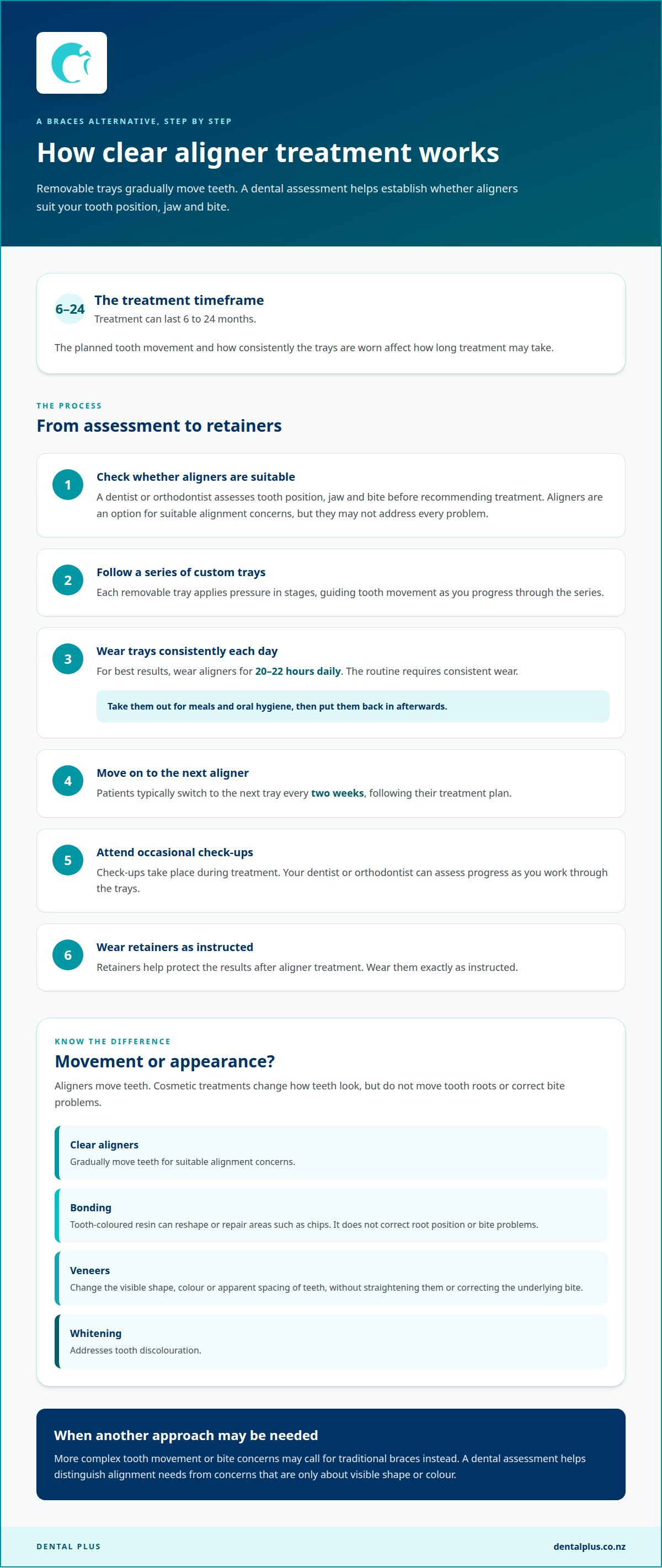
Clear aligners are removable trays that gradually move teeth, offering an alternative to fixed metal braces for suitable alignment concerns. A series of custom trays applies pressure in stages, so each one guides tooth movement. Treatment can last from 6 to 24 months, depending on the planned movement and how consistently the trays are worn.
For best results, aligners should be worn 20-22 hours daily. Patients typically switch to the next aligner every two weeks and attend occasional check-ups during treatment. The trays come out for meals and oral hygiene, then go back in afterwards. That routine can suit people who want removable treatment, but it requires consistent daily wear.
Aligners may not address every alignment problem. A dentist or orthodontist assesses tooth position, jaw and bite before recommending treatment. More complex movement or bite concerns may call for traditional braces instead. Cosmetic changes alone cannot correct a bite problem or move tooth roots, so choosing treatment by appearance alone may overlook an important part of the assessment.
Veneers for visual alignment changes
Porcelain veneers are thin coverings bonded to the front of teeth to change their visible shape, colour or apparent spacing. They can make a smile look more uniform when small gaps or uneven edges draw attention. Veneers improve appearance, not tooth position, so they don’t straighten teeth or correct the underlying bite.
That distinction matters when a tooth is visibly out of line. A veneer may create a more even-looking front surface, but it doesn’t move the tooth into a different position. Veneers are permanently cemented over natural teeth and may require enamel reshaping. Porcelain veneers can last 10 to 15 years with proper care, making the decision a long-term one.
Comparing aligners, veneers and bonding
Clear aligners, veneers and bonding address different concerns. Aligners move teeth; veneers alter their visible surfaces; bonding uses tooth-coloured resin to reshape or repair areas such as chips. A small chip may suit bonding, while crowding calls for an alignment assessment rather than a surface change.
Bonding can change a tooth’s appearance, but it doesn’t correct root position or bite problems. Veneers may involve lasting changes to natural enamel, while aligners require consistent wear and follow-up. Retainers help protect results after aligner treatment and should be worn exactly as instructed. The right comparison starts with the concern being treated, not simply the option that looks quickest or least noticeable.
How Can a Dentist Help Improve My Smile Without Braces?
A dentist assesses your teeth, gums and bite before recommending cosmetic treatment. This helps distinguish appearance concerns from alignment problems that need tooth movement.
Suitability and benefits of cosmetic treatments
Cosmetic treatments suit people whose main concerns involve tooth colour, chips, gaps or uneven edges. Smile whitening addresses discolouration, bonding can reshape a chipped edge, and veneers can change the visible shape of teeth. Each option targets a different feature, so matching treatment to your concern helps keep the plan focused.
Suitability also depends on your teeth’s health and position. A cosmetic change can improve the visible smile, but veneers and bonding don’t correct bite problems or root position. If a tooth’s position affects how your teeth meet, a dentist considers this before recommending an appearance-only solution.
Discussing cosmetic options with a dentist
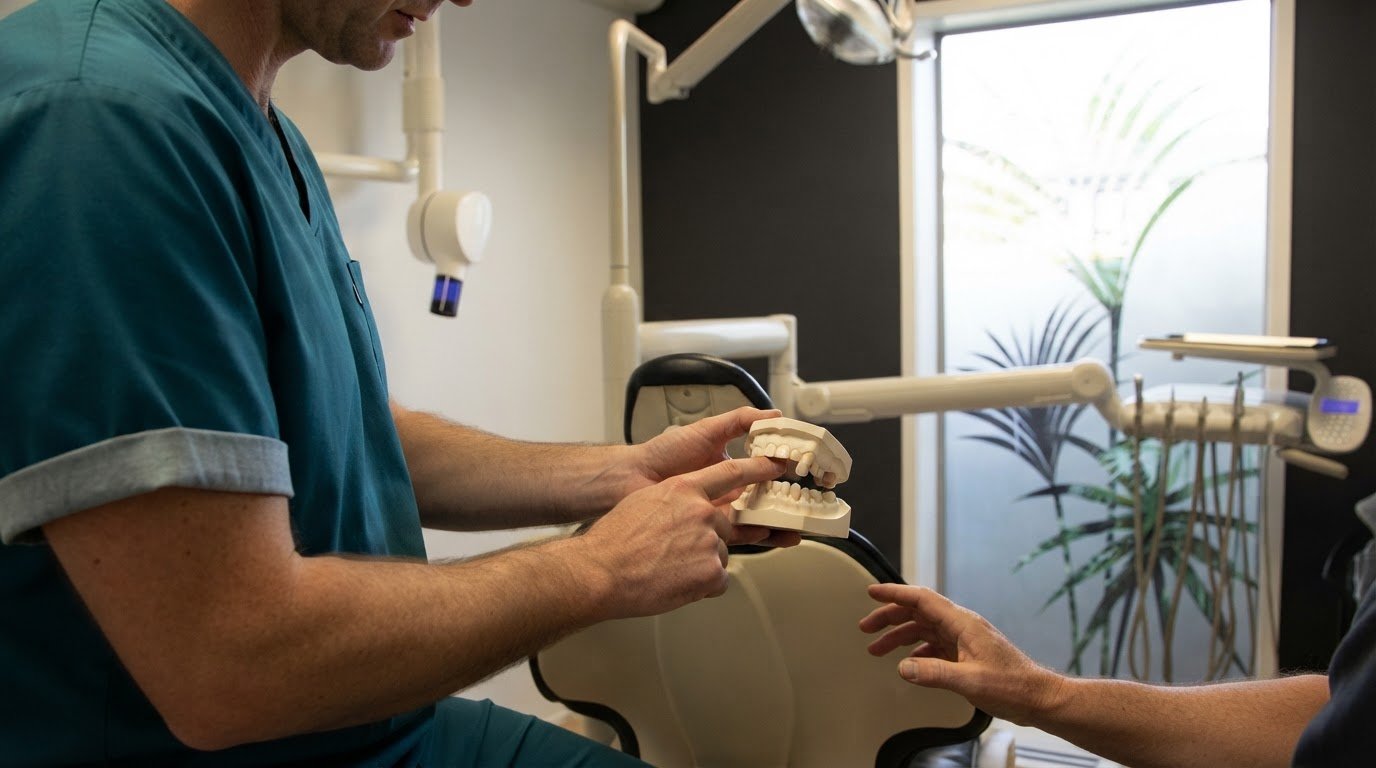
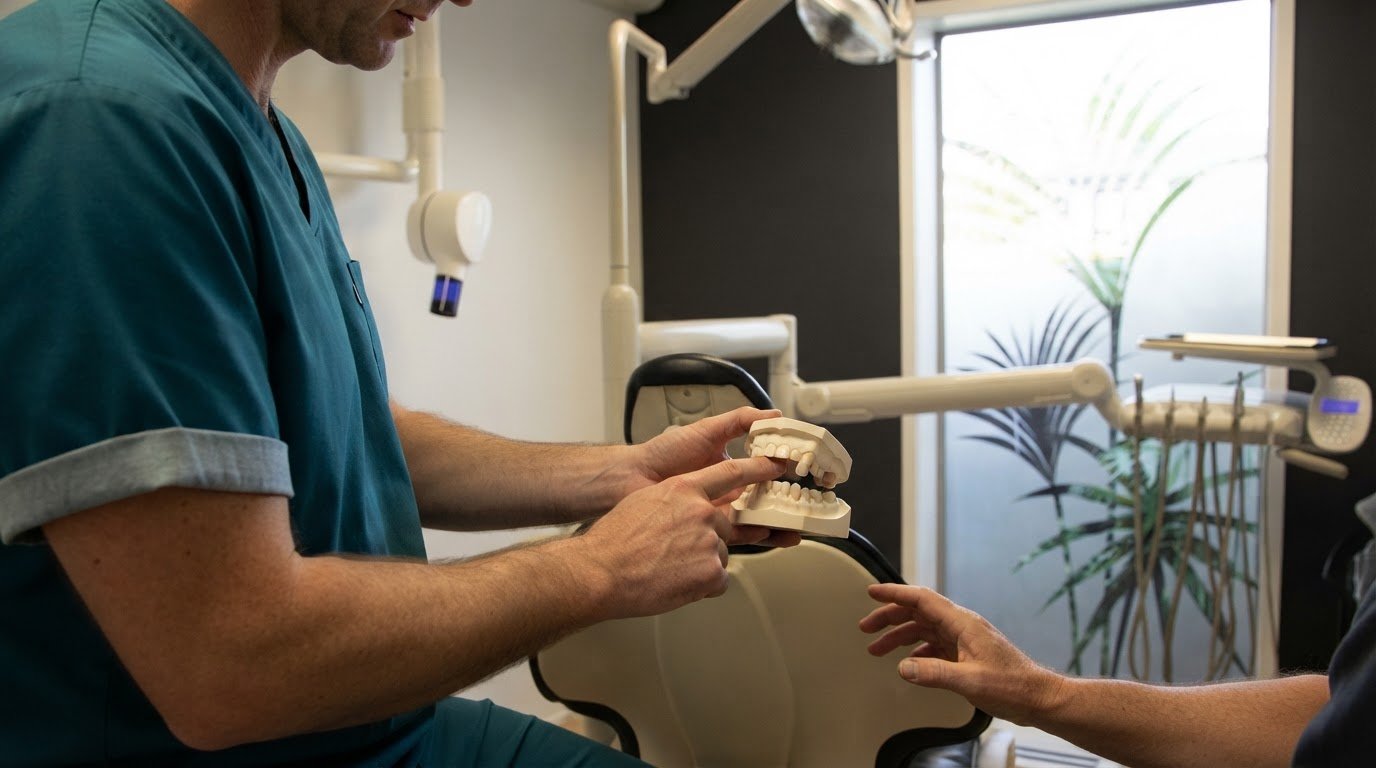
A dental consultation connects your goals with an assessment of your whole smile. For straightening concerns, the examination should consider more than the front teeth, including your bite and how your teeth meet. This broader view helps show whether a cosmetic treatment addresses the concern or simply changes what’s visible.
Bring clear priorities to the discussion, such as wanting to improve a gap, a stain or a chipped tooth. The dentist can explain which treatments match those priorities, what each changes and where its limits lie. Digital Smile Design is one cosmetic dentistry offering that can form part of a conversation about your smile goals.
Veneers for cosmetic straightening
Veneers can create the appearance of straighter, more uniform teeth by changing their visible contours. They can address gaps and cover stained or discoloured surfaces, making the smile look more even without moving teeth.
This is visual straightening, not orthodontic movement. A veneer doesn’t change a tooth’s underlying position or correct the bite. Because veneers are permanently cemented over natural teeth and may involve enamel reshaping, consider the lasting change to the tooth before deciding.
Combining cosmetic treatments
A combination of treatments can address separate concerns in one planned smile outcome. For example, whitening can address colour while bonding reshapes a small chip. The dentist considers how the treatments work together, including how the shade and shape of treated teeth relate to neighbouring teeth.
Crowns are another option when a tooth needs a covering that restores its shape and appearance. Cosmetic dental crowns can last 10 to 15 years with proper care. The tooth’s condition and the purpose of treatment guide whether a crown, veneer, bonding or another approach fits best.
Choosing treatments by severity, timeline, budget and lifestyle
The best fit depends on what needs changing, how much change is involved and your daily routine. A dentist weighs visible concerns alongside tooth position, jaw and bite before comparing treatment timelines and costs.
Matching treatment to severity and lifestyle
Treatment choice should reflect the extent of the concern and how it affects everyday life. A small chip may suit a focused cosmetic approach, while several crowded teeth call for an alignment assessment. If your bite is uncomfortable or your teeth don’t meet properly, function matters alongside appearance.
Lifestyle also affects whether a removable option feels practical. Clear aligners need consistent wear, so frequent meals or a routine that makes reinserting trays difficult may affect suitability. Fixed metal braces stay in place, while bonding changes a tooth’s appearance without requiring you to manage removable trays. A dentist can consider these differences alongside your comfort and priorities.
Weighing timelines and budgets
Timelines vary because treatments do different things. Tooth movement follows a planned course, while a cosmetic change focuses on the visible surface. The number of teeth involved, complexity of movement and sequence of any combined treatments all influence how the plan unfolds.
Budget discussions should compare the full treatment plan, not just its first appointment. The price depends on the case and is given after a quote request; factors include the treatment selected, the number of teeth involved and the work required. A dentist can explain what each option addresses, helping you weigh the initial commitment against ongoing care and the expected lifespan of restorations.
Assessment and professional treatment advice
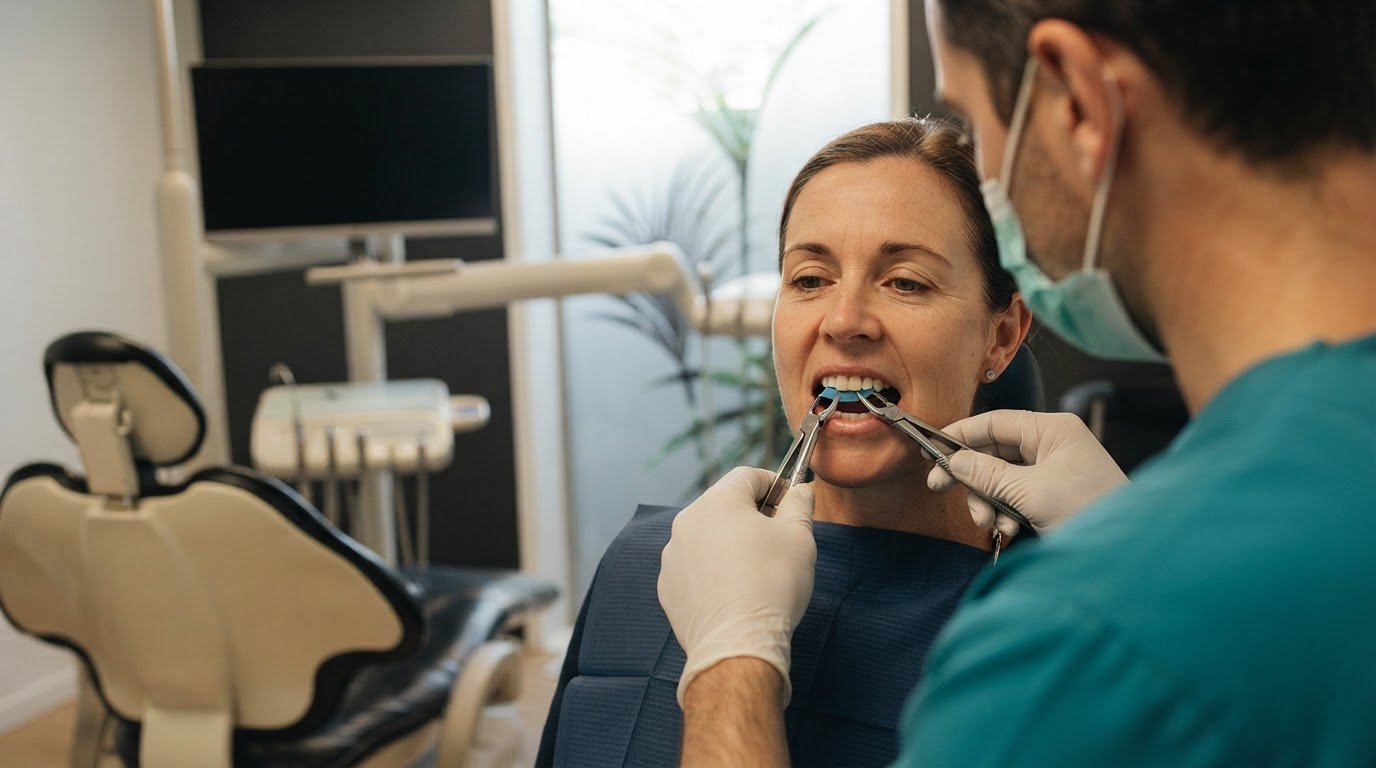
A dental assessment helps distinguish cosmetic concerns from problems involving tooth position, jaw or bite. The dentist examines your teeth and how they meet, then considers whether the concern is mainly visible or functional. For example, a gap that affects appearance differs from a bite issue that changes how your teeth come together.
Professional advice is particularly useful when several treatments seem possible. Ask for a clear explanation of what each option changes, what it cannot correct and what care follows. A cosmetic dentist can also discuss how treatment choices affect neighbouring teeth and your overall smile, rather than focusing on one visible tooth alone.
Use the appointment to describe your priorities plainly: a more even appearance, a comfortable bite or a treatment routine that fits work and meals. The dentist can compare suitable options against those goals. This helps avoid choosing a cosmetic treatment for a concern that needs orthodontic attention, or tooth movement when the main issue is colour or shape.
Composite bonding to repair chips and reduce gaps
Composite bonding uses tooth-coloured resin to reshape a tooth’s visible surface. It can repair a chipped edge, smooth a minor irregularity or reduce a small gap. For someone seeking a focused cosmetic change, bonding can improve a tooth’s outline without moving it. That distinction matters: bonding changes appearance, while traditional braces move teeth.
A dentist first assesses the tooth, surrounding teeth and bite. For a small chip, the dentist can add resin to rebuild the edge, then shape it to sit naturally alongside neighbouring teeth. The repair plan depends on the chip’s location and size. If the concern involves tooth position, a surface change may not address the underlying alignment.
To reduce a gap, bonding may involve making the teeth on either side wider. This can make the space look smaller, but the teeth’s proportions need careful consideration. Adding too much width may make them look bulky or less balanced. A dental assessment helps determine whether bonding suits the gap or another treatment is more appropriate.
The bonding process involves preparing the tooth surface, applying a conditioning liquid, then placing and shaping composite resin. A special light hardens the material. Dental bonding takes 30 to 60 minutes per tooth, and composite bonding normally takes one visit. It doesn’t require an anaesthetic and has no healing time afterwards, although the dentist will shape the resin carefully before finishing.
Composite resin typically lasts 3 to 10 years, depending on its location and care habits. A repair on a tooth’s edge may experience different demands from resin placed elsewhere. The material can need maintenance or replacement over time. Good oral health care also includes keeping plaque under control around natural teeth and restorations.
Bonding may suit adults and other patients seeking a minor correction rather than gradual tooth movement. It can alter a chipped edge or the visible shape around a small space, but it cannot correct a bite problem or change root position. If teeth need to move, cosmetic resin is not a substitute for alignment treatment.
Bonding doesn’t make teeth brighter through whitening. It changes a tooth’s shape and visible surface, so colour concerns need separate consideration in the treatment plan. For example, someone concerned about both a chip and discolouration may discuss bonding alongside smile whitening. The dentist can compare the concerns and plan the treatment sequence to support a natural-looking result.
Start by identifying what needs changing: a chip, a small gap, tooth colour or alignment. That helps determine whether bonding is a focused solution or another treatment better matches the concern. A dentist can explain the expected shape, the amount of resin needed and how care habits may affect the restoration over time.
What are the risks and long-term effects of veneers, bonding and clear aligners?
Each treatment changes your smile differently, so its longer-term effects differ too. Veneers alter tooth surfaces, bonding adds resin, and clear aligners move teeth. Understanding these differences helps you consider not just the immediate appearance, but also ongoing care and the health of your teeth.
Veneers can involve reshaping enamel before they’re fitted, making the change to natural teeth lasting. Porcelain veneers can last 10 to 15 years with proper care, but they don’t move teeth or correct bite problems. Composite veneers have a different expected lifespan, listed as 5-7 years. The material and the treatment plan therefore matter when considering durability.
Bonding adds composite resin to reshape or repair a tooth. Its long-term performance depends on where it is placed and your care habits, so a repair on an edge may face different demands from resin elsewhere. Bonding doesn’t correct root position or bite problems. If grinding or clenching is wearing your teeth or straining your bite, that concern needs attention to help protect your teeth and restorations.
Clear aligners involve a different commitment: consistent wear and planned tooth movement. When treatment ends, retainers help protect the result and should be worn exactly as instructed. Review appointments can help identify small changes early. Keeping plaque under control around natural teeth, attachments and restorations also supports oral health during and after treatment.
Unsupervised tooth movement carries risks. The American Association of Orthodontists warns that some patients have experienced tooth and gum loss after choosing direct-to-consumer orthodontic treatments. This warning concerns those treatment routes, not every aligner plan. An assessment of your teeth, jaw and bite helps determine whether aligners suit the movement required.
Daily care matters for all three options. Plaque can collect around natural teeth and restorations, while retainers need to be used as directed to help maintain aligner results. Veneers and bonded areas also need routine attention as part of your oral health care. If you grind your teeth, addressing it can help reduce continued wear and strain on the bite.
Before choosing, weigh the lasting change to enamel, the upkeep of resin, or the retainer routine after aligners. A dentist can explain what each treatment changes and what it cannot address. Discuss veneer and bonding options as part of a considered plan for your smile.
Dental Plus: Traditional Braces
Dental Plus offers traditional braces for people whose teeth need to move, rather than simply look different. If an assessment identifies alignment or bite concerns that cosmetic treatments cannot address, braces may be more suitable than veneers or bonding. Routine check-ups support ongoing dental care, and digital X-rays can contribute to assessing your teeth and their position.
The right approach depends on what needs correcting. A visible chip may call for cosmetic treatment, while more involved tooth movement may require orthodontic care. Discussing your concern with a dentist helps clarify the options and their purpose.
Contact Dental Plus to discuss whether traditional braces may suit your smile.
Take the next step towards a smile that feels right
Deciding how to improve my smile without braces starts with identifying what you want to change and what matters most in daily life. A clear sense of your priorities can make the next conversation more useful, whether you’re focused on appearance, comfort or how your teeth meet.
That conversation can also consider the health of your teeth and gums alongside your cosmetic goals. Dental Plus offers professional dental hygiene, digital X-rays and routine check-ups to support assessment and ongoing oral care. These services can inform a treatment discussion, while your dentist explains which options address your concerns and what each involves.
You don’t need to arrive with a treatment already chosen. Describe what you’d like to improve and discuss what matters to you, including the practical commitment and longer-term care. A thoughtful plan begins with understanding your smile and priorities.
Contact Dental Plus to discuss your options and take a considered next step towards a smile that feels comfortable and true to you.
Frequently Asked Questions
What Is a Smile Makeover?
A smile makeover is a personalised plan combining dental treatments to address appearance goals. It might involve whitening for discolouration, bonding for a chipped edge or veneers to change visible tooth shape. The combination depends on your teeth, gums, bite and priorities. In Tauranga, a dentist can assess these factors and explain which changes are cosmetic, which affect function and how the proposed treatments work together.
Why Do Adults Avoid Traditional Metal Braces?
Some adults prefer options that are less visible or removable, or want to avoid the routine involved with fixed braces. Work, social commitments and eating habits can influence that preference. Others are comfortable with metal braces if tooth movement is needed. The choice isn’t just about appearance: the type and extent of alignment change, bite concerns and daily routine help determine which orthodontic approach is suitable.
What are the ways to improve your smile without braces?
If you’re wondering how to improve my smile without braces, start by identifying what you want to change. Options include whitening for tooth colour, bonding for chips or small shape changes, and veneers for visible surfaces. Clear aligners can move teeth without fixed braces when suitable. A dentist can assess whether the concern is colour, shape, spacing or tooth position, then explain which approach addresses it.
Can clear aligners straighten teeth without braces in New Zealand?
Yes, clear aligners can move teeth without traditional fixed braces when they suit the alignment problem. Treatment uses a series of removable trays and planned dental reviews. In New Zealand, a dentist or orthodontist assesses tooth position, jaw and bite before recommending an approach. Aligners aren’t suitable for every case, particularly when more complex movement or bite correction is required.
How do veneers and dental bonding compare for improving a smile?
Veneers cover the front surface of teeth and can change their visible shape, colour or apparent spacing. Bonding adds composite resin to selected areas and can suit a smaller repair, such as a chipped corner. Both alter appearance rather than move teeth or correct bite problems. The choice depends on the extent of the change, the tooth’s condition and how much lasting alteration is involved.
How much do clear aligners, veneers and dental bonding cost in New Zealand?
The cost depends on the case and treatment plan. Factors include the treatment selected, how many teeth are involved, the complexity of tooth movement and any additional work required. Clear aligners, veneers and bonding involve different processes, so compare the full proposed treatment, follow-up and longer-term care.
What steps are involved in getting clear aligners without braces?
If you’re asking how to improve my smile without braces, start with a dental assessment of your teeth, jaw and bite. If aligners suit your case, the dentist plans tooth movement and provides a sequence of removable trays. Wear each tray as directed, attend review appointments and follow the treatment plan. After treatment, retainers help protect the result and should be worn as instructed.
Which smile concerns can’t be fixed without braces or orthodontic treatment?
Veneers or bonding alone can’t correct concerns involving tooth position, root position or a bite problem. These treatments change visible surfaces, not the underlying position of teeth. More complex alignment may also need orthodontic treatment rather than cosmetic adjustment. An assessment helps distinguish a surface concern, such as a chip, from a functional issue affecting how your teeth meet.
Comments