
How to Get a Confident Smile: A Gentle, Practical Guide

Updated: Sep 28
What if learning how to get a confident smile began with understanding what matters to you, rather than trying to match someone else’s? If the colour, shape, alignment or condition of your teeth makes you hold back, it’s understandable to feel self-conscious. You don’t need to decide on treatment straight away.
A useful first step is to talk through what you’d like to change and what’s behind your concerns. This guide covers sensible next steps and possible options, so you can make informed choices at your own pace, without pressure or judgement.
A check-up can help clarify options, from whitening and bonding to orthodontic treatment, crowns or veneers, depending on your needs. You’ll also learn how Digital Smile Design may help you visualise a proposed smile and how to discuss your goals, comfort and concerns with a dental professional. The aim isn’t to chase a perfect smile, but to feel more at ease with yours.
Table of Contents
How to get a confident smile starts with understanding what concerns you
Learning how to get a confident smile doesn’t mean measuring yourself against a particular shade, tooth shape or perfectly even smile. Start by noticing what would help you feel more comfortable. You might feel self-conscious about colour, spacing, alignment or a chip, or find yourself hiding your teeth in photos. Those feelings are valid, but they don’t mean there’s one standard you need to meet.
Smile confidence can involve appearance, comfort, oral health and personal preference. These may overlap, but they’re not the same. Wanting a brighter-looking smile is different from experiencing pain or sensitivity, which deserves a dental discussion. You don’t need cosmetic treatment to have a healthy smile or feel good about it.
Which part of your smile would you like to feel better about?
Try naming one concern rather than judging your whole smile. A specific starting point makes it easier to explain what you’ve noticed and decide what, if anything, you’d like to explore.
Appearance: colour, spacing, alignment or a visible chip.
Comfort or health: pain, sensitivity, damage or another change that concerns you.
Everyday impact: whether it affects eating, speaking, smiling in photos or social situations.
Writing down when the concern shows up can help you describe it clearly at an assessment. For instance, you may feel fine smiling with friends but uneasy in close-up photos, or notice sensitivity while eating. That context helps distinguish a personal preference from something that may need clinical attention.
Good everyday care supports a comfortable mouth. You can read more about the foundations of oral hygiene. If you’re experiencing pain, sensitivity, bleeding gums or damage, raise it with a dental professional before focusing on appearance.
Confidence is personal, not a one-size-fits-all ideal
There’s no single tooth shape, colour or level of alignment that defines an attractive or confident smile. Images online and other people’s preferences aren’t a clinical plan. A suitable goal should reflect what matters to you while taking your oral health and individual needs into account.
Smile confidence means feeling at ease with your own smile, not matching someone else’s. You may decide to make a change, seek advice about a concern or leave your smile as it is. Each can be a reasonable choice. If you want to explore options, a dental professional can help you understand what’s appropriate without assuming treatment is necessary.
Build a confident smile on healthy, comfortable foundations
Before considering cosmetic changes, take stock of how your mouth feels. Ongoing pain, sensitivity, bleeding gums, visible damage or a noticeable change in your oral health are worth discussing with a dental professional. These symptoms can have different causes, so avoid self-diagnosing. An examination can help clarify what’s going on and inform suitable next steps.
When should you book a dental check-up?
Consider arranging an assessment if discomfort persists, a tooth feels sensitive, you notice damage or something has changed. Mention when it happens and what seems to affect it, such as eating or brushing. A check-up can help identify oral-health concerns before you weigh up cosmetic choices, so decisions are based on your needs rather than guesswork.
If you’re unsure what a routine visit involves, read this guide to a modern routine dental exam in Tauranga. A check-up also gives you space to raise questions and understand which next steps, if any, may be appropriate.
Everyday habits that support a comfortable smile
Consistent brushing and interdental cleaning support day-to-day oral hygiene. The best approach can vary, so ask a dental professional for advice suited to your teeth and gums. Professional dental hygiene can complement your home routine, but it doesn’t replace daily care or provide an instant cosmetic fix.
Preventive dental care supports oral health by helping identify concerns and guide appropriate care. A healthy mouth matters beyond appearance. The Mayo Clinic discusses the relationship between oral health and overall wellness.
Brush regularly using a technique recommended for you.
Clean between your teeth as part of your daily routine.
Ask about professional hygiene if you’re unsure what would support your oral-health needs.
These habits won’t change tooth colour or alignment overnight, but they help establish a considered starting point. If you’re in Mount Maunganui or Tauranga, you can learn about discussing a routine check-up with Dental Plus before deciding whether to explore other options.
Compare smile-improvement options without assuming one treatment suits everyone
Once you’ve identified what you’d like to address, a dental professional can help compare relevant options. The discussion depends on your oral health, personal goals and a clinical assessment, not just how a tooth looks. The examples below are starting points for a conversation, not treatment recommendations.
When might whitening, bonding or restorative care be discussed?
Whitening may be worth discussing if tooth colour is your main concern, but a dentist should first assess whether it’s appropriate. If you want to explore oral hygiene products and home whitening options, check out White Pearl (krasnyusmev.cz). Bonding, crowns and veneers address different concerns, so they aren’t interchangeable fixes. The condition of the tooth and your priorities help guide the conversation. For a broader overview, read the complete cosmetic dentistry guide for Tauranga. If you’re weighing up two options, this focused comparison of dental bonding versus veneers in Tauranga may help you prepare questions.
When could orthodontic treatment be part of the conversation?
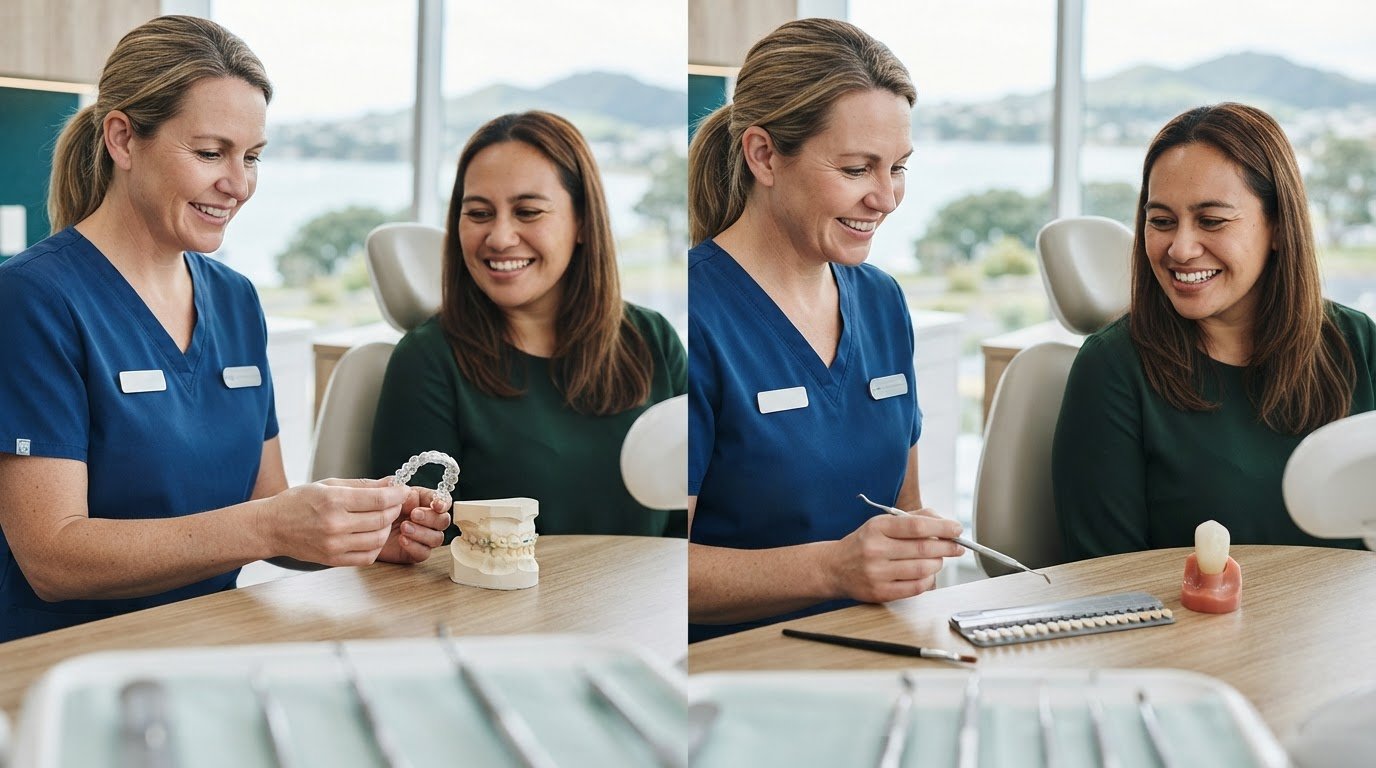
If alignment is affecting your confidence, ask a dental professional whether orthodontic care may suit your circumstances. Dental Plus offers Invisalign and traditional braces. Which, if either, is appropriate depends on an individual assessment. You don’t need to settle on a treatment before understanding your options. The Invisalign guide for Mount Maunganui offers more background for that discussion.
As you explore how to get a confident smile, ask what each option involves, what alternatives exist and whether doing nothing for now is reasonable. Comparing these points can help you choose a next step that fits your health needs and personal preferences.
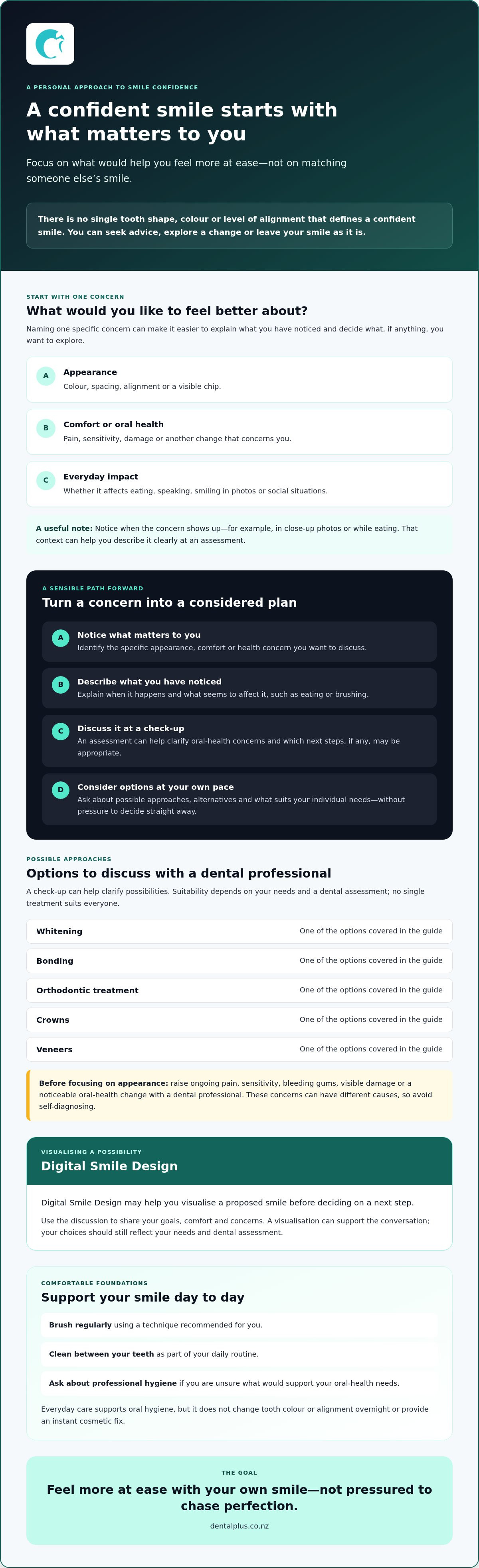
Follow these steps to turn a smile concern into a practical plan
A clear plan can make a smile concern feel more manageable. You don’t need to arrive knowing which treatment you want. Start with what’s bothering you, then use a professional assessment to understand your choices and decide what feels right.
Name the concern. Write down what you’ve noticed and when it affects you.
Set your priorities. Consider what matters most, such as comfort, appearance or keeping care simple.
Arrange an assessment. Share your concern and ask what the clinician finds.
Compare options. Discuss suitability, alternatives, maintenance and possible limitations.
Take time to decide. Ask follow-up questions before choosing whether to proceed.
This sequence turns “how to get a confident smile” into manageable conversations, rather than a decision you need to make all at once.
What should you ask at a smile consultation?
Bring a short list of questions, or make notes on your phone. You could ask: What have you found? Are there any health needs to address first? Which options may suit my goals, and what are the trade-offs? What appointments, maintenance or follow-up might be involved? Are there alternatives, limitations or reasons to wait? Clear answers help you weigh up the choices without relying on assumptions.
How can you make decisions at a comfortable pace?
A consultation is a chance to understand your options, not an obligation to begin treatment. It’s reasonable to take time, ask for clarification or return with further questions. If anxiety, comfort or a previous dental experience is on your mind, mention it early so the clinician can discuss ways to support you, including whether sedation is appropriate.
There’s no need to minimise your concerns. Telling the dental team what helps you feel informed and at ease can make the conversation more useful, whether you’re exploring a small change or simply seeking advice.
If you’d like to explore what may be relevant to your goals, explore Dental Plus care options in Mount Maunganui and Tauranga.
Explore personalised smile planning with a Tauranga dental team
Once you’ve clarified your priorities, a conversation with a dental team can connect them with suitable next steps. At Dental Plus in Mount Maunganui, Tauranga, patients can discuss general dental, cosmetic and orthodontic options at the same practice. The focus is on understanding what you’d like to feel more comfortable about, then explaining relevant possibilities based on your needs.
How can Digital Smile Design support a clearer conversation?
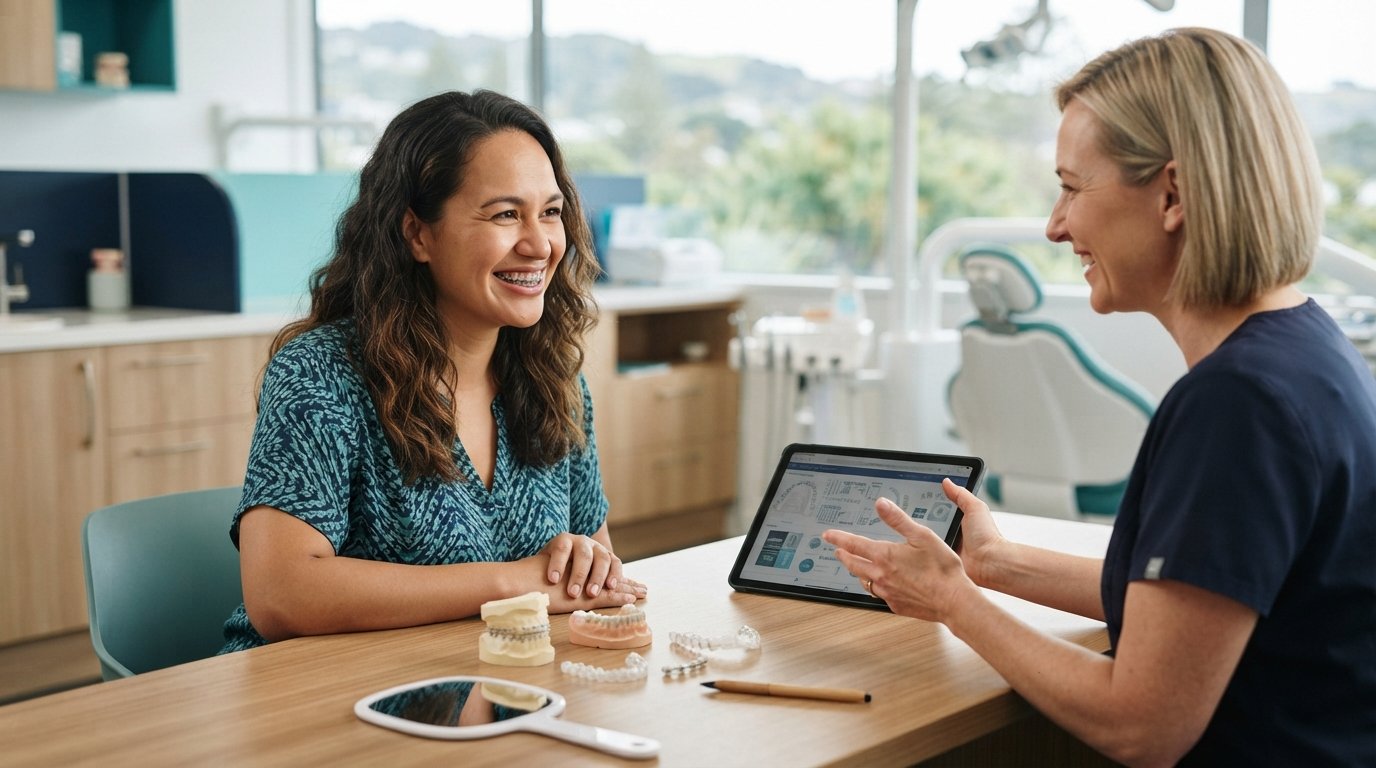
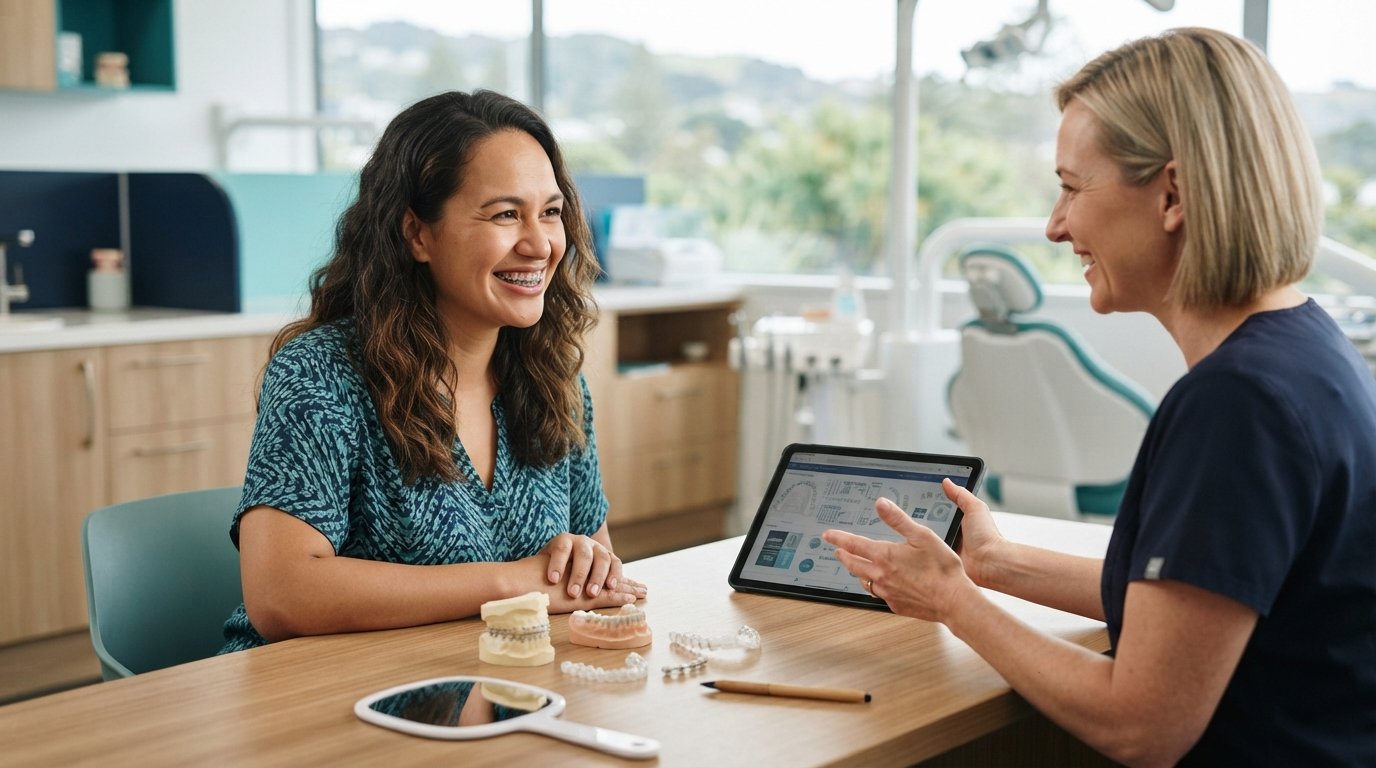
Digital Smile Design can help you visualise a proposed smile before treatment begins. Seeing a possible direction may make it easier to explain what you like, what you’d change or what you’re unsure about. It’s a planning aid for discussion, not a promise of a particular final result. Ask how the visualisation relates to your options and what clinical assessment is needed before making a decision.
You can use that conversation to keep your preferences at the centre. For example, ask how a suggested approach relates to your concern, what alternatives could be considered and whether any oral-health needs should be addressed first. You don’t need to arrive with a finished plan. Your questions and preferences belong in the care conversation.
What if you feel nervous about discussing your smile?
It’s okay to feel unsure or anxious. Describe your concerns at your own pace, and let the team know if a previous dental experience affects how you feel. You can ask for information to be explained clearly and take time to think before making a decision. If dental anxiety is a concern, Dental Plus offers sedation. Discuss with the team whether it’s suitable for you.
Your questions, comfort and preferences are part of the plan, not an interruption to it. Whether you’re exploring a change or simply want to understand your choices, the next step can be a conversation rather than a commitment to treatment.
If you’re ready to talk through your priorities, talk with Dental Plus about your smile goals.
Take a comfortable next step towards your smile goals
Knowing how to get a confident smile starts with understanding what matters to you. A concern about colour or alignment may call for a different conversation from discomfort or damage, and treatment isn’t automatically the answer. A dental assessment can help clarify your options and give you time to consider what feels right.
At Dental Plus in Mount Maunganui, Tauranga, you can discuss general, cosmetic and orthodontic care with the team. Digital Smile Design may help you visualise a proposed smile before treatment, while sedation is available to discuss if comfort or dental anxiety is a concern. Neither means you need to commit to a particular plan.
If you’re ready to talk through your priorities and ask questions at your own pace, talk with Dental Plus about your smile goals. Your next step can simply be a conversation. Contact Dental Plus to discuss your smile goals in Mount Maunganui or Tauranga.
Frequently Asked Questions
Is it possible to get a more confident smile without cosmetic dentistry?
Yes, you can feel more confident without cosmetic dentistry. Understanding your oral health, addressing discomfort and finding manageable daily care habits may help you feel more at ease. Some people choose cosmetic treatment, while others feel reassured after a check-up or a conversation about a concern. A dentist can explain whether treatment is relevant to your needs, but you don’t have to pursue cosmetic changes to have a healthy, confident smile.
How can I feel more confident about my smile?
Start by identifying what specifically makes you self-conscious, such as tooth colour, alignment, damage or discomfort. If you notice symptoms or a change, arrange a dental assessment. Then discuss your goals, possible options and any limitations with a dental professional. Learning how to get a confident smile doesn’t require choosing a treatment on your own. Taking one informed step at a time can make the process feel more manageable.
Can a dentist help me decide what would improve my smile?
Yes, a dentist can assess your oral health, listen to what you’d like to change and explain options that may suit you. The right approach depends on your teeth and gums, your preferences and the clinical findings. At Dental Plus in Mount Maunganui, Tauranga, you can discuss general, cosmetic and orthodontic care. Ask about alternatives, maintenance and limitations, then take time to consider the information. A consultation doesn’t obligate you to proceed.
What happens if I feel embarrassed about my teeth?
You can tell the dental team that you feel self-conscious or nervous, and begin with the concern that matters most to you. You don’t need to explain everything at once. A respectful conversation can help the clinician understand your priorities and discuss possible next steps. If anxiety makes attending difficult, ask whether comfort options, including sedation where appropriate, can be discussed. Sharing what worries you can help the team respond thoughtfully.
How do I know whether whitening, bonding or veneers might suit me?
These options address different concerns, so they aren’t interchangeable. A dental professional needs to assess your oral health, understand your goals and explain the potential benefits, limitations and maintenance involved. Avoid choosing based only on photographs or online descriptions, as they can’t account for your individual needs. A personalised discussion can clarify whether whitening, bonding or veneers may be suitable, or whether another approach, including no cosmetic treatment, makes more sense.
Can Digital Smile Design show exactly what my final smile will look like?
No, Digital Smile Design helps you visualise a proposed smile and discuss your preferences before treatment, but it can’t guarantee an exact final result. Treat it as a planning and communication aid. Ask your dentist what the visualisation represents, how it relates to the proposed treatment and what factors may affect the outcome. This gives you a clearer basis for questions and decisions without mistaking a preview for a promise.
Comments