
How Much Does It Cost to Maintain Teeth Whitening Results?

The cost of keeping a brighter smile isn’t determined by the whitening session alone. How to maintain teeth whitening results also shapes ongoing care: daily habits, professional cleaning and the timing of any dentist-approved touch-ups all play a part. Results can last from six months to three years, depending on factors such as diet and exposure to staining.
It’s reasonable to want a clear idea of the ongoing commitment before choosing whitening. There isn’t one maintenance cost that suits everyone: some people may need touch-ups sooner, while consistent oral care can help preserve results.
This article explains how stain-causing foods and drinks, brushing and flossing, regular dental visits and professional touch-ups can affect whitening longevity and maintenance costs. You’ll also learn when ongoing professional care may be useful, so you can make a considered plan for maintaining your smile.
Table of Contents
1. How a dentist can help manage stain-causing foods, drinks and tobacco
Whitening doesn’t stop new stains from forming. Coffee, tea and tobacco can gradually dull a bright smile, particularly when they’re part of your daily routine. A dentist can discuss how these habits affect your teeth and help you find practical ways to reduce staining without expecting you to avoid every favourite drink.
The first 48 hours after whitening deserve particular care. Stick to light-coloured foods during this period, and avoid coffee, especially in the first few days. If you do drink coffee later, rinsing your mouth with water can help wash away dark pigments before they settle on teeth. A straw can also reduce contact between staining drinks and your front teeth.
Timing matters after a stain-causing drink or food. Wait 30 minutes to 1 hour before brushing, especially after acidic items, because brushing straight away may be uncomfortable for enamel. Wait at least 24 hours after whitening before using mouthwash. A dentist can help tailor this advice to your routine, including how often you drink coffee or tea and whether acidic drinks are common.
Tobacco is another source of staining, so reducing or avoiding it can help preserve whitening results. A dentist can assess whether discolouration is on the tooth surface and discuss how professional dental hygiene may help manage surface stains. Cleaning can also remove plaque, which may collect pigments from food and drinks. It won’t change every cause of tooth colour, so an assessment helps set realistic expectations.
Stains can return because whitening changes the appearance of natural teeth, not the habits that expose them to pigments. Brushing and flossing help remove plaque, but don’t prevent all discolouration from coffee, tea or tobacco. The European Commission notes that whitening doesn’t usually change the colour of fillings and other restorative materials. Restorations may therefore look different beside newly whitened teeth, so a dentist can explain what to expect before further treatment.
Be cautious about repeating whitening strips when stains reappear. Overuse can cause tooth sensitivity and may harm the gums. A dentist can distinguish surface staining from other causes of colour changes, then advise whether professional cleaning, a change in habits or a whitening review is more appropriate. This makes maintenance more considered than repeating a whitening product whenever teeth look less bright.
2. Daily brushing and flossing
Brushing twice a day helps remove plaque that can hold stains against tooth surfaces. Flossing once daily clears plaque and food particles between teeth, where a toothbrush may not reach. These habits support a clean, bright appearance, but don’t prevent every stain from coffee, tea, berries or smoking.
A dental professional can review your brushing technique and recommend a gentle approach if your teeth feel tender. Using a soft-bristled toothbrush with light pressure can help avoid irritating sensitive teeth and gums. Ask about fluoride toothpaste suited to your needs, especially if whitening has left your teeth uncomfortable.
Tooth sensitivity after whitening normally lasts a day or two. Using toothpaste for sensitive teeth for a week before and after whitening can help reduce discomfort. A dentist can help you decide whether this toothpaste is appropriate and whether to adjust your brushing routine while tenderness settles.
Fluoride toothpaste supports everyday oral care after whitening. Use it for regular brushing, and continue flossing once a day to clear plaque between teeth. If a new toothpaste causes discomfort, a dental professional can help identify a gentler option. Consistency matters more than adding extra products to keep your smile bright.
Whitening toothpaste may help manage surface stains, but use it in moderation. For long-term maintenance, the guidance recommends using it once or twice a week. A dentist can discuss whether this suits your teeth and existing dental work. Frequent or unsuitable whitening products may irritate sensitive teeth, so using them more often isn’t automatically better.
Replacing your toothbrush every 3 months, or when its bristles fray, helps maintain effective cleaning. A dentist or hygienist can assess your brush and show how to reach the gumline and spaces between teeth. This practical review can make brushing and flossing more thorough without encouraging harder scrubbing.
Frequent whitening can cause sensitivity; overusing whitening strips may also harm gums. Professional whitening gel lifts stains without removing tooth enamel, but that doesn’t make repeated treatment necessary. In a 3-month trial, 44% of subjects using 6% hydrogen peroxide strips reported sensitivity, according to the European Commission.
Whitening changes the colour of natural teeth, but doesn’t usually change fillings or other restorative materials, according to the European Commission. Crowns, veneers and implants may therefore remain a different shade from whitened teeth. A dental professional can assess your existing restorations and explain how they affect the overall result.
If plaque or surface stains make daily cleaning less effective, professional dental hygiene can support your routine. A hygienist can clean areas that are difficult to reach with brushing and flossing, then offer practical guidance for keeping your smile bright between visits.
3. Regular dental check-ups and professional cleaning
Regular dental check-ups help assess changes in tooth colour alongside oral health. A dentist can look for surface stains, check existing restorations and discuss whether whitening remains appropriate. This matters because whitening affects natural teeth differently from fillings and other restorative materials. A review can also help distinguish new staining from a colour difference between teeth and restorations.
Professional dental cleaning can remove plaque and some surface staining that brushing may not lift. Cleaning before whitening is useful because it helps whitening gel reach the tooth rather than plaque. It also gives the dentist a clearer view of the natural tooth shade and can identify areas that need attention before whitening begins.
Professional dental cleanings every six months can help manage stains after whitening. At each visit, the dental team can assess how lifestyle habits, such as regular coffee or tea, relate to visible discolouration. They can also discuss whether cleaning is enough or a whitening review is more suitable. The right approach depends on the type and location of the staining.
Professional in-office whitening results are estimated to last 1 to 3 years. Lifestyle, diet and exposure to staining agents affect how long the brighter shade remains. This is a broad estimate, not a fixed timetable for every smile. A check-up can help track gradual changes and discuss maintenance before staining becomes more noticeable.
At-home options have different estimated durations. At-home whitening options may produce results that last for different lengths of time, depending on the method and individual factors. These figures describe the reported lifespan of results, not how long a product itself remains usable. The method, stain exposure and daily oral care all influence the outcome.
Professional teeth whitening and at-home products differ in how treatment is planned. A dentist can assess tooth condition, shade and existing dental work before recommending an approach. This is especially relevant if your teeth are sensitive or restorations show when you smile. Home products may be convenient, but they don’t replace an assessment of what causes the discolouration.
Cleaning and whitening serve different purposes. Professional cleaning focuses on plaque and surface stains, while whitening changes the shade of natural teeth. If coffee staining returns, cleaning may help; if the underlying tooth shade has darkened, a dentist can discuss whitening. Keeping these options distinct helps avoid repeating whitening when another form of care may better address the concern.
For a maintenance plan, regular check-ups and cleaning let the dental team compare changes over time. They can consider stain exposure, tooth sensitivity and the condition of restorations together. That assessment helps guide your next step, rather than relying on colour alone.
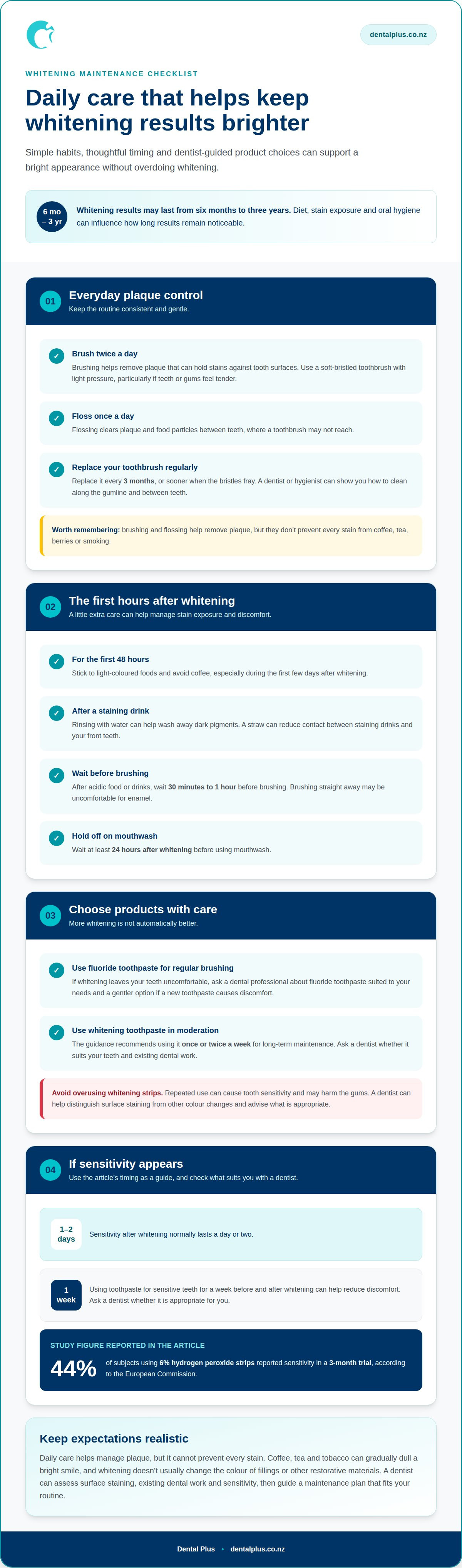
4. Dentist-approved whitening touch-ups
A whitening touch-up can refresh colour as discolouration gradually returns. The right timing depends on stain exposure, including coffee, tea and tobacco. A dentist can compare your current shade with your earlier result and consider whether a touch-up is suitable. This assessment helps distinguish new staining from other changes in tooth colour.
There isn’t one schedule for every smile. For people with low coffee, tea and smoking exposure, touch-ups may be needed every 12-18 months. People who smoke or have heavy stain exposure may need whitening maintenance every 6 months or as advised. These intervals are guides, not a reason to repeat treatment automatically.
After an initial whitening treatment, wait at least several weeks before a touch-up. A common interval is 2-4 weeks or more, depending on dental advice. This allows the dentist to consider sensitivity and the shade achieved before planning further treatment. If teeth remain sensitive, that information matters when deciding whether and when to whiten again.
Custom-fitted whitening trays used once every few months can help maintain results. A dentist can assess the tray and explain how it fits into your maintenance plan. Avoid increasing use simply because your teeth look less bright. More frequent whitening isn’t necessarily appropriate, particularly if you’ve experienced sensitivity after previous treatment.
Different touch-up approaches have different suggested intervals. At-home touch-ups are recommended every 4-6 months in some guidance, while other advice suggests considering treatments every few months. A whitening booster is also suggested every 2-3 weeks. These schedules don’t form one combined routine. Your dentist can select an approach based on your treatment history and staining pattern.
A professional review can also identify whether the concern is surface staining or a change in natural tooth colour. Professional cleaning may help with surface stains, while whitening is intended to change natural tooth shade. The distinction matters: repeating whitening won’t address every cause of discolouration, and restorations may not respond like natural teeth.
Before recommending a touch-up, a dentist can consider your previous whitening, current sensitivity and exposure to staining. They can also discuss how brushing and regular dental care fit into the plan. For example, someone with low stain exposure may need less frequent maintenance than someone who smokes or drinks coffee often.
Follow your dentist’s timing rather than adding extra whitening products between reviews. Frequent or excessive whitening can contribute to sensitivity, and overused whitening strips may harm gums. If discomfort continues beyond a few days after whitening, consult a dentist before considering another touch-up. A measured schedule can help preserve results while limiting unnecessary treatment.
5. How long whitening results last
Whitening results can last from six months to three years. Other estimates place typical results around 6 to 18 months, or six months to two years. These ranges differ because results depend on lifestyle, oral hygiene and exposure to staining. They’re useful guides, not a personal timetable.
Habits affect how quickly colour changes become noticeable. Daily coffee or tea can expose teeth to staining pigments regularly. People who drink coffee or tea daily may need whitening maintenance every 6-12 months. Smoking and other frequent stain exposure can also shorten the time between maintenance needs.
Foods and drinks are only part of the picture. Brushing twice a day helps remove plaque that can hold stains on tooth surfaces. Flossing once daily reaches spaces a toothbrush may miss. These hygiene habits support a cleaner appearance, although they can’t prevent all colour changes.
Professional cleaning and whitening have different roles. Cleaning can remove plaque and some surface stains, while whitening changes the shade of natural teeth. A regular dental check-up helps identify which change is occurring. This distinction matters if teeth look darker despite consistent brushing and flossing.
Your starting shade and the type of discolouration also influence visible results. Stains on the tooth surface may respond differently from colour changes within a tooth. A dentist can assess these differences and discuss the maintenance approach suited to the cause. This helps avoid treating every change as a need for more whitening.
Existing dental work can affect how even the result looks. Whitening doesn’t usually change the colour of fillings and other restorative materials, according to the European Commission. If natural teeth become lighter, a visible filling may look darker beside them. A dentist can consider restorations when discussing expected colour and future treatment.
Track the factors that shape your results: coffee or tea habits, smoking, oral hygiene and visible surface stains. For example, someone who drinks coffee daily may notice colour changes sooner than someone with little stain exposure. These details make a dental review more useful than relying on a general lifespan estimate alone.
When colour begins to fade, a professional assessment can clarify whether cleaning or whitening is the appropriate next step. It can also account for sensitivity and existing dental work. A review of your whitening options can help you plan maintenance around your teeth, habits and desired shade.
Dental Plus: Smile Whitening
Dental Plus offers Smile Whitening for people considering professional whitening or wanting to discuss changes in their results. A Routine Check Up can help assess your teeth and existing dental work, while Professional Dental Hygiene supports care for plaque and surface stains. These services can help clarify whether you’re considering whitening, cleaning or a broader review of your smile.
If staining has returned or you’re unsure whether whitening suits your teeth, Dental Plus can discuss your options and the factors that influence maintenance. A dental assessment can take your oral health and existing restorations into account before you decide on next steps. Contact Dental Plus to discuss Smile Whitening and ongoing care for your smile.
Plan your next step with confidence
Your next step is to shape a maintenance plan around your teeth, habits and priorities. A dental review can help clarify what you want to change and what outcome feels right for you. Understanding how to maintain teeth whitening results is less about pursuing the brightest possible shade and more about choosing care that suits your oral health and smile.
Maintenance costs depend on the care involved, which may include Professional Dental Hygiene, Routine Check Ups, Digital X-Rays or Smile Whitening. The cost depends on your case, and Dental Plus provides a treatment plan with a cost estimate after examination. The assessment and treatment needed will shape the estimate, so you can understand the options before deciding.
Bring your questions about staining, sensitivity or existing dental work to that discussion. A clear goal helps the dental team focus on the care that fits your priorities, rather than adding treatment you don’t need. Contact Dental Plus for advice and take a considered next step towards a smile you feel comfortable sharing.
Frequently Asked Questions
How Much Does Whitening Maintenance Cost?
There isn’t one maintenance fee for everyone. The cost depends on the care recommended after an assessment, such as professional cleaning, whitening or both. Your teeth’s condition and the treatment involved affect the estimate. Dental Plus provides a cost estimate after examination, so you can understand the proposed care before deciding whether it suits your needs.
How often should a dentist provide whitening touch-ups?
A dentist can recommend touch-ups by assessing your current shade, previous treatment and how your teeth responded. Mention any sensitivity or uneven results, as these details can affect the plan. The aim is to address a colour change without treating whitening as an automatic part of every dental visit. Your dentist can also discuss whether cleaning may better address your concern.
What Makes Whitening Stay Or Fade?
Whitening changes the appearance of natural teeth, while later colour changes can have different causes. Surface pigments, changes within a tooth and differences involving dental work may look similar in the mirror but need different approaches. To understand how to maintain teeth whitening results, have the cause of a colour change assessed before choosing further treatment.
Why are my teeth still yellow near the gums?
The colour near your gums may differ naturally from the rest of the tooth, or the area may have a cause that needs assessment. A dentist can examine the gumline and compare it with surrounding teeth to determine whether the appearance relates to surface build-up, natural tooth colour or another change. Avoid trying to whiten only that area yourself, as uneven treatment can make colour differences more noticeable.
How long do professional teeth whitening results last?
Professional whitening results don’t have a fixed expiry date. Published estimates describe a broad range, while your result depends on your teeth and daily exposure to staining. Fading can happen gradually, so a sudden or uneven colour change calls for a dental assessment rather than an automatic touch-up. A dentist can compare the change with your treatment history and explain what may be contributing to it.
How often can a dentist safely whiten your teeth?
There’s no single repeat schedule that suits everyone. Before recommending another treatment, a dentist considers your oral health, previous whitening method and any discomfort or gum irritation. Mention sensitivity, uneven colour or recent dental work during the assessment. These details help the dentist decide whether further whitening is appropriate now or whether another concern should be addressed first.
What foods and drinks can stain teeth after whitening, and what advice can a dentist give about avoiding them?
Dark-coloured drinks and tobacco can contribute to visible staining. Rather than asking you to give up every favourite food or drink, a dentist can help identify which habits are most relevant to your teeth and discuss manageable changes. For example, you could describe your usual coffee routine and ask which small adjustments might fit comfortably into your day.
How can a dental professional advise you on brushing, flossing and mouthwash to maintain whitening results?
A dental professional can tailor advice to your tooth sensitivity, gumline and hard-to-reach areas. They can review your current products and routine, then suggest adjustments that support oral hygiene without adding unnecessary whitening steps. If you’re unsure how to maintain teeth whitening results alongside everyday care, describe what you currently use and any discomfort. That gives the dentist a practical starting point.
Comments