
Teeth whitening for sensitive teeth: options and risks in NZ

Sensitive teeth don’t automatically rule out whitening, but it’s important to understand what’s causing the sensitivity first. For teeth whitening for sensitive teeth in NZ, DIY kits must contain less than 8% hydrogen peroxide, the active ingredient in most whitening products. A dentist can check for cavities or failing dental work before whitening, as bleaching agents may irritate or damage vulnerable teeth.
It’s understandable to want a brighter smile without triggering discomfort. A lower-strength peroxide gel may be gentler, but the right approach depends on your teeth and how they respond. This guide explains how whitening works, what may help limit sensitivity and what risks to consider, so you can discuss suitable options with confidence.
Table of Contents
How effective are teeth whiteners?
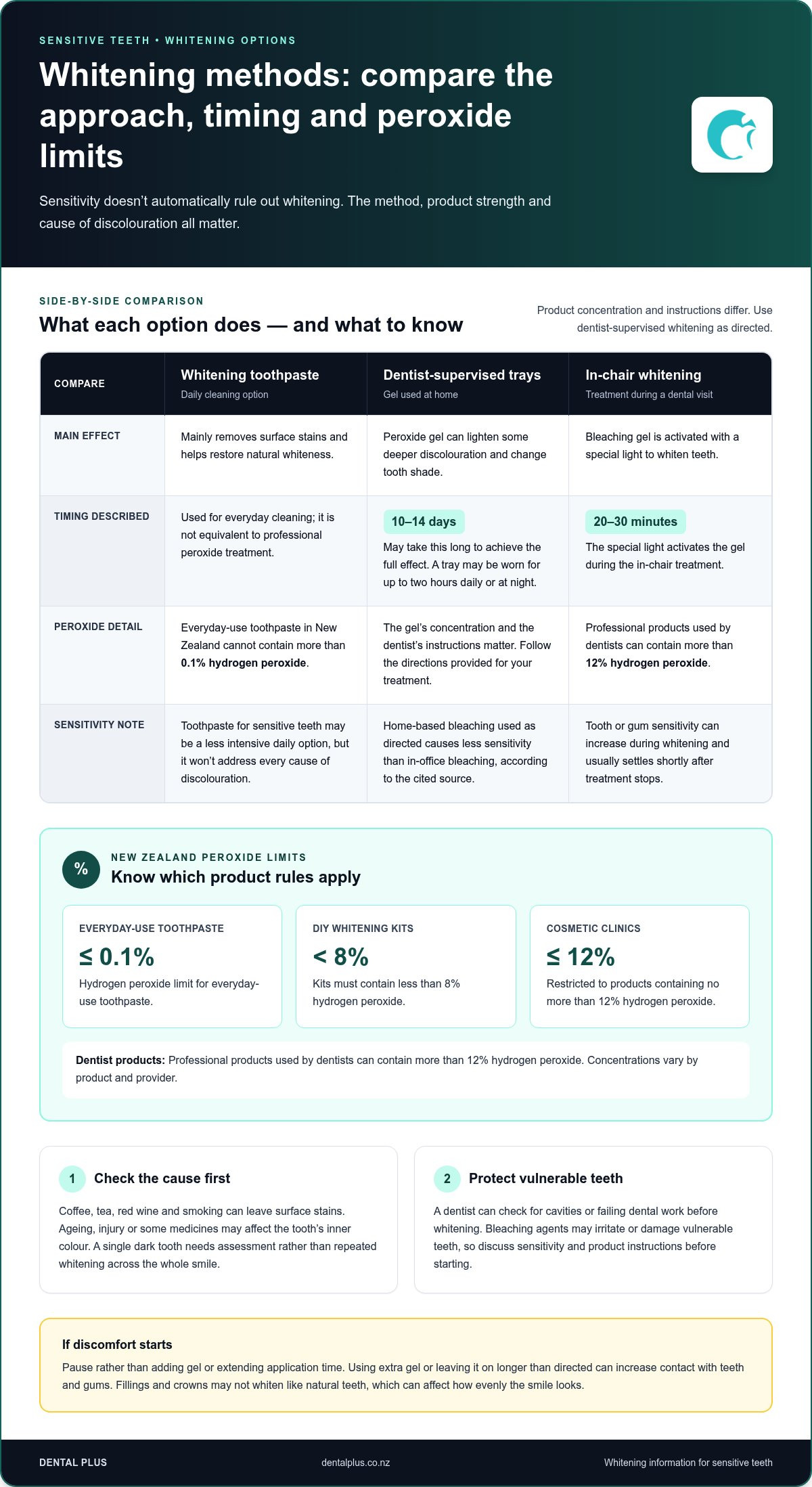
Whitening works best when the cause of discolouration is understood first. In New Zealand, dentist-supervised trays may take 10 to 14 days to achieve their full effect, while in-chair whitening uses a special light to activate gel for 20 to 30 minutes.
Tooth Staining and Whitening Suitability
Tooth staining is a colour change caused by surface deposits or changes within the tooth. Coffee, tea, red wine and smoking can leave surface stains, while ageing, injury or some medicines may change the tooth’s inner colour. The distinction matters: whitening toothpaste mainly removes surface marks, while peroxide treatment can lighten some deeper discolouration.
Before choosing a method, consider the stains’ colour and pattern, and whether one tooth looks different from the others. A dentist should identify the cause before whitening in New Zealand, because the diagnosis affects whether treatment is suitable. For example, a single dark tooth needs assessment rather than repeated whitening across the whole smile.
Whitening Toothpaste and Professional Treatment
Whitening toothpaste typically helps remove surface stains and restore teeth’s natural whiteness while keeping them clean. It isn’t equivalent to professional peroxide treatment, which changes tooth shade through bleaching. For example, toothpaste may help with tea stains, while dentist-supervised trays can provide a broader whitening effect over 10 to 14 days.
Toothpaste marketed for sensitive teeth can be a less intensive option for daily cleaning, but it won’t treat every cause of discolouration. Charcoal toothpaste is not a peroxide treatment; some formulas may feel abrasive, which can be uncomfortable for sensitive teeth. In New Zealand, everyday-use toothpaste cannot contain more than 0.1% hydrogen peroxide.
Dentist-Supervised Trays and In-Chair Whitening
Dentist-supervised trays deliver whitening gel at home, while in-chair treatment applies gel during a dental visit. For sensitive teeth, home-based bleaching used according to the manufacturer’s instructions causes less sensitivity than in-office bleaching, according to the U.S. National Library of Medicine. A dentist-supervised tray may be worn for up to two hours daily or at night.
In-chair whitening uses a special light to activate the gel for 20 to 30 minutes. DIY kits in New Zealand must contain less than 8% hydrogen peroxide; professional products used by dentists can contain more than 12%, while cosmetic clinics are restricted to products with no more than 12%. Follow a dentist’s instructions because products differ in form and concentration.
Whitening Results and Repeat Treatment
Whitening results can fade as new surface stains build up. The outcome depends partly on habits such as drinking coffee or tea and smoking. Whitening toothpaste may help remove fresh surface marks, but it won’t maintain every result from peroxide treatment. Fillings and crowns also won’t whiten like natural teeth, so they may look darker by comparison.
There’s no repeat schedule that suits everyone: the starting shade, cause of staining, treatment method and return of surface stains all matter. Don’t treat sensitivity as a reason to add more gel or repeat treatment sooner. Tooth and gum sensitivity can increase during whitening and usually settles shortly after treatment stops.
Sensitive whitening treatment and lower-strength hydrogen peroxide gel
Hydrogen peroxide is the active ingredient in many whitening products, but its concentration and use affect comfort. If you’re considering teeth whitening for sensitive teeth in NZ, discuss the product’s strength and instructions with a dentist before starting.
How Hydrogen Peroxide Whitening Works
Hydrogen peroxide whitening uses a bleaching gel to change the appearance of tooth stains. The peroxide reacts with colour compounds in teeth, making discolouration less noticeable. This differs from toothpaste, which typically removes surface stains rather than bleaching tooth colour.
Products contain peroxide in different forms and concentrations, so follow their instructions carefully. For dentist-supervised whitening in New Zealand, use the directions provided by your dentist. Using extra gel or leaving it on longer than directed doesn’t make treatment safer and can increase contact with teeth and gums.
Lower-Strength Gel for Sensitive Teeth
Lower-strength peroxide gel may help limit discomfort for people with sensitive teeth. Its effect depends on the product concentration and how it’s used, so a dentist can explain the directions for supervised treatment. In New Zealand, DIY whitening kits must contain less than 8% hydrogen peroxide.
Professional products used by dentists can contain more than 12% hydrogen peroxide. Cosmetic clinics and teeth-whitening services are restricted to products containing no more than 12%. These differences make it useful to understand the product type, who provides the treatment and which instructions apply.
Choosing teeth whitening for sensitive teeth in NZ means weighing the treatment method and peroxide concentration. A lower-strength product may be gentler, but it still needs to be used exactly as directed.
Peroxide Sensitivity and Gum Irritation
Peroxide whitening can increase tooth or gum sensitivity, and the product may irritate gums or the mouth lining. Sensitivity usually settles shortly after treatment stops. For example, discomfort after using a whitening tray is a reason to pause, not to add gel or extend application time.
Gum irritation can occur if gel spreads beyond the teeth. The tray’s fit and the amount of gel used affect where the product makes contact. Follow the product directions and your dentist’s instructions, because whitening products differ in concentration and form. A dentist can assess whether sensitivity relates to another dental concern.
Reducing Sensitivity Around Whitening
To help reduce sensitivity, tell your dentist about previous discomfort before whitening and follow the product directions during treatment. Use only the instructed amount of gel, leave it on for the directed time and don’t combine whitening products. These steps help avoid unnecessary peroxide exposure.
If discomfort develops, stop treatment and allow sensitivity to settle. It usually eases shortly after whitening stops. Discuss ongoing sensitivity with a dentist before restarting, particularly if one tooth is affected. For tailored advice about dentist-supervised whitening, consider a professional discussion before beginning treatment.
Discussing whitening options with a dentist
For sensitive teeth in New Zealand, discuss whitening options with a dentist rather than relying on one product for everyone. A dentist can consider your sensitivity, the cause of discolouration and the peroxide product before you begin.
Start by describing when sensitivity occurs, such as with cold water, brushing or sweet foods. Say whether it affects one tooth or several, and whether it began after dental treatment. These details help distinguish general sensitivity from discomfort linked to a particular tooth. If whitening has caused pain before, explain which product you used and how you applied it.
Ask how the whitening method suits your teeth. Dentist-supervised at-home whitening may involve a tray worn for up to two hours daily or at night. The peroxide form and concentration determine the instructions, so clarify how much gel to use, how long to wear the tray and what to do if discomfort develops. Don’t extend application time to seek faster results.
A dentist should identify the cause of tooth discolouration before treatment, because the diagnosis affects whether whitening is suitable. Explain what you’ve noticed, such as even yellowing or one dark tooth, and mention any fillings or crowns. Whitening can make existing dental work look darker by comparison, so discuss how that may affect the final appearance.
Ask what the chosen approach can reasonably address. Surface stains and deeper discolouration don’t respond in the same way, and whitening products aren’t interchangeable. In New Zealand, follow your dentist’s instructions because products contain hydrogen peroxide in different forms and concentrations. Understanding the directions helps you avoid combining products or using them beyond their intended application.
Before leaving the appointment, make sure you understand the next steps. Confirm the application instructions, how to manage temporary sensitivity and when to stop treatment. Tooth and gum sensitivity can increase during whitening and usually settles shortly after treatment stops. If symptoms persist or affect one tooth, contact a dentist instead of restarting the gel.
A useful discussion is specific, not brand-led. Bring the whitening product packaging if you already have a kit, and point out its peroxide concentration and directions. The dentist can relate those details to your sensitivity and dental condition, then explain an appropriate approach. This helps clarify your decision before treatment begins.
Don’t rely on one whitening product for everyone or choose by brand alone. A dentist can assess your sensitivity and dental condition, then explain which whitening approach is appropriate.
Risks of bleaching with cavities or failing dental work
Don’t apply whitening gel over an untreated cavity or cracked tooth. Bleaching agents can enter cracks or cavities, damage the tooth pulp, irritate gums and the mouth lining, and weaken filling materials. A dentist should identify the cause of discolouration before whitening, so hidden problems aren’t mistaken for staining.
Consider a tooth that gives a sharp twinge when you drink something cold or hurts when you bite. Those symptoms don’t prove there’s a cavity, but they’re worth mentioning before whitening. A dentist can examine the tooth and assess whether decay, a crack or another concern needs attention first.
A failing filling can leave a gap where whitening gel reaches areas it shouldn’t. Peroxide may irritate nearby tissues and weaken filling material, while the tooth’s existing sensitivity may become more noticeable. A loose or damaged filling can also affect how securely a whitening tray fits over that tooth.
Cracks matter for a similar reason. Even a small crack can let gel enter the tooth, where it may affect the pulp. If one tooth feels different from the rest or has a visible chip, don’t treat it as ordinary staining. Point it out during a dental assessment before using bleaching products.
Existing dental work also affects the appearance of the result. Whitening doesn’t lighten fillings or crowns like natural teeth, so they may look darker after surrounding teeth become brighter. For example, a filling in a front tooth could look uneven in colour after whitening, even if the natural tooth responds.
Before whitening, tell the dentist about previous fillings, crowns, cracks, dental pain and sensitivity. They can examine your teeth, identify causes of discolouration and assess whether dental work is intact. If they find a concern, addressing it before bleaching helps avoid exposing a vulnerable area to peroxide.
If you’ve started whitening and develop pain or gum irritation, stop applying the product. Don’t add extra gel or resume treatment while discomfort remains. Arrange a dental assessment, especially if the pain is focused on one tooth or occurs when biting. These details help the dentist distinguish a whitening reaction from a cavity or failing restoration.
The safest sequence is straightforward: describe any symptoms, have your teeth and existing dental work assessed, then discuss whitening after concerns are addressed. This matters for sensitive teeth because peroxide can reach vulnerable areas through cracks or cavities. A pre-whitening check helps clarify whether bleaching is appropriate and how dental work could affect the final colour.
What teeth whitening options are suitable for sensitive teeth in New Zealand?
The suitable option depends on the staining, your sensitivity and the whitening product. For teeth whitening for sensitive teeth in NZ, compare toothpaste, home kits and dentist-supervised treatment by how they work and their peroxide concentration.
Match the method to the type of stain
Whitening toothpaste can help remove surface stains, such as marks from tea or coffee, but it doesn’t bleach deeper discolouration. If your teeth look darker despite regular brushing, toothpaste may not address the cause. A dentist can assess the colour change and explain whether whitening is suitable.
Before choosing peroxide treatment, describe your symptoms to a dentist. Explain whether cold drinks trigger discomfort or one tooth feels different. This helps distinguish general sensitivity from pain linked to a particular tooth. Whitening changes tooth colour but doesn’t treat the cause of pain, so assess cavities or failing dental work first.
Compare home and dentist-supervised options
New Zealand DIY whitening kits must contain less than 8% hydrogen peroxide. That limit doesn’t mean every kit suits sensitive teeth; the instructions and your dental condition still matter. Don’t combine products or leave gel on longer than directed. A kit’s concentration alone doesn’t establish how comfortable it will feel.
Professional products used by dentists can contain more than 12% hydrogen peroxide, while cosmetic clinics and teeth-whitening services are restricted to products containing no more than 12%. A dentist-supervised home tray is another option, with use directed for up to two hours daily or at night.
In-chair whitening uses gel activated by a special light for 20 to 30 minutes. If you’re weighing teeth whitening for sensitive teeth in NZ, compare this approach with a home plan’s instructions and your ability to pause treatment. Discuss your sensitivity with a dentist rather than choosing a method based on speed alone.
Choose a cautious starting point
If sensitivity is your main concern, ask about lower-strength peroxide gel and its directions. Product strength, application time and contact with gums all affect exposure. Stop using a product if sensitivity develops, and don’t restart while discomfort continues. A dentist can help you understand what to do next.
Whitening toothpaste is a less intensive option for surface stains, while peroxide treatment is designed to bleach tooth colour. Neither changes fillings or crowns like natural teeth. For example, a visible filling may look darker beside whitened teeth, so include existing dental work in your decision.
To compare options for your teeth, discuss whitening with a dentist before starting a kit or treatment.
Dental Plus: Professional Dental Hygiene
Dental Plus offers Professional Dental Hygiene and Routine Check Ups as useful steps before considering whitening. If you have sensitive teeth, a check-up can help identify concerns such as cavities or damaged dental work that need attention before bleaching. Digital X-Rays are also available when they form part of your dental assessment.
Professional Dental Hygiene can help remove surface build-up, while a check-up gives you the opportunity to discuss sensitivity and whitening suitability with a dentist. This is especially relevant if one tooth feels different or you’ve experienced discomfort during previous whitening.
Contact Dental Plus to discuss a check-up and your whitening questions.
Choose a whitening plan that feels manageable
A brighter smile shouldn’t come at the cost of comfort. For teeth whitening for sensitive teeth in NZ, start by discussing your priorities, previous experiences and what you’d like to change. That helps you make a considered choice instead of rushing into treatment based on a product label or someone else’s result.
Think about the outcome you want, too. Perhaps you’re hoping for a subtle lift or a more noticeable change. Sharing that goal, along with any concerns about discomfort, gives your dentist useful context when discussing an approach that suits you. Take time to understand the options and decide what feels right before beginning.
If you’re ready to talk through whitening, contact Dental Plus about whitening. A clear conversation is a positive first step towards making a confident choice for your smile.
Frequently Asked Questions
Should I visit the dentist first?
Yes, arrange a dental assessment before whitening, particularly if you already have sensitivity or previous treatment caused pain. Tell the dentist which teeth react and what triggers it, such as cold drinks or brushing. If you’ve bought a strip or gel, bring its packaging so you can discuss the ingredients and directions. This gives the dentist useful context to assess suitability and identify concerns needing attention first.
What causes staining?
Staining can come from surface deposits or colour changes within a tooth. Tea, coffee and smoking can leave marks on enamel; ageing, injury or some medicines can affect colour from within. A single dark tooth differs from even discolouration across your smile. Note when you first saw the change and whether it affects one tooth, then share those details with a dentist to help identify its likely cause.
Will my teeth become sensitive?
Whitening can cause temporary tooth or gum sensitivity. If discomfort begins, stop using the product rather than increasing or repeating the application. Sensitivity usually settles shortly after treatment stops. A sharp feeling in one tooth, pain on biting or discomfort that continues after stopping deserves dental assessment. Don’t automatically assume these symptoms are a normal whitening response, especially if they began before treatment.
Are peroxide whitening strips or gels safe for people with sensitive teeth?
Peroxide strips or gels aren’t automatically suitable just because they’re sold for home use. In New Zealand, DIY whitening kits must contain less than 8% hydrogen peroxide. Read the package directions and use only the stated amount and application time. A strip overlapping onto gums, or gel used alongside another whitening product, can increase irritation. Discuss recurring sensitivity with a dentist before using peroxide.
What are the risks and side effects of whitening sensitive teeth?
The main side effects include increased tooth sensitivity and gum irritation; peroxide can also irritate the mouth lining. If gel reaches a cavity or crack, it can damage the tooth pulp and weaken filling materials. Whitening doesn’t change fillings or crowns like natural teeth, so they can look darker by comparison. Stop applying the product if discomfort develops, and seek dental advice if it persists.
When should I see a dentist before whitening, such as with cavities, gum disease, or exposed roots?
See a dentist before whitening if you suspect a cavity, have a cracked tooth or failing filling, or notice gum concerns or exposed roots. A dentist can assess these issues and explain how they affect whitening suitability. Don’t apply peroxide to a painful tooth or irritated gums while arranging an assessment. Bring any whitening product packaging and describe your symptoms, including when they occur and which teeth are affected.


Comments