
Long-term dental crown care: Daily care and warning signs

A dental crown is a fitted covering that restores and protects a tooth. Long-term care for dental crowns means brushing and flossing carefully, attending regular dental check-ups and watching for changes in comfort or fit. With proper care, crowns typically last 5 to 20 years, depending on their material and how they’re looked after.
A crown may feel like a finished solution, but the tooth and gum around it still need attention. Everyday habits matter, and a crown that feels different or becomes uncomfortable shouldn’t be ignored.
This guide explains how crown material and tooth location affect care, what to include in your daily oral hygiene routine, and which warning signs call for a dental assessment. You’ll also learn how regular check-ups help maintain the crown and the natural tooth beneath it, so you can care for your smile with confidence.
Table of Contents
1. What is a dental crown?
A dental crown is a custom-made covering fitted over a tooth to restore its shape, strength and function. It can protect a weakened or damaged tooth while providing a surface for everyday chewing. Unlike a removable denture, a crown is fixed in place. The natural tooth beneath it, and the gum around it, still need attention.
Crown lifespan varies with material, placement, bite forces and oral hygiene. Dental crowns typically last 5 to 20 years, though individual crowns may need attention sooner or remain functional longer. Good long-term care for dental crowns includes cleaning around the crown and keeping regular dental reviews. A dentist can assess its condition and the tooth beneath it.
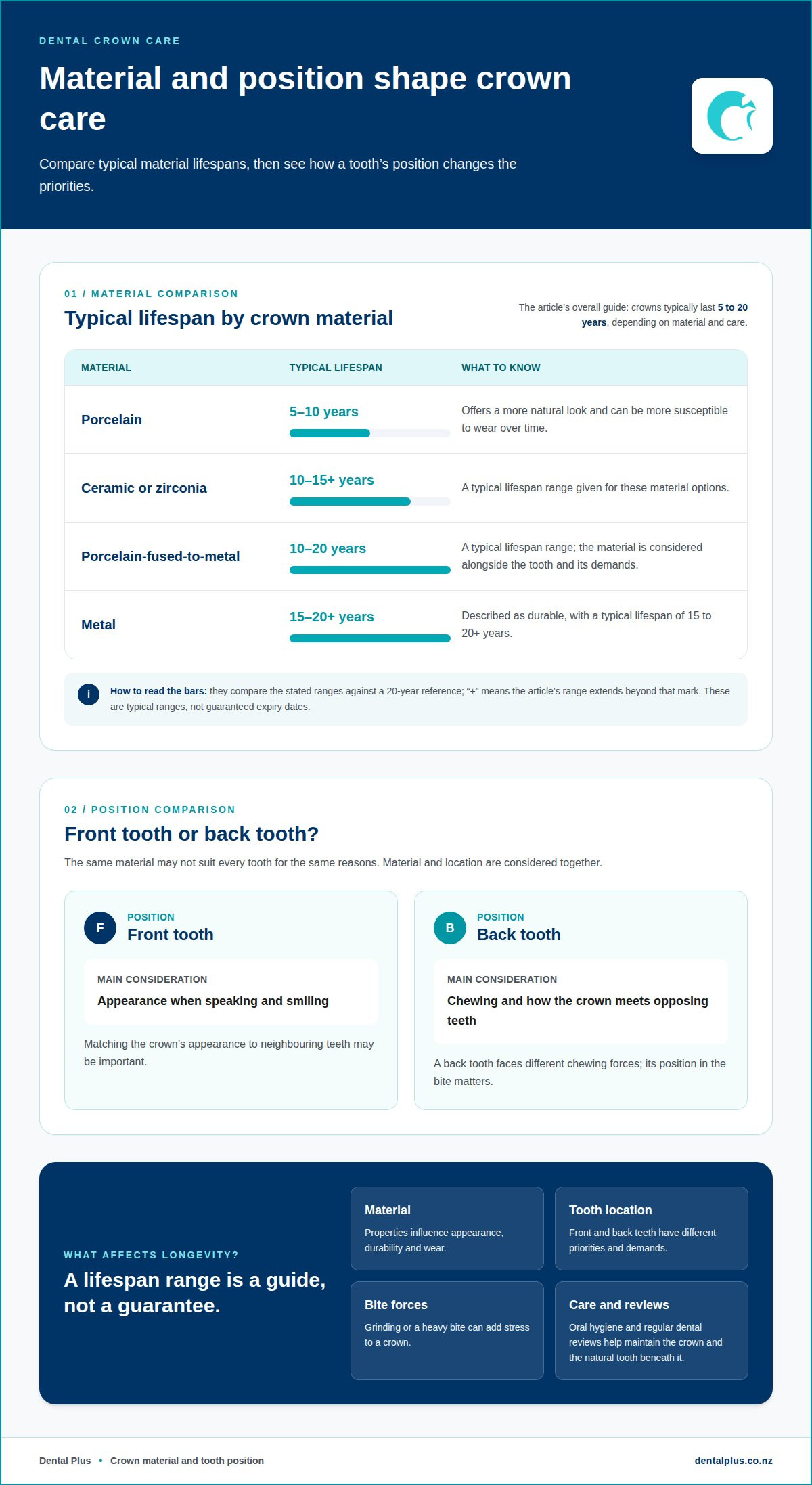
Material gives a useful guide, not a guaranteed expiry date. Porcelain crowns typically last 5 to 10 years. Ceramic or zirconia crowns typically last 10 to 15+ years, while porcelain-fused-to-metal crowns typically last 10 to 20 years. Metal crowns typically last 15 to 20+ years. These differences relate to the material’s properties and the demands placed on the tooth.
Tooth location matters, too. A crown on a back tooth faces different chewing forces from one on a front tooth. Grinding or a heavy bite can add stress, and the crown’s position affects how it meets opposing teeth. During reviews, your dentist can assess these factors alongside wear, gum health and the fit at the crown’s edge.
An implant crown is the visible replacement tooth attached to a dental implant. It may need replacing every 10 to 15 years, while the titanium post can last a lifetime with proper care. These are different components, so an implant crown’s lifespan shouldn’t be confused with the post’s. Regular reviews let a dentist assess the crown and surrounding tissues.
At a review, the dentist checks the crown’s fit and condition, the underlying tooth and nearby teeth. Although crown material itself doesn’t decay, the natural tooth can decay where it meets the crown. A loose edge, damaged surface or change in your bite can affect how well the crown protects the tooth.
Does New Zealand dental insurance or ACC cover crown replacement? Private dental insurance cover depends on the policy’s terms and exclusions. ACC may help with dental treatment linked to an accepted injury claim, but routine replacement due to wear differs from treatment for an injury.
Between reviews, brush with a soft-bristled toothbrush and clean carefully along the gumline. Floss gently around the crown, without pulling sharply against it. Limit sticky foods if they catch at the crown, and avoid biting hard objects. These daily steps support the natural tooth and the crown’s lifespan.
2. Recognising crown discomfort, damage, or displacement
A crown may feel different if it’s loose, damaged or affecting your bite. Notice changes when chewing, brushing or drinking. A new rough edge, altered colour, movement or discomfort deserves attention, even if the crown still looks intact. Changes in texture or colour may indicate wear or damage, so arrange a dental assessment rather than waiting for the crown to break.
Some sensitivity after fitting can settle as the tooth adjusts. Temperature sensitivity may last a couple of weeks, while tenderness in the surrounding gums should ease within a few days. Contact the dental practice if pain when biting hasn’t settled within a week of fitting, temperature sensitivity worsens during the first two weeks, or the crown causes ongoing pain or feels different.
Persistent pain or sensitivity can point to an ill-fitting restoration or infection around the tooth. A dentist can assess the crown, bite and underlying tooth to identify the cause. Regular appointments also give the dentist a chance to spot changes you may not notice at home. Don’t assume a crown is fine just because it hasn’t visibly chipped.
If a crown comes off, arrange a prompt dental visit and don’t try to reattach it at home. Keep the area clean and avoid chewing on that tooth while arranging an appointment. A displaced crown leaves the prepared tooth exposed, and forcing it back can cause further harm. If it feels loose but remains in place, avoid testing it with your tongue or fingers.
Food choices can reduce unnecessary stress on a crown. Cut firm raw fruit and vegetables into smaller pieces and chew carefully. Avoid chewing ice, hard lollies, popcorn kernels and hard sweets, which can damage a crown. Sticky foods such as chewing gum or toffee can pull at the crown and dislodge it. If food catches or causes discomfort, stop chewing on that side.
Use scissors to open packaging, not your teeth.
Don’t use teeth to open bottles or crack hard items.
Choose softer foods if chewing causes discomfort.
These habits help limit avoidable damage, but they don’t replace an examination when something changes. If biting feels uneven or sensitivity persists, book a dental assessment instead of adjusting your chewing permanently. A crown assessment can help identify whether the crown or the tooth beneath it needs attention.
3. Crown material and tooth location
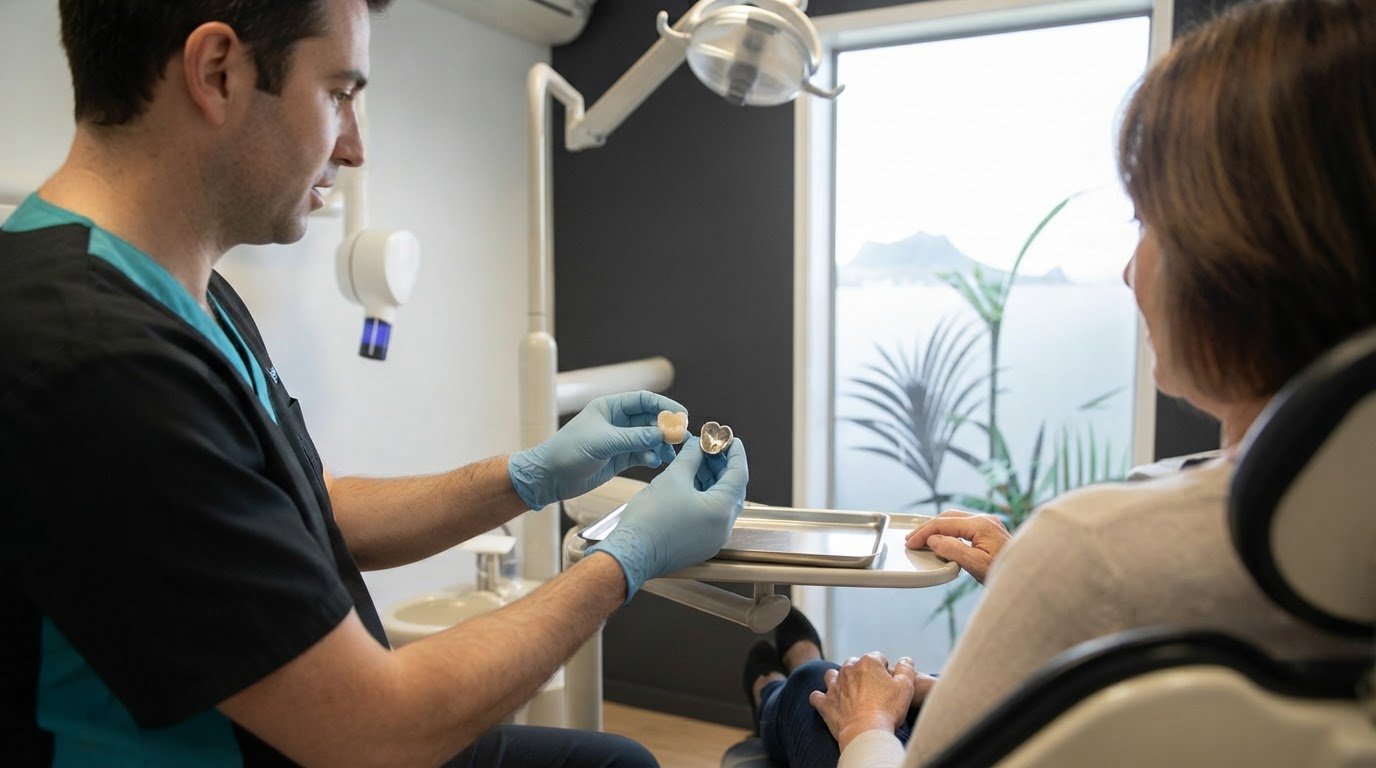
The crown’s material affects its appearance, durability and care needs. Metal crowns are durable, while porcelain offers a more natural look and can be more susceptible to wear over time. Ceramic, zirconia and porcelain-fused-to-metal crowns are other material options. The right choice depends partly on which tooth needs protection and how visible it is when you smile.
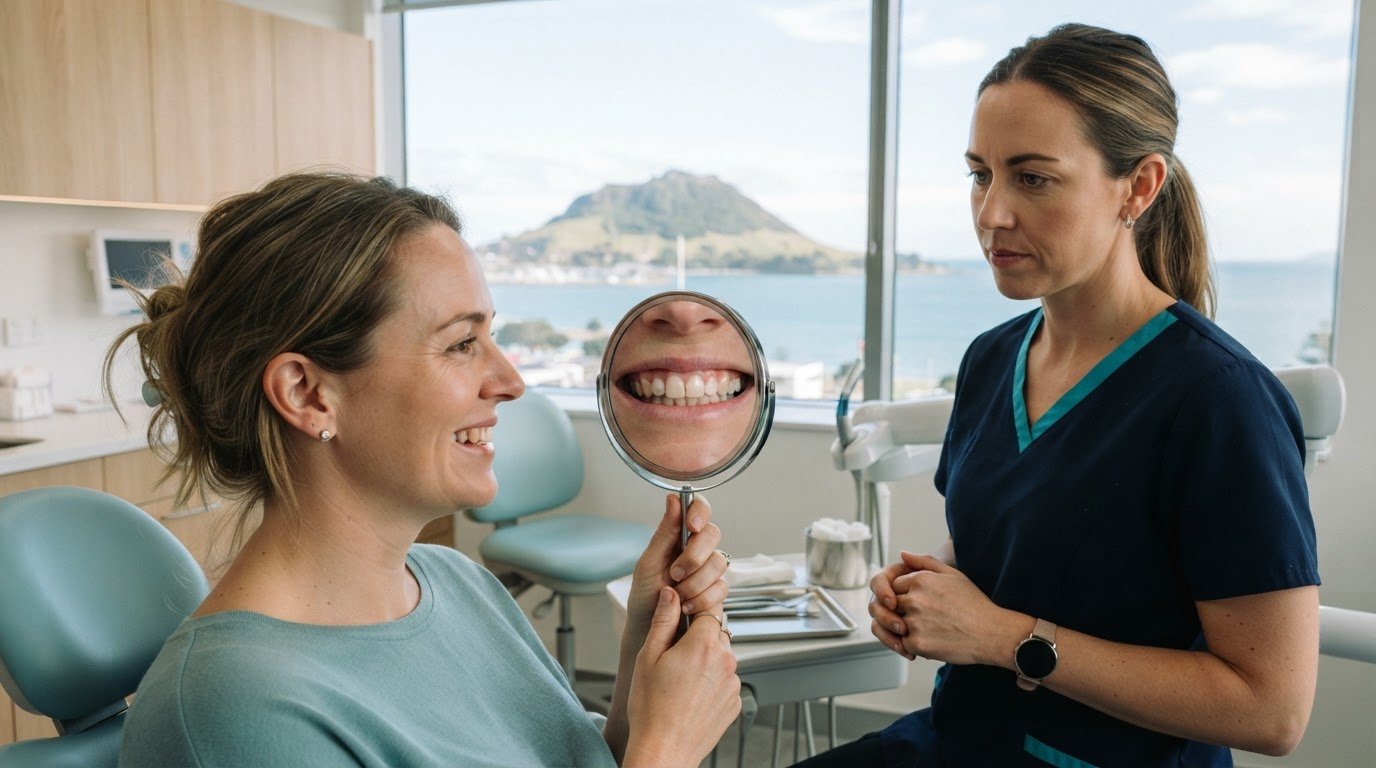
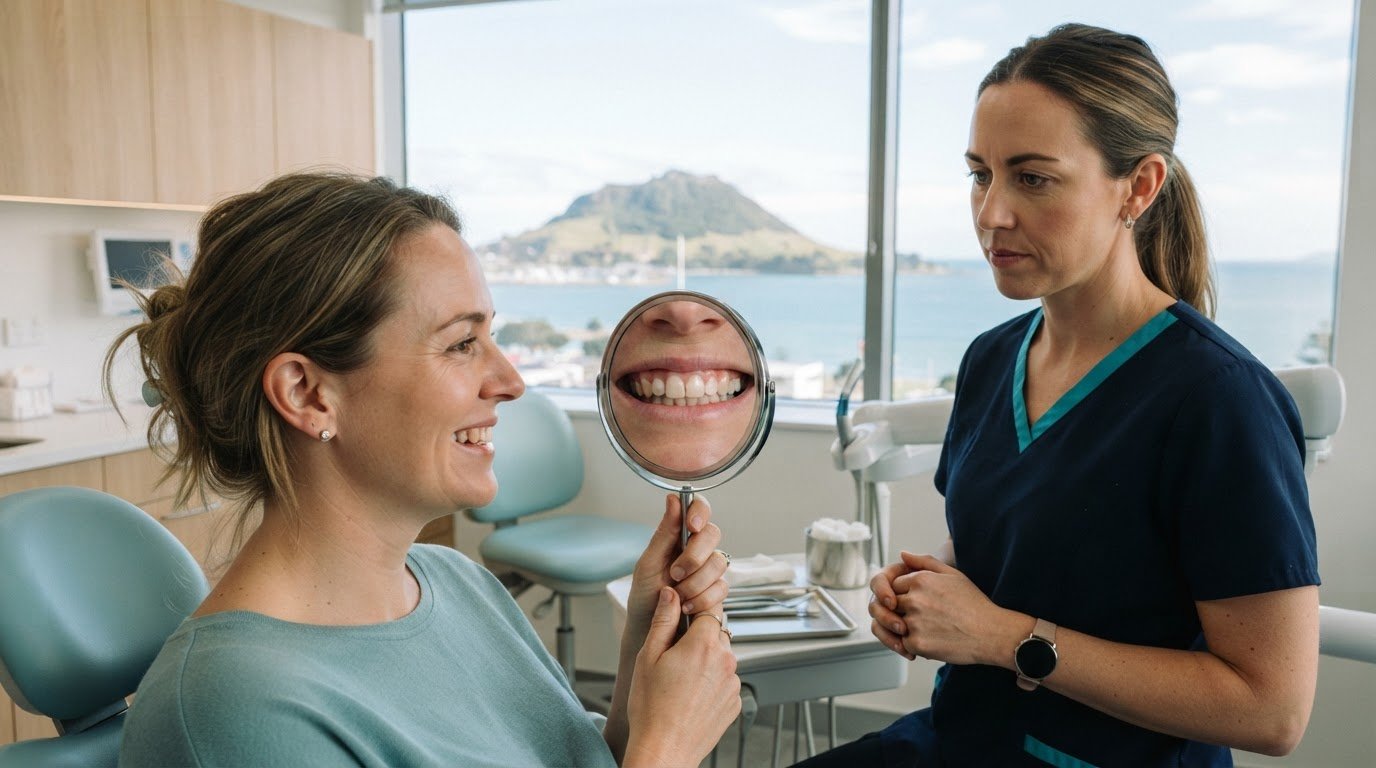
Tooth location changes the demands on a crown. A front tooth is visible when speaking and smiling, so matching its appearance to neighbouring teeth may be important. A back tooth is used for chewing, so how its crown meets opposing teeth matters. The same material won’t suit every tooth for the same reasons.
Material and location are considered together, not as separate decisions. For example, a crown on a visible front tooth has different aesthetic priorities from one on a molar. A molar’s role in chewing makes its position in the bite a key consideration. Your dentist assesses the tooth, surrounding teeth and desired appearance before recommending a restoration.
Different materials respond differently to everyday wear. Porcelain can provide a natural-looking surface, but its susceptibility to wear makes the bite and habits such as grinding relevant. Metal offers durability, though its appearance differs from porcelain. These differences help explain why crown material alone doesn’t determine how well it serves a particular tooth.
Whatever its material, protect a crown by following the care routine recommended for your mouth. Use a soft-bristled toothbrush around the crown and gumline, and clean carefully between teeth. Brushing can remove plaque around the crown, but it can’t reveal damage to the crown’s edge or show how it meets the opposite tooth. Your dentist assesses those details during reviews.
At a review, describe where the crown is and any changes you’ve noticed. For example, tell your dentist if the bite feels uneven on a back tooth or if a front crown looks different beside a neighbouring tooth. This helps focus the examination on function, fit and appearance. Even a comfortable crown can benefit from assessment alongside the surrounding teeth.
Material choice also provides context if a crown needs attention later. A change in surface feel or appearance can be assessed alongside the type of crown and its position. For instance, wear on a porcelain crown is considered differently from the appearance of a metal crown. Your dentist can examine the restoration and identify whether the crown, bite or surrounding tooth needs care.
No single crown material suits every location or priority. Consider visibility, chewing demands, material properties and the tooth’s condition together. These factors help guide a crown that restores the tooth while meeting your practical needs and fitting your smile.
4. Daily oral hygiene for crowns
Brush at least twice daily with fluoride toothpaste and a soft-bristled toothbrush. Pay particular attention to the gumline around each crown, where plaque can collect. Use gentle, small movements rather than scrubbing across the crown’s edge. This cleans the crown and the natural tooth beside it, helping protect the area where they meet.
Floss between your teeth once a day, including beside a crown. Guide the floss carefully between the teeth, curve it around each tooth, then move it gently near the gumline. Avoid snapping floss down or pulling sharply against the crown. Cleaning between teeth matters because a toothbrush cannot reach the tight spaces where plaque can build up.
The crown material doesn’t decay, but the tooth underneath can. Decay may develop where the crown meets the natural tooth, so consistent brushing and flossing help keep that margin clean. A porcelain crown also needs careful attention around its edges and the surrounding gum. Good hygiene supports both the tooth and the restoration.
Food and drink choices can support your oral care routine. Sugary and acidic foods may contribute to decay in the tooth beneath a crown. Acidic drinks can also affect the natural enamel around the restoration. After consuming acidic foods or drinks, rinse your mouth with water. This simple step helps clear residue and keeps daily care manageable.
For a practical routine, follow these steps each day:
Brush twice daily using fluoride toothpaste and a soft-bristled brush.
Clean between your teeth once daily, moving floss gently around the crown.
Rinse with water after acidic food or drinks.
Regular dental reviews complement home care. A dentist can inspect the crown, its edge and the underlying tooth, while professional cleaning helps prevent cavities and gum disease. Mention any change in the crown’s feel or your brushing routine at your appointment. These details help focus the assessment on areas that may need attention.
If you have bruxism, or grind your teeth, tell your dentist. Grinding can place extra force on crowns and nearby teeth. Your dentist can discuss whether a nightguard may help protect them. Don’t try to address a change in your bite by brushing harder; mention it at a review instead.
Consistency matters more than using a special crown-cleaning product. A soft-bristled toothbrush, fluoride toothpaste, gentle flossing and rinsing with water after acidic foods make a clear routine. Keep cleaning the gumline even when the crown looks smooth. Its appearance alone can’t show whether the tooth beneath it or the surrounding gum needs care.
5. Why dental crowns need regular care
A crown covers a tooth, but it doesn’t make the tooth or gum invulnerable. The crown material itself can’t decay, but the natural tooth can decay where it meets the crown. Plaque around the crown’s edge can affect that junction, while plaque along the gumline can contribute to gum disease. Cleaning and dental reviews help protect both areas.
Can a tooth with a crown still get decay or gum disease? Yes. Decay can develop where the crown meets the natural tooth, and plaque around the crown can contribute to gum disease. The crown protects the covered surface, not every part of the tooth or the surrounding gum.
Regular care matters because several factors work together. Crown material, placement quality and daily hygiene all contribute to how long a restoration lasts. A dentist can check the crown’s fit, the tooth beneath it, nearby teeth and gum condition. Professional cleaning also helps prevent cavities and gum disease, supporting the crown’s continued function.
Chewing places repeated force on a crown, especially if you grind your teeth. Bruxism can add pressure to the restoration and nearby teeth, so tell your dentist if you wake with jaw soreness or notice grinding. Ask whether a nightguard may help protect your crown. A nightguard doesn’t replace cleaning or reviews; it addresses a different source of stress.
Food and drink habits can also affect the tooth and crown’s appearance. Sugary and acidic foods can contribute to decay in the natural tooth beneath a crown. Coffee, tea, red wine and smoking can discolour a crown over time. Rinsing with water after acidic foods and drinks helps clear residue, while consistent cleaning around the crown supports gum health.
What are the risks of leaving a loose, cracked or damaged crown untreated? It may expose the underlying tooth to further damage and make chewing uncomfortable. A loose crown can shift or come away, while a crack can worsen with chewing. Arrange a dental assessment if you notice movement, a rough edge or a change in your bite.
Fitting a crown doesn’t end the need for care. Routine reviews let a dentist assess changes that may not be obvious in the mirror, including the crown’s edge and the tooth beneath it. Regular professional cleaning and careful home hygiene work together; neither fully replaces the other.
If your crown feels loose, cracked or different, book a routine dental check-up to have it assessed. An examination can help identify whether the crown, underlying tooth or gum needs attention, before you continue chewing normally on that side.
Dental Plus: Professional Dental Hygiene
Dental Plus offers Professional Dental Hygiene to help care for your teeth and gums around a crown. Regular hygiene visits support gum health, while Routine Check Ups allow a dentist to assess the crown, nearby teeth and the underlying tooth. If you’ve noticed a change in comfort, fit or appearance, arrange a check-up rather than waiting for your next routine visit. Digital X-Rays may also form part of an assessment when clinically appropriate. Together, these services support a considered approach to maintaining your crown and oral health. For ongoing crown care or a concern about your restoration, contact Dental Plus or visit dentalplus.co.nz.
Make your next crown-care step a confident one
Your crown is part of your everyday smile, so keep its care connected to your overall oral health. If you notice a change, note what feels different and when it happens. Sharing those details can help guide a useful conversation at your next appointment. Consistent long term care for dental crowns comes from small daily choices and staying engaged with your dental care, rather than waiting until a concern affects eating or comfort.
For ongoing support, Dental Plus offers Professional Dental Hygiene, Routine Check Ups and Digital X-Rays. These services can help maintain oral health and assess a crown when concerns arise. Take a manageable next step by arranging a check-up or asking about hygiene care.
Contact Dental Plus to discuss care for your crown. A thoughtful step today can help you feel more prepared to care for your smile.
Frequently Asked Questions
What is a dental crown?
A dental crown is a fixed covering that restores the shape and function of a damaged or weakened tooth. It fits over the visible part of the prepared tooth, helping it cope with everyday use. Unlike a filling, which repairs part of a tooth, a crown covers the tooth. A dentist may recommend one when a tooth needs more coverage than a smaller restoration provides.
How long do crowns last?
Dental crowns typically last 5 to 20 years, depending on their material and care. That range is a guide, not a set replacement date. A crown may need attention earlier if it becomes damaged or its fit changes. Keep track of when it was placed and mention its age during dental reviews. Your dentist can assess its condition alongside the tooth and gum around it.
How long do dental crowns last, and what affects their lifespan?
Material, placement quality, oral hygiene and chewing forces all influence a crown’s lifespan. A crown exposed to frequent grinding, for example, experiences different stress from one without that added pressure. Plaque near the crown’s edge can also affect the natural tooth underneath. A dentist can review the crown and surrounding teeth, while daily cleaning helps limit preventable problems.
How should you clean and care for a dental crown long term?
Brush twice daily with fluoride toothpaste and a soft-bristled toothbrush, and floss between your teeth once a day. Use gentle movements around the crown’s edge rather than scrubbing the gumline. After acidic food or drinks, rinse with water. Notice at home if floss catches or the crown feels different. Share those changes at your next dental appointment instead of trying to adjust the crown yourself.
What foods and habits can damage or loosen a dental crown?
Sticky foods such as chewing gum or toffee can pull at a crown. Hard foods, including ice, hard lollies and popcorn kernels, may damage it. Cut firm raw fruit and vegetables into smaller pieces, and don’t use your teeth to open bottles or packaging. If you grind your teeth, tell your dentist and ask whether a nightguard may help protect the crown.
What are the signs a dental crown needs repair or replacement?
Watch for a crown that feels loose, a new rough edge, a visible crack, altered colour or a change in your bite. Persistent pain or sensitivity also warrants a dental assessment. If the crown comes off, arrange a prompt dental visit and don’t try to reattach it at home. Avoid chewing on the exposed tooth while arranging care, and explain when the change began.
How often should a crown be checked by a dentist in New Zealand?
Have a crown checked during regular dental reviews in New Zealand rather than waiting for a problem. There isn’t one review interval that suits everyone; the crown’s condition, the underlying tooth, gums and other oral health needs all matter. If you notice looseness, pain or a changed bite between planned visits, arrange an assessment sooner. Mention any changes since your previous appointment.
How do porcelain, ceramic, zirconia, and metal crowns compare for durability and care?
Porcelain crowns typically last 5 to 10 years. Ceramic or zirconia crowns typically last 10 to 15+ years, while metal crowns typically last 15 to 20+ years. Metal is described as durable; porcelain offers a natural appearance and may be more susceptible to wear over time. Brush and floss carefully around any crown, since the natural tooth at its edge still needs protection from decay.
Comments