
Interest-Free Dental Treatment NZ: Your 2026 Guide

Interest-free dental treatment doesn’t make dental care cheaper; it changes how you repay it. If paying upfront feels difficult, interest free dental treatment NZ options may help spread repayments. Fees, repayment schedules and missed-payment conditions can still affect what you ultimately pay.
Finance advertising can be confusing. “Interest-free” doesn’t always mean fee-free, and eligibility and repayment terms vary between plans. The right option depends on the treatment plan and what you can comfortably manage in your budget.
This guide explains what interest-free dental finance means and how to compare payment options, including fees, repayment timing and key conditions. It also covers common mistakes, such as focusing on an advertised offer without checking the full terms.
Dental Plus in Mount Maunganui, Tauranga, offers Qcard and Afterpay as flexible payment options. Their repayment structures and terms differ. Start with a personalised dental plan, then compare the relevant terms and consider how repayments fit your budget.
Table of Contents
What does interest-free dental treatment in NZ actually mean?
Interest-free finance means no interest is charged when you meet the specific plan’s terms, but other fees may still apply. “Interest-free” describes how interest is treated, not necessarily the total cost of borrowing. The provider and plan determine terms such as eligibility, repayment conditions and what happens if a payment is late.
In New Zealand, adult dental care is generally privately paid for, unlike many other health services. The country’s mix of public and private care is outlined in this overview of New Zealand's healthcare system. Finance may help spread payments for suitable care, but it doesn’t reduce the treatment fee or change what a dentist recommends for your oral health.
Does interest-free mean there are no extra costs?
Not necessarily. A plan may include account or establishment fees, and late or missed payments may lead to additional charges under the provider’s terms. These can increase the total you repay, even if no interest applies when you meet the plan conditions.
Before committing, read the current plan documents and terms. Check which charges apply, when repayments are due and whether any conditions could change the cost. Compare the total repayment, not just the interest-free wording in an advertisement.
What should patients understand before using dental finance?
Finance is a way to pay for treatment over time, not a discount on the treatment itself. You’re responsible for the agreed repayments, so consider whether the schedule fits your regular budget and other commitments. A manageable plan should leave room for everyday expenses rather than create ongoing pressure.
Keep clinical decisions separate from payment decisions. Your dentist assesses your needs and discusses suitable care; a payment option doesn’t determine which treatment is appropriate. Dental Plus offers Qcard and Afterpay as flexible payment options, but their terms differ, and interest-free conditions may not apply to every plan or purchase.
Eligibility and approval depend on the relevant provider’s assessment. Approval isn’t guaranteed, and conditions can differ between plans. Understanding these details gives you a clearer basis for comparing options and deciding whether repayments feel sustainable.
Which dental payment options can help spread treatment costs?
Dental Plus offers Qcard and Afterpay as flexible payment options that may help spread the cost of dental care. They’re payment methods, not discounts, and their repayment structures differ. The terms, eligibility requirements and applicable purchase can affect how each option works.
Afterpay generally divides an eligible purchase into instalments due on set dates. Qcard works through a credit account, with repayment conditions determined by the selected plan. An interest-free offer may apply only when specific conditions are met, and fees or missed-payment charges may affect the total you repay. The phrase interest free dental treatment NZ alone doesn’t explain the full cost.
How do Qcard and Afterpay fit into dental payments?
Both options can be considered alongside a personalised treatment plan, whether you’re planning general, orthodontic or cosmetic care. Neither option is automatically right for every person or purchase. Review the current terms to understand eligibility, repayment dates, applicable charges and the consequences of missing a payment. Approval and conditions depend on the provider’s assessment.
How can you compare payment plans fairly?
Look beyond the marketing label and compare the details in the plan documents. These points can help you assess how each option fits your budget:
Total repayment: What will you repay once any applicable fees are included?
Payment timing: When are instalments due, and how often will they be taken?
Fees and interest: What charges apply, and what conditions must you meet for any interest-free offer?
Missed-payment conditions: What may happen if a payment is late or declined?
Eligibility and approval: Is approval required, and what does the provider’s assessment mean for your plan?
A convenient-looking schedule can still strain your finances if payment dates clash with other commitments. Compare both the amount and timing of repayments with your regular budget. Choose based on what feels sustainable, not simply the provider’s name.
To explore care and payment options in Tauranga, visit Dental Plus and consider finance alongside your treatment plan.
How to compare interest-free dental treatment options in NZ
Compare the written terms, not just the headline. For interest free dental treatment NZ, the plan documents show what an offer means for your repayments. They also explain how eligibility, approval and repayment conditions work. Don’t assume that an advertised offer applies to every purchase or that you’ll receive the same conditions as someone else.
Which details should you check in the finance terms?
Use the table to compare the same details across each plan. Look for the explanation of any unclear term in the provider’s current documents before making a decision.
Check whether a promotional offer has restrictions, such as applying only to certain purchases or requiring particular repayment behaviour. Don’t assume a term you’ve seen advertised applies to your plan. Use the current agreement and disclosures to understand the conditions.
To estimate the total payable, use the figures in your actual documents. Add any upfront payment, scheduled repayments and applicable fees, along with any interest the plan says may apply. Check that the repayment schedule covers the full balance. This gives you a clearer comparison than looking at the instalment amount alone.
How do you assess whether repayments are manageable?
Set the repayment dates against your regular household costs and other financial commitments. Consider whether the schedule would still work if your income changed or an unexpected expense came up. If repayments could cause financial strain, pause before accepting the agreement.
Before you commit, use this quick checklist:
Have I read the current plan documents, including the conditions and offer end date?
Have I included all applicable fees and any interest in my total repayment estimate?
Do I understand the repayment amount, frequency, due dates and minimum payment?
Do I know what may happen if I miss or can’t make a payment?
Does this schedule fit my budget without putting essential expenses at risk?
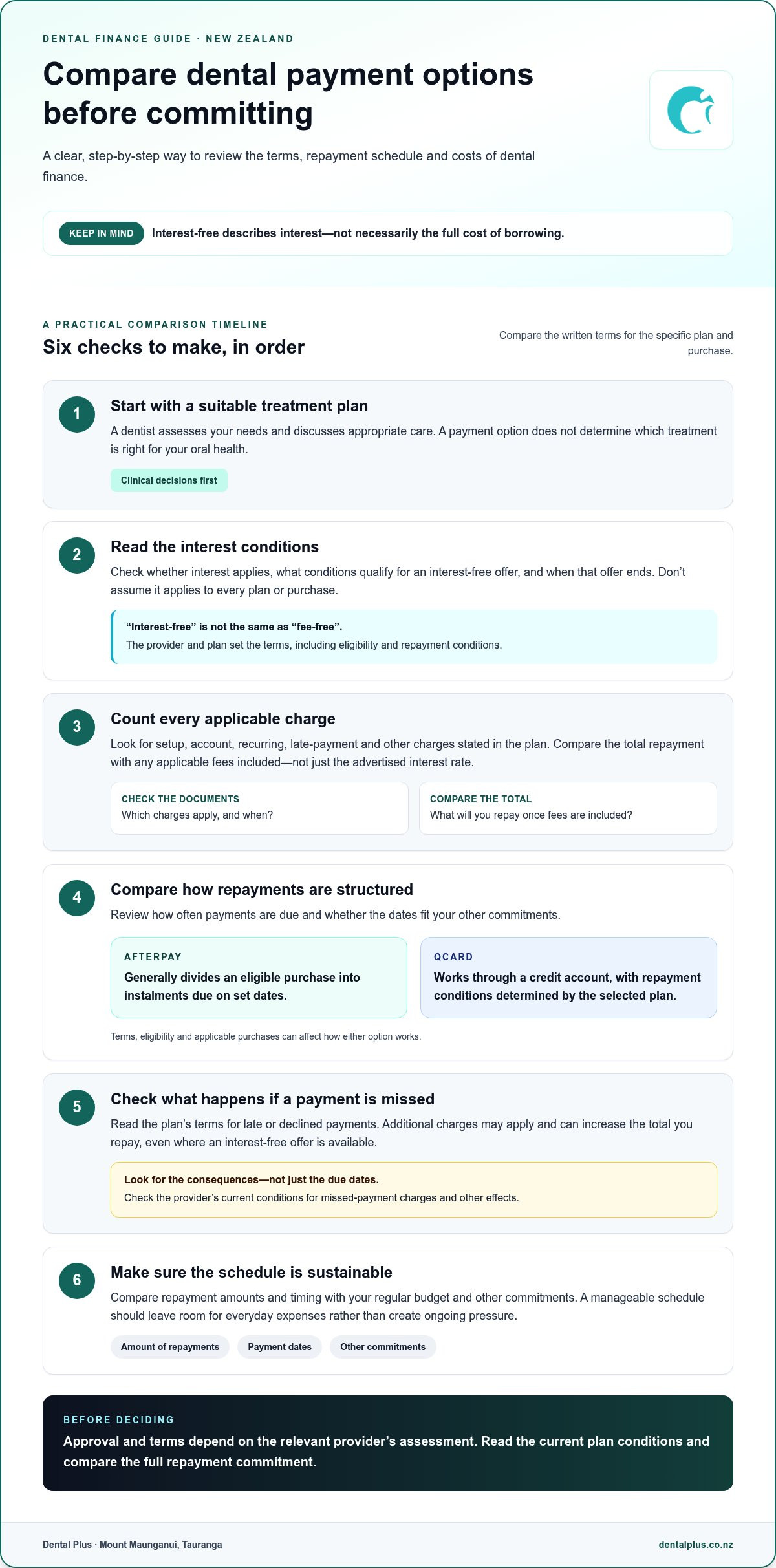
How to plan dental treatment around your payment option
A clear sequence can make treatment and payment decisions easier to manage: discuss your concerns, understand suitable care, review the proposed plan, then assess the payment terms. Keeping those steps in order helps you make clinical decisions based on your dental health, rather than letting a finance offer steer you towards treatment you don’t need.
What happens before you commit to a treatment plan?
An appointment gives you the chance to explain your concerns and understand possible treatment pathways. Your dentist can assess your needs, explain recommended care and discuss the order in which treatment may take place. Take time to understand the plan before deciding how to pay. Ask questions about the clinical steps and payment arrangements so you can weigh them clearly.
The right approach depends on your individual needs. For example, if you’re exploring teeth alignment, read the Invisalign Mount Maunganui guide. If you’re considering changes to your smile, the Cosmetic Dentistry Tauranga guide may be helpful. These examples don’t mean every treatment has the same cost, timing or finance conditions. Your dentist determines what care is suitable for you.
How can you keep treatment and repayments aligned?
Once you understand the recommended care, map planned appointments or treatment stages against the payment schedule. Check when payments begin, how often they’re due and whether the plan’s conditions apply to the full treatment or a particular purchase. Don’t assume each stage, or options such as Invisalign and cosmetic dentistry, will have identical finance terms.
For interest free dental treatment NZ, a payment option should support a clinically appropriate plan, not determine it. Compare repayment dates with your household budget and make sure the schedule remains manageable alongside other commitments. If the proposed repayments would put pressure on essential expenses, pause and reconsider before agreeing.
Take things one step at a time: understand the care first, then decide whether the payment arrangement fits. To explore care at Dental Plus in Tauranga, view Dental Plus services.
Using Qcard or Afterpay for dental care at Dental Plus
Dental Plus offers Qcard and Afterpay as flexible payment options to consider alongside your dental care. They’re separate options with different repayment structures and conditions. Neither guarantees an interest-free outcome: fees, eligibility, approval and repayment requirements depend on the applicable provider and plan.
Start with the care, not the payment method. Whether you’re considering a routine check-up, orthodontic treatment or cosmetic dentistry, understand what your dentist recommends and why. Then review the current terms for the option you’re considering, including any charges, payment dates and what may happen if you miss a payment. This helps you assess the full commitment before deciding.
What should you have clear before choosing a payment method?
Before accepting a finance agreement, work through these steps:
Understand the treatment: Know what care is recommended, why it’s suitable and how the planned stages fit together.
Read the current provider terms: Check fees, eligibility, approval requirements, repayment dates and conditions that may affect interest or charges.
Assess the repayments: Compare the schedule with your regular expenses and other commitments. Choose only an arrangement that feels sustainable for your circumstances.
Interest free dental treatment NZ describes a possible way to structure repayments, not a discount on care or a promise that every plan is fee-free. Understanding both the treatment plan and the finance terms can help you make a considered choice without letting a payment offer drive unnecessary treatment.
How can Dental Plus support your next step?
Dental Plus provides general, cosmetic and orthodontic care, with recommendations guided by your individual needs. Your dentist can explain suitable care and its planned sequence, while you consider whether a payment option aligns with your budget. Take time to understand both before committing.
To discuss your dental care and payment planning, contact Dental Plus.
Take your next step with confidence
Interest free dental treatment NZ can help spread repayments, but the headline doesn’t tell you the full cost. Check the current plan terms, including fees, payment dates and missed-payment conditions, then consider whether the repayments fit your budget.
Keep your care decision separate from your finance decision. Your dentist can explain suitable treatment and its planned sequence; assess the payment option against your own circumstances. Approval and terms depend on the provider, and Qcard and Afterpay may have different conditions.
Dental Plus is a local practice in Mount Maunganui, Tauranga, offering general, cosmetic and orthodontic care, with Qcard and Afterpay as flexible payment options. You can explore care and payment options together, at a pace that feels comfortable.
Explore dental care and flexible payment options at Dental Plus, and take your next step with greater clarity.
Frequently Asked Questions
Is dental treatment interest-free in New Zealand?
Some dental finance plans may be interest-free when you meet their stated conditions, but this doesn’t apply to every plan or purchase. In Tauranga, Dental Plus offers Qcard and Afterpay as flexible payment options, each with its own terms. Before choosing interest free dental treatment NZ, read the current provider information and check whether interest, fees or other charges could apply to your repayments.
Can I use Afterpay or Qcard for dental treatment at Dental Plus?
Yes, Dental Plus offers Afterpay and Qcard as flexible payment options for dental care. They’re payment methods, not discounts, and their repayment structures and conditions differ. Eligibility and use depend on the relevant provider’s terms and assessment. Review the current plan details to understand payment dates, fees and other conditions before deciding whether an option suits your circumstances.
Does interest-free dental finance mean there are no fees?
No, interest-free doesn’t necessarily mean fee-free. A finance plan may have charges such as account or establishment fees, or fees for late payments, depending on its terms. These can affect the total you repay even if interest doesn’t apply when you meet the plan conditions. Read the current provider documents and include any applicable charges in your repayment estimate before accepting an offer.
How do I compare interest-free dental payment plans?
Compare each plan’s total amount payable, interest conditions, fees, payment dates, minimum repayments and missed-payment consequences. Check the provider’s current documents rather than relying on an “interest-free” headline, which may not explain every condition. Then compare the repayment schedule with your regular expenses and existing commitments. Consider a plan only if you understand its terms and the repayments feel manageable for your budget.
Can I use a payment plan for Invisalign or cosmetic dentistry?
Dental Plus offers Invisalign and cosmetic dentistry, alongside flexible payment options such as Qcard and Afterpay. Finance conditions can depend on the provider, plan and purchase, so don’t assume the same terms apply to every treatment. First understand the care your dentist recommends and its planned sequence. Then review the relevant terms, including eligibility, fees and repayment conditions, to decide whether an option fits your circumstances.
What happens if I miss a payment on dental finance?
The consequences depend on the payment provider and the agreement you accepted. A missed or late payment may lead to charges or affect the plan’s conditions, including any interest-free offer. Check the plan documents for the exact consequences and payment process. If you’re concerned about meeting a repayment, refer to the provider’s current guidance promptly to understand the applicable terms and steps.
Do I need credit approval for interest-free dental treatment?
Approval requirements depend on the provider and the specific plan, and acceptance isn’t guaranteed. The provider may assess your application and eligibility before confirming whether you can use the finance option. Dental Plus offers Qcard and Afterpay, but the provider determines approval and applicable conditions. Review the current application information and terms before relying on a payment plan to fund your treatment.
Is interest-free dental treatment available in Tauranga?
Dental Plus in Mount Maunganui, Tauranga, offers Qcard and Afterpay as flexible payment options for dental care. Whether a particular plan is interest-free depends on its current terms, the purchase and your eligibility, so outcomes can differ. Read the provider’s documents carefully and consider fees, repayment dates and missed-payment conditions. Your dentist can discuss suitable care separately from your choice of payment method.


Comments