
How to Clean Invisalign Aligners and Know How Often

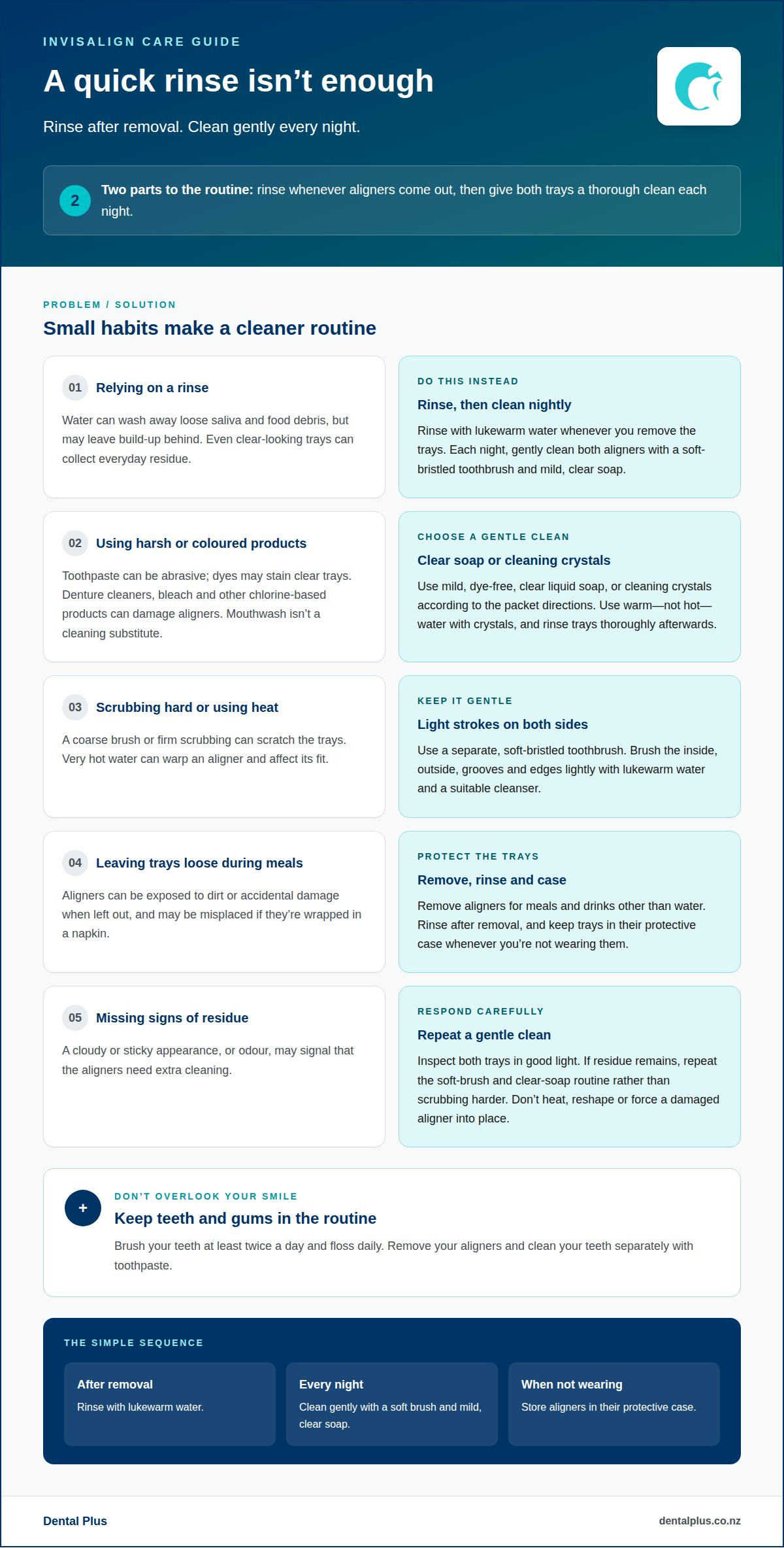
A quick rinse isn’t enough to keep Invisalign aligners clean. Invisalign cleaning best practices include rinsing them whenever you take them out, then gently cleaning them each night with a soft-bristled toothbrush and mild, clear soap. This removes build-up that water alone can leave behind.
It’s easy to focus on the aligners and overlook your oral hygiene during treatment. Learn what to use and avoid, how to care for your teeth and gums, and when to remove your aligners for meals, drinks and brushing.
This guide covers a simple cleaning routine and signs that your aligners need extra attention, so you can keep them fresh and care for your smile with confidence.
Table of Contents
How often should you clean your aligners?
Rinse your aligners whenever you remove them, then clean them thoroughly each night. Regular cleaning removes build-up that water alone may leave behind.
Make nightly cleaning part of your routine. Clean both aligners every night, even if they look clear. Saliva and everyday residue can collect on their surfaces while you wear them. A consistent evening routine makes it easier to spot cloudy areas and keep the trays fresh.
Rinse after each removal. Use lukewarm water when taking your aligners out for meals or brushing. This washes away loose saliva and food debris before it dries. Rinsing is useful between cleans, but it doesn’t replace a thorough nightly clean.
Choose a soft brush and gentle cleanser. A soft-bristled toothbrush and mild, clear liquid soap are suitable for gentle cleaning. Brush lightly over the inside and outside surfaces, including around the edges. Avoid coarse-bristled brushes, which can scratch the aligners.
Keep toothpaste and mouthwash away from the trays. Toothpaste can be abrasive, leaving scratches or a cloudy film. Mouthwash, especially varieties containing alcohol, isn’t a cleaning substitute and may affect the aligners. Remove your trays and brush your teeth separately with toothpaste.
Skip denture cleaners and chlorine-based products. Don’t use denture tablets, bleach or other chlorine-based cleaners on Invisalign aligners. These products can damage the trays. Avoid soaps with added dyes, too, because colour can stain clear aligners.
Use cleaning crystals thoughtfully. Cleaning crystals are another option, but frequent or unsuitable use may make aligner surfaces rougher. Rough surfaces can make it easier for bacteria to stick. Follow the product directions, use warm rather than hot water, and don’t scrub aggressively.
Store trays in their protective case. Put your aligners in their case whenever you’re not wearing them, rather than wrapping them in a napkin or leaving them loose. A case helps protect the trays from dirt, accidental damage and being misplaced during meals.
Respond carefully to damage or residue. Don’t try to reshape a cracked or warped aligner with heat, and don’t force a damaged tray into place. If it remains dirty, repeat a gentle clean with a soft brush and clear soap. Persistent damage or residue needs individual attention.
Keep abrasive toothpaste away from Invisalign aligners: it can scratch their surface. Mouthwash is also unsuitable for cleaning trays, especially varieties containing alcohol. Don’t use either product as a substitute for gentle cleaning. Keep your tooth-cleaning routine separate from cleaning the trays.
Soft-bristled toothbrush and gentle soap
Use a gentle cleanser, lukewarm water and a soft brush to clean your aligners without scratching them. This simple routine works at home or while travelling.
Choose a suitable cleanerChoose mild, clear liquid soap or Invisalign Cleaning Crystals for cleaning your aligners. Use crystals according to their packet directions; each packet is intended for one use, and the crystals should be mixed with warm water, not hot water.Check that the soap is dye-free, as added colour may stain clear trays. Avoid toothpaste, denture cleaners and bleach: toothpaste can be abrasive, while denture and chlorine-based cleaners can damage aligners. Mouthwash, especially varieties containing alcohol, isn’t a substitute for an aligner cleanser.
Prepare mild soap and waterRinse the trays with lukewarm water, then apply a small amount of mild, clear soap. Gently work it over each surface, including the edges where saliva and residue can collect. Avoid very hot water, which can warp the aligner and affect its fit.If you use cleaning crystals, dissolve them in warm water as directed on the packet. Don’t reuse a single-use packet or add extra crystals to make the solution stronger. After cleaning, rinse thoroughly with lukewarm water so no soap or solution remains before putting the trays back in.
Brush gently with a soft-bristled toothbrushUse a separate soft-bristled toothbrush to gently brush both sides of each aligner. Light strokes loosen residue without the abrasion that a coarse brush or firm scrubbing can cause. Pay attention to grooves and edges, where a quick pass may miss build-up.While travelling, pack a soft toothbrush, a small amount of clear soap and the aligner case. Clean your aligners over a sink with lukewarm water, then rinse them thoroughly before wearing them again. If soap or a suitable cleaner isn’t available, rinse the trays and clean them properly when you can. Don’t use hotel toothpaste or mouthwash as a substitute.Inspect both trays in good light after brushing. If they still look cloudy or feel sticky, repeat the gentle soap-and-brush routine rather than scrubbing harder or switching to bleach. A careful clean is better than using an abrasive tool that may scratch the surface and leave it looking dull.
Daily cleaning versus rinsing
Rinse aligners whenever you remove them, but don’t rely on water alone. A proper nightly clean tackles residue that a quick rinse may leave behind.
Rinse after every removal. Run lukewarm water over each tray when you take it out, including before eating and after meals. This helps wash away loose saliva and food particles before they dry onto the plastic. Rinsing is a useful immediate step, not a replacement for brushing or a suitable cleanser. Avoid hot water, which can warp the aligners and affect their fit.
Clean the aligners thoroughly each night. Even clear-looking trays can collect saliva and residue while you wear them. Use a gentle cleaning method at the end of the day, rather than waiting until you notice build-up. Cleaning crystals can be used as directed, but rinsing alone won’t remove every film from the inner surface or edges. A nightly clean also gives you a regular opportunity to check both trays.
Act promptly if a tray looks or smells unclean. An odour that remains after rinsing can signal that your aligners need extra cleaning. Cloudiness or a sticky feel can also be a cue. Clean the affected tray gently instead of masking the smell with mouthwash or scrubbing it with abrasive toothpaste. Check its inner surface and edges, where residue may be less obvious.
Clean visible dirt before putting trays back in. If you’ve worn your aligners while drinking a non-clear beverage or put them back soon after eating, clean them if they look dirty. Food particles trapped beneath a tray can remain against your teeth. Remove the aligners for meals, then brush and floss before reinserting them. This helps avoid trapping fresh debris under the plastic.
Keep tray care separate from tooth care. Rinsing aligners doesn’t clean your teeth, and brushing your teeth doesn’t clean the trays. After eating, clean your teeth and aligners using the appropriate method for each. If you’re away from home, rinse the trays after removal and store them safely, then clean them thoroughly when you can. Don’t use hot water or substitute toothpaste for an aligner cleanser.
Keep the cleaning routine focused on both the appliance and your mouth: people wearing Invisalign should floss daily to remove plaque and food particles. Flossing addresses material around the teeth, while the aligner’s own cleaning steps address the tray; one task does not replace the other. The nightly Invisalign cleaning process involves soaking the aligners in a tray for 3 minutes, rinsing off the sterilising solution, and brushing with warm water. Follow that order so the solution is rinsed away before brushing. The soak is one part of the routine, not a reason to skip the rinse or brushing step. Pairing daily flossing with the nightly tray process gives attention to both sources of debris: what remains between teeth and what collects on the aligners during wear. Keeping these steps consistent helps make care for your teeth and aligners part of the same routine.
Oral hygiene during Invisalign treatment
Invisalign aligners don’t replace daily dental care. Clean your teeth before putting the trays back in, and follow your prescribed wear routine.
Remove your aligners before eating. Food can lodge between a tray and your teeth, while chewing may damage the plastic. Take both trays out for meals and snacks, then store them safely. Before putting them back in, clear food from your teeth and rinse the aligners. This helps prevent food particles becoming trapped beneath the trays.
Choose water while wearing the trays. Drink water with Invisalign aligners in; remove them for other drinks. Coffee, tea, juice and other beverages can stain the trays or expose teeth to sugars while they’re covered. Water also helps wash away loose food particles. After a non-water drink, take the trays out before brushing your teeth.
Brush your teeth at least twice a day. Brush in the morning and before bed, paying attention to the gumline and every tooth surface. Use fluoride toothpaste to help strengthen enamel and protect against cavities. Clean your teeth before putting aligners back in, especially after breakfast or an evening meal, so residue isn’t held against them.
Floss daily between your teeth. Flossing removes plaque and food particles from spaces a toothbrush may not reach. Make it part of your daily routine, such as before bed, and do it after removing your trays. Brushing and flossing work together: clean tooth surfaces and the spaces between them before reinserting your aligners.
Follow your prescribed wear schedule. The recommended routine is about 22 hours per day, with aligners removed for meals, drinks other than water, and brushing or flossing. Keep removal periods purposeful, then put the trays back in after cleaning your teeth. Aligners are changed every 2 weeks, but each set still needs careful cleaning throughout its use.
Keep water nearby and watch for changes. Drinking water during the day helps wash away food particles and bacteria. If trays look cloudy or feel sticky, clean them rather than putting them straight back in. A persistent odour or bad breath can also prompt a closer look at your cleaning routine and oral hygiene.
Keep regular dental check-ups. Routine visits help monitor your teeth and gums during Invisalign treatment. Share any changes, such as bleeding gums, lingering bad breath or difficulty keeping your teeth clean. A dental professional can assess your oral health and help identify areas that need more attention while you wear your aligners.
What is the best step-by-step way to clean Invisalign aligners?
Follow a consistent routine each evening, and clean the trays again if they become visibly dirty. These steps help remove residue without exposing the plastic to harsh cleaners or heat.
Wash your hands first. Use soap and water before handling either tray. This helps prevent food residue or dirt on your fingers transferring to the aligners. Set a clean towel beside the sink, then remove the trays carefully rather than pulling roughly at one edge.
Rinse each tray as soon as you remove it. Use lukewarm water to wash away loose saliva and debris. Avoid very hot water, which can warp the plastic and affect the aligners’ fit. Check both the inner and outer surfaces before cleaning.
Choose one suitable cleaning method. For a straightforward clean, use mild, clear liquid soap and water. Alternatively, use Invisalign Cleaning Crystals according to the packet directions. Each crystals packet is for single use, and the solution should be made with warm, not hot, water.
Soak only as directed. If using crystals, dissolve the packet in the recommended amount of warm water and follow the stated soaking time. Don’t guess the concentration or reuse a single-use packet. Keep the trays fully covered by the solution so both surfaces receive the same contact.
Brush gently with a soft-bristled toothbrush. Use light strokes across the inside, outside and edges of each aligner. A soft brush helps dislodge residue from grooves without scratching the surface. Don’t use toothpaste, a coarse brush or forceful scrubbing, as abrasive contact can leave trays cloudy or marked.
Rinse thoroughly before wearing them again. Wash away every trace of soap or cleaning solution with lukewarm water. Check the trays in good light. If you see a cloudy patch or feel a sticky area, repeat the gentle clean instead of applying bleach or mouthwash.
Clean the case and let it dry. Wash the aligner case with soap and water, then leave it to air-dry completely before storing clean trays. A damp case can hold residue against the aligners. Keep the trays in their case whenever you’re not wearing them, rather than placing them on a bench.
If you’d like professional support with your oral hygiene routine, book a dental check-up.
Dental Plus: Professional Dental Hygiene
Dental Plus offers Professional Dental Hygiene to support a clean, healthy smile during Invisalign treatment. If plaque build-up is difficult to manage at home, or your teeth and gums need extra attention, professional hygiene care can complement your daily brushing, flossing and aligner routine.
Routine Check Ups also give you an opportunity to discuss changes such as persistent bad breath, gum irritation or difficulty keeping your teeth clean while wearing aligners. These visits keep your oral health part of the treatment conversation, not an afterthought.
For personalised oral hygiene support in Tauranga, contact Dental Plus or visit dentalplus.co.nz.
Keep your smile care moving forward
Build a cleaning routine that fits naturally into your day, then pay attention to how your teeth and gums respond during treatment. Following Invisalign cleaning best practices can help you stay organised, but a home routine is only one part of looking after your oral health. If you’re finding it difficult to keep your teeth clean, or notice a change that concerns you, professional support can help you decide what needs attention.
Dental Plus offers Professional Dental Hygiene, Routine Check Ups and Digital X-Rays as part of its dental care in Tauranga. These services can support a closer look at your oral health while you work towards your smile goals.
For guidance with Invisalign or your wider dental care, contact Dental Plus. A thoughtful routine and the right support can help you keep moving towards a healthier, confident smile.
Frequently Asked Questions
Any cleansers to avoid?
Avoid abrasive toothpaste, mouthwash containing alcohol, denture cleaners, bleach and other chlorine-based cleaners. Toothpaste can scratch aligners, while chlorine-based products can damage them. Soaps with added dyes may also stain the trays. For example, don’t use your regular mint toothpaste on the trays just because it’s beside the sink. Keep aligner cleaning separate from brushing your teeth, and choose a gentle, clear cleanser instead.
Is there any research on best cleaning practices?
A 2025 randomised trial compared five methods for cleaning invisible aligners. Among the methods tested, brushing and effervescent tablets cleaned aligners most effectively. When weighing Invisalign cleaning best practices, remember that this finding applies to the specific methods tested, not every tablet available. Follow directions for products intended for aligners, and avoid harsh or abrasive cleaners that could damage their surface.
Can I Eat or Drink with My Aligners In?
Remove your aligners before eating, and drink only water while wearing them. For example, take them out before coffee, tea or juice, then store them safely while you eat or drink. This helps reduce staining and the chance of food becoming trapped against your teeth. Before putting the trays back in, clear food from your mouth and make sure the aligners are clean.
How often should I clean my Invisalign trays?
Clean your trays thoroughly every night, and rinse them whenever you remove them. A quick rinse after lunch clears loose saliva or food debris, while the nightly clean addresses residue left behind. If a tray looks cloudy or feels sticky during the day, clean it before wearing it again. Keep the routine steady even when the aligners look clear.
How often should Invisalign aligners be cleaned?
Clean aligners daily, even when you’re due to change to a fresh set soon. Trays are changed every 2 weeks, but that replacement schedule doesn’t remove the need for daily care. For instance, don’t skip the evening clean on the last day of a set. Rinse them after removal during the day, then complete a thorough clean before storing them overnight.
How do you prevent Invisalign aligners from becoming stained, cloudy, or smelly?
Good Invisalign cleaning best practices also include removing trays for meals and drinks other than water, rinsing them after removal, and cleaning them nightly. Put them in their protective case rather than leaving them loose on a bench, where residue or dirt can collect. If an odour remains after rinsing, or a tray looks cloudy or sticky, give it extra gentle cleaning instead of masking the smell.
Comments