
How to Care for Dental Veneers: A Practical Guide

Updated: Oct 5
Could the habits that keep your natural teeth healthy also protect your veneers? It’s a common question, especially if you’re unsure whether brushing, everyday foods or changes in your bite could cause damage. Learning how to care for dental veneers starts with a gentle, consistent routine and attention to the natural teeth beneath and around them, which can still develop decay.
You don’t need an elaborate daily ritual. A few mindful choices can support your veneers and overall oral health. This guide covers a simple cleaning routine, habits that may put veneers or natural teeth at risk, and changes to discuss with your dentist.
You’ll also find practical guidance on brushing and flossing, food and habits to be mindful of, and what to do if a veneer feels different or becomes damaged. Routine check-ups are a good opportunity to ask questions about your veneers. Dental Plus in Mount Maunganui, Tauranga, offers routine check-ups and crowns and veneers for people seeking local advice about cosmetic dentistry.
Table of Contents
How to care for dental veneers starts with understanding what they protect
A dental veneer is a thin facing attached to the front of a tooth. It changes the visible surface, but it doesn’t replace the whole tooth. The Veneer (dentistry) overview describes veneers and broad material categories, including porcelain and composite. Knowing what a veneer covers helps clarify what your daily care should protect: the veneer, the natural tooth beneath and beside it, and the gum tissue around its edge.
Veneer care means looking after a tooth with a facing attached, not cleaning a removable appliance. Veneers are fixed in place, so you don’t take them out to clean them. The tooth and gums still need regular care, and damage or changes can occur around a veneer’s edges. Good oral hygiene supports the health of the natural tooth and gumline as well as the appearance of the veneer.
Do veneers need different care from natural teeth?
For everyday cleaning, the basics are familiar: brush gently and clean between your teeth. Pay attention to the gumline and the area where the veneer meets the natural tooth, as plaque can collect around any tooth. Veneers aren’t a reason to skip cleaning or professional check-ups. Their surfaces can also become stained, chipped or otherwise damaged, so don’t assume they’re immune to everyday wear.
That’s the practical answer to how to care for dental veneers: keep caring for your whole mouth and follow any specific advice from your dentist. The most suitable approach may depend on your veneer, bite and oral health, with dedicated cosmetic practices such as Melbourne Smile similarly emphasising tailored care to protect long-term smile enhancements.
Why the veneer material and your dentist’s instructions matter
Veneers may be made from materials such as porcelain or composite resin. These are broad categories, and care advice won’t necessarily be identical for every veneer. Your treating dentist can explain what material you have and whether particular foods, cleaning products or habits deserve extra attention in your case.
Your bite and oral health matter, too. Advice may differ, for example, if your teeth meet unevenly or you have a habit that puts extra pressure on them. If you’re unsure what your veneer is made from or have received conflicting care advice, ask your dentist to clarify. Their instructions are the most relevant guide for your teeth and can help you build a manageable routine without being overly cautious.
How to care for dental veneers every day: a simple cleaning routine
A steady routine is more useful than scrubbing harder or buying special equipment. For most people, how to care for dental veneers means gently cleaning all tooth surfaces, including the gumline and the spaces between teeth. A soft-bristled toothbrush and fluoride toothpaste are sensible general choices, but follow your dentist’s advice if they’ve recommended a different approach for your teeth or veneers.
Brushing veneers gently and consistently
Brush in the morning and before bed, using small, controlled movements across the front, back and chewing surfaces of your teeth. Take care around the gumline rather than pressing or scrubbing aggressively. Gentle brushing helps clean thoroughly without adding unnecessary pressure. If brushing causes sensitivity, or your dentist has given you specific instructions, check with them before changing your products or technique. The ADA’s oral health information on veneers also provides background on veneers and factors to discuss with a dental professional.
Cleaning between teeth and after meals
A simple routine to remember: brush gently in the morning, clean between your teeth once a day, then brush again before bed. Follow any personalised instructions from your dentist.
Keep the routine comfortable and manageable. You don’t need to press hard to clean effectively, and rinsing after lunch shouldn’t become a reason to skip your usual care later. If you have questions about your technique or what suits your veneers, bring them up at a dental visit. Patients in Mount Maunganui and Tauranga can discuss their oral health and veneer-care questions during routine dental check-ups in Tauranga.
Foods, habits and risks: what can damage or stain dental veneers?
Veneers are designed for use on teeth, but they aren’t indestructible. Repeated pressure, accidental knocks and some habits may increase the chance of damage. As part of how to care for dental veneers, notice what puts pressure on your teeth and ask your dentist whether any risks are especially relevant to your veneer and bite. Cleveland Clinic’s Dental Veneers guide also explains general considerations around veneer care.
Everyday habits that may put veneers under strain
Don’t use your teeth to tear packaging, open bottles or bite objects that aren’t food. Chewing ice, biting your nails or crunching very hard items can also place extra force on teeth. The level of risk can vary with your bite, oral health and veneer material. These examples aren’t a diagnosis or a reason to avoid every firm food. If a habit is difficult to change, ask your dentist for practical advice.
Teeth grinding or clenching can also put repeated pressure on teeth and restorations. You might notice jaw tightness or be told that you grind while asleep, but only a dental professional can assess what’s happening and advise you on suitable next steps. Ask your dentist whether a mouthguard is appropriate for you rather than assuming it is.
Can coffee, tea or smoking affect veneers?
Colour changes can involve the veneer, its edges or the natural teeth around it. The effect of coffee, tea and smoking may differ depending on the veneer material and individual circumstances. Avoid relying on claims that veneers can never discolour, or that one particular drink will inevitably damage them. If you notice a persistent change, ask your dentist to assess it rather than trying abrasive products or scrubbing harder, which may not address the cause.
There’s no need to treat every meal as a threat to your veneers. Focus on avoiding unnecessary strain and be mindful of habits that repeatedly expose your teeth to hard biting or pressure. At a routine check-up, mention any grinding concerns, colour changes or habits you’re finding hard to manage. Your dentist can consider your veneer, natural teeth and gums together, then offer advice suited to your situation.
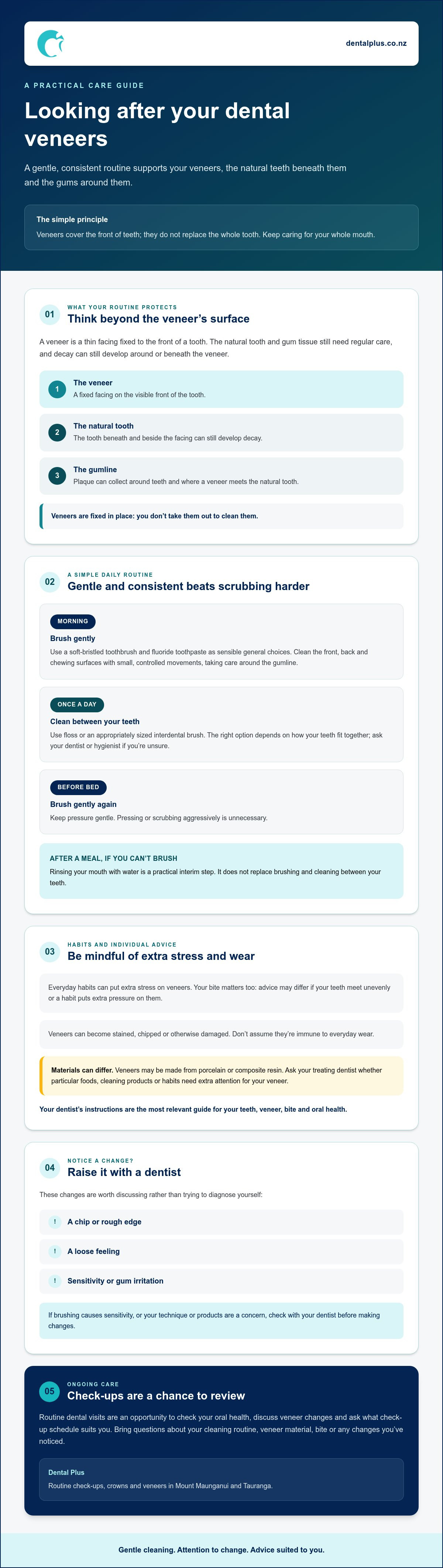
How to care for dental veneers when something feels different
A change in how a veneer looks or feels can be unsettling, but it doesn’t tell you what the cause is. Note what you’ve noticed and when it began, avoid putting extra pressure on the tooth, then contact a dentist for advice. A chip, loose feeling, rough edge, new sensitivity or irritation around the gumline are all worth mentioning.
What to do if a veneer chips, loosens or feels rough
If chewing feels uncomfortable or the veneer seems loose, avoid chewing on that side until you’ve spoken with a dentist. Don’t glue, file or try to adjust the veneer yourself. That could cause further damage or make it harder for a dentist to assess. If it comes off, keep the piece safe in a clean container if practical, but don’t try to reattach it.
When you contact the clinic that treated you, describe what has changed, when you first noticed it and whether you’re experiencing discomfort or sensitivity. These details can help the dental team advise you on what to do next. If you can’t reach the treating clinic, contact another dentist for guidance.
When to arrange a dental assessment
Arrange an assessment if you notice persistent discomfort, a changed bite, ongoing looseness or changes to the surrounding gums. These signs can have different explanations, so a dentist needs to assess them rather than relying on guesswork. A minor change that isn’t worsening still deserves advice, particularly if it persists.
Seek prompt professional care if symptoms are severe or getting worse. If you’re unsure how quickly to act, explain your symptoms when you contact a dental clinic and ask what level of care is appropriate. Don’t wait for a routine visit if you’re concerned the situation needs attention sooner.
A routine dental exam is also a useful opportunity to raise changes you’ve noticed and ask about veneer care. You can read more about a Routine Dental Exam Tauranga as part of planning ongoing care. For personalised advice about a veneer concern, contact Dental Plus about veneer care in Mount Maunganui, Tauranga.
Maintain veneers with regular dental care in Tauranga
Veneer care isn’t only about what you do at home. Routine dental visits give a dentist the opportunity to assess your overall oral health, including the natural teeth and gums around veneers, and discuss any changes you’ve noticed. Your dentist can recommend a check-up schedule suited to your oral health and circumstances rather than relying on a one-size-fits-all interval.
Use your appointment to check that your cleaning routine still suits you. If you’re unsure how to care for dental veneers as your needs change, a conversation with your dentist can help you make informed adjustments without guessing.
Questions to ask at your next veneer check
It can help to jot down questions before your visit, especially if you’ve noticed a change since treatment. Consider asking:
Does my brushing and between-teeth cleaning routine suit my veneers and gum health?
What changes in fit, appearance or comfort should prompt me to contact the clinic?
Could my bite, grinding, clenching or another habit be putting extra pressure on my teeth?
Do you recommend any adjustments to my home-care routine or check-up schedule?
Specific answers can help you understand what’s normal for your own mouth and when to seek advice, without relying on general guidance alone.
Explore veneer and cosmetic dentistry advice in Mount Maunganui
Dental Plus is based in Mount Maunganui, Tauranga, and offers crowns and veneers, routine check-ups and professional dental hygiene. If you’re considering treatment as well as ongoing care, the topics Crowns and Veneers Tauranga and Dental Bonding vs Veneers in Tauranga can help you explore relevant treatment information. Use those comparisons as a starting point for questions, not as a substitute for advice tailored to your teeth.
For personalised guidance, ask a dentist to consider your veneer, bite and oral health together. You can contact Dental Plus through its website to discuss veneer questions, check-ups or cosmetic dentistry options in Mount Maunganui.
Make veneer care part of your everyday routine
Looking after veneers doesn’t have to be complicated. Gentle cleaning, mindful habits and regular dental care support the health of your veneers, natural teeth and gums. If you notice a change in comfort, fit or appearance, seek advice from a dentist rather than trying to adjust the veneer yourself.
The best approach to how to care for dental veneers is one that suits your veneer, bite and oral health. Routine dental visits are a good opportunity to ask about your cleaning technique, discuss changes and confirm a check-up schedule that works for you.
Dental Plus, based in Mount Maunganui, Tauranga, offers crowns and veneers, routine check-ups and professional dental hygiene. If you have questions about caring for your veneers or would like to discuss your dental care, discuss your veneer care with the Dental Plus team.
With consistent daily care and advice tailored to your needs, you can feel more confident about supporting your smile over time.
Frequently Asked Questions
How often should I brush my dental veneers?
Brush your teeth twice a day, including the teeth with veneers, and clean between your teeth daily. Use gentle movements across all tooth surfaces and take care around the gumline. Veneers don’t remove the need to care for the natural teeth and gums around them. If your dentist has recommended a different routine because of your oral health or treatment, follow their personalised advice.
Can I use an electric toothbrush on dental veneers?
Generally, you can use an electric toothbrush on teeth with veneers, provided you brush gently and follow any instructions from your dentist. Let the brush do the work rather than pressing hard or scrubbing along the gumline. If you have sensitivity, a changed veneer or specific advice about your teeth, check with your dentist about the brush and technique that suit you.
What toothpaste should I use to clean veneers?
A fluoride toothpaste that isn’t abrasive is a sensible general option, but the right choice can depend on your veneer and oral health. Don’t assume that a whitening toothpaste or another specialised product is suitable for everyone. If you’re unsure what to use, or your dentist has given you specific instructions, ask them to recommend an approach for your teeth and veneers.
Can coffee or tea stain dental veneers?
Colour changes can vary with the veneer material and individual circumstances. Coffee or tea may contribute to staining, but it’s not accurate to say every veneer will stain or that a particular drink will always cause discolouration. Natural teeth around veneers can also change in appearance. If you notice a persistent colour difference, ask your dentist for advice rather than trying abrasive products or scrubbing harder.
Can I eat normally with dental veneers?
You can generally eat a varied diet while taking care not to put unnecessary force on your teeth. Avoid using them to open packaging or bite objects, and be mindful of habits such as chewing ice or biting very hard items. What may pose a risk can depend on your veneer, bite and oral health. Ask your dentist if you need advice tailored to your situation.
What should I do if a dental veneer chips or comes loose?
Contact a dentist for advice and avoid chewing on the affected tooth while you wait for guidance. Note when the change began and describe any roughness, looseness, sensitivity or discomfort. Don’t glue, file or try to adjust the veneer yourself. If it has come off, keep it safe in a clean container if practical, but don’t attempt to reattach it.
Do dental veneers need professional cleaning?
Veneers still need to be included in your regular dental care. Routine check-ups give a dentist the opportunity to assess your oral health and discuss changes around veneers, while professional hygiene visits support care of your teeth and gums. Tell the dental team that you have veneers and follow their advice about cleaning. Your dentist can recommend a check-up schedule suited to your needs.
Can teeth grinding damage dental veneers?
Grinding or clenching can put repeated pressure on teeth and may increase the risk of damage to veneers. If you notice jaw tightness, changes in your teeth or a veneer that feels different, discuss it with a dentist. They can assess your bite and advise whether any protective approach is suitable. Don’t assume a mouthguard is right for you without personalised clinical advice.



Comments