
Dentist for Nervous Patients: Gentle Dental Care in Tauranga

What if feeling more at ease at the dentist starts with being heard, rather than with sedation? If pain, needles, unfamiliar sounds or not knowing what comes next make appointments daunting, you’re not alone. Finding a dentist for nervous patients means looking for care where you can discuss your concerns without judgement, whether you’ve been putting off a check-up or feel uneasy about the state of your teeth.
It’s understandable to worry about what an appointment might involve, and you don’t need to have all the answers before you go. Sharing what makes you anxious, what you’d like explained and when you need clarification can help your dentist understand what matters to you. Sedation may also be an option, but it isn’t the only way to approach care, and a clinician considers its suitability individually.
This article explains what can make dental visits difficult, how to prepare and how to communicate your concerns before and during an appointment. We’ll also outline the comfort support available at Dental Plus in Mount Maunganui, Tauranga, including sedation, so you can understand your options and take a manageable next step.
Table of Contents
Why seeing a dentist for nervous patients can feel like a big step
For some people, a dental appointment brings a little unease. For others, worry can lead them to postpone care or avoid booking altogether. Both experiences are real, and neither means you’re being unreasonable. Dental anxiety is worry or fear connected with dental visits or treatment. It can vary in intensity and may change over time.
Dental anxiety is worry or fear about dental care that can make an appointment feel difficult to face. It isn’t a diagnosis in itself, and it doesn’t look the same for everyone. Some people feel tense in the waiting room; others are concerned about a particular procedure or find it hard to make an appointment. A general overview of dental fear and anxiety can help explain how varied these feelings may be.
Uncertainty can add to the strain. If you don’t know what an examination involves, why a step is being recommended or what a sound means, it’s easy for your thoughts to fill in the gaps. Past experiences can matter too: a difficult appointment may influence how you feel about returning, even if your needs are different now.
What can make a dental visit feel intimidating?
Triggers are personal. You might feel uneasy about needles, the sound of dental equipment, the possibility of discomfort or simply not knowing what happens next. For someone else, being reclined, having instruments nearby or discussing the condition of their teeth may be the hardest part. Previous experiences can shape these reactions, but they don’t determine what support you’ll need at a future appointment.
There’s no single way to be a nervous patient. You don’t have to identify one clear cause or compare your feelings with someone else’s before talking about them. Even saying, “I’m not sure what worries me, but I feel tense about coming in,” gives your dental team useful context. A dentist for nervous patients can take your concerns seriously without assuming everyone needs the same approach.
How avoidance can make returning feel harder
Putting off a visit can bring short-term relief, but the longer it’s delayed, the less familiar an appointment may feel. You might start wondering what care will involve or feel embarrassed about the time that has passed. That uncertainty can make booking seem like a bigger step, which may lead to further postponement. This cycle isn’t a personal failing, and judgement won’t help break it.
Focus on one manageable next step rather than expecting yourself to feel completely calm or plan every part of your care at once. That might mean writing down what you’re worried about or arranging a routine check-up to talk through your concerns. You can also decide what information you want before discussing any proposed care. You deserve to be treated with respect, whatever has led you to seek care now.
How dentists support nervous patients' comfort
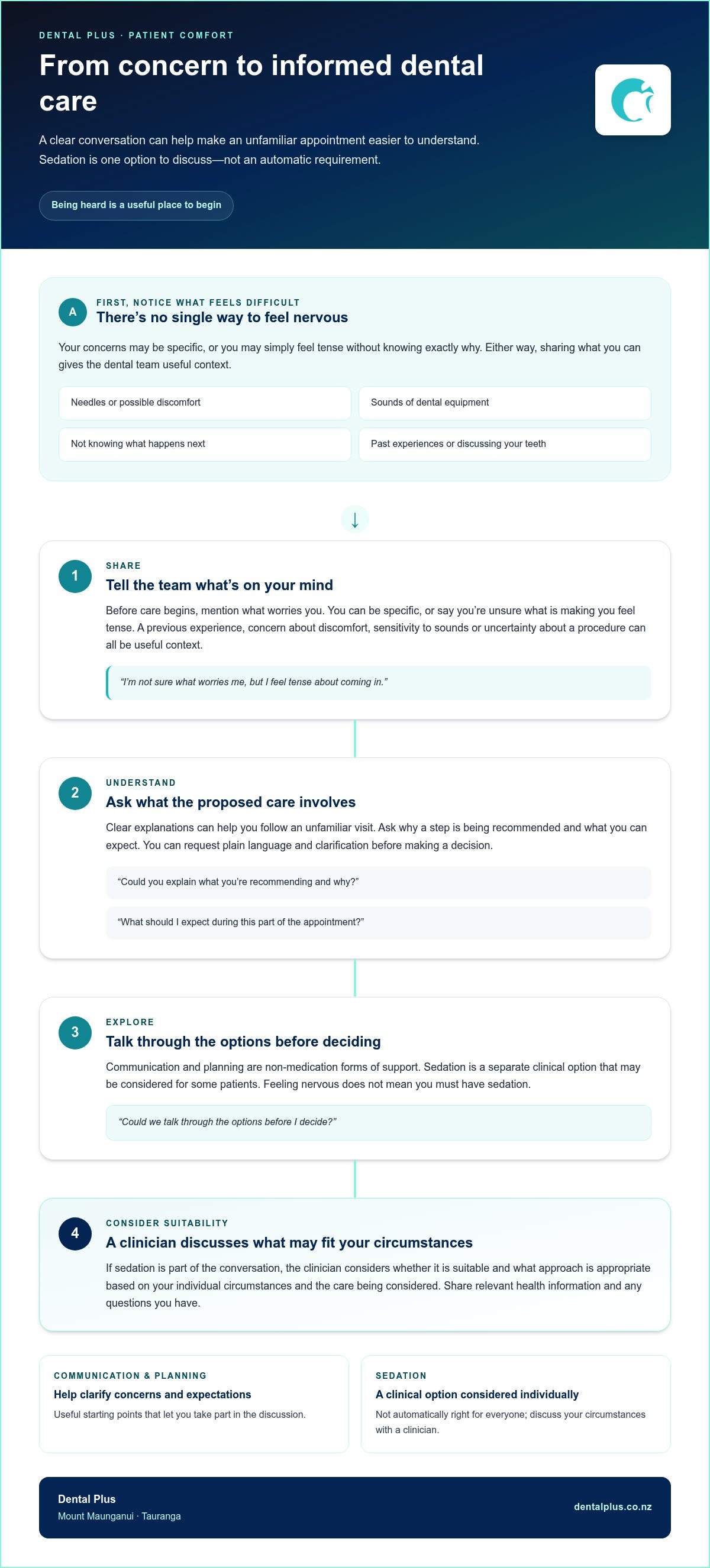
Supportive dental care starts with understanding what feels difficult for you and making sure you understand the care being proposed. You don’t need to arrive with a solution or know whether sedation is right. Sharing your concerns gives the clinician useful context for discussing your needs and the options relevant to your care.
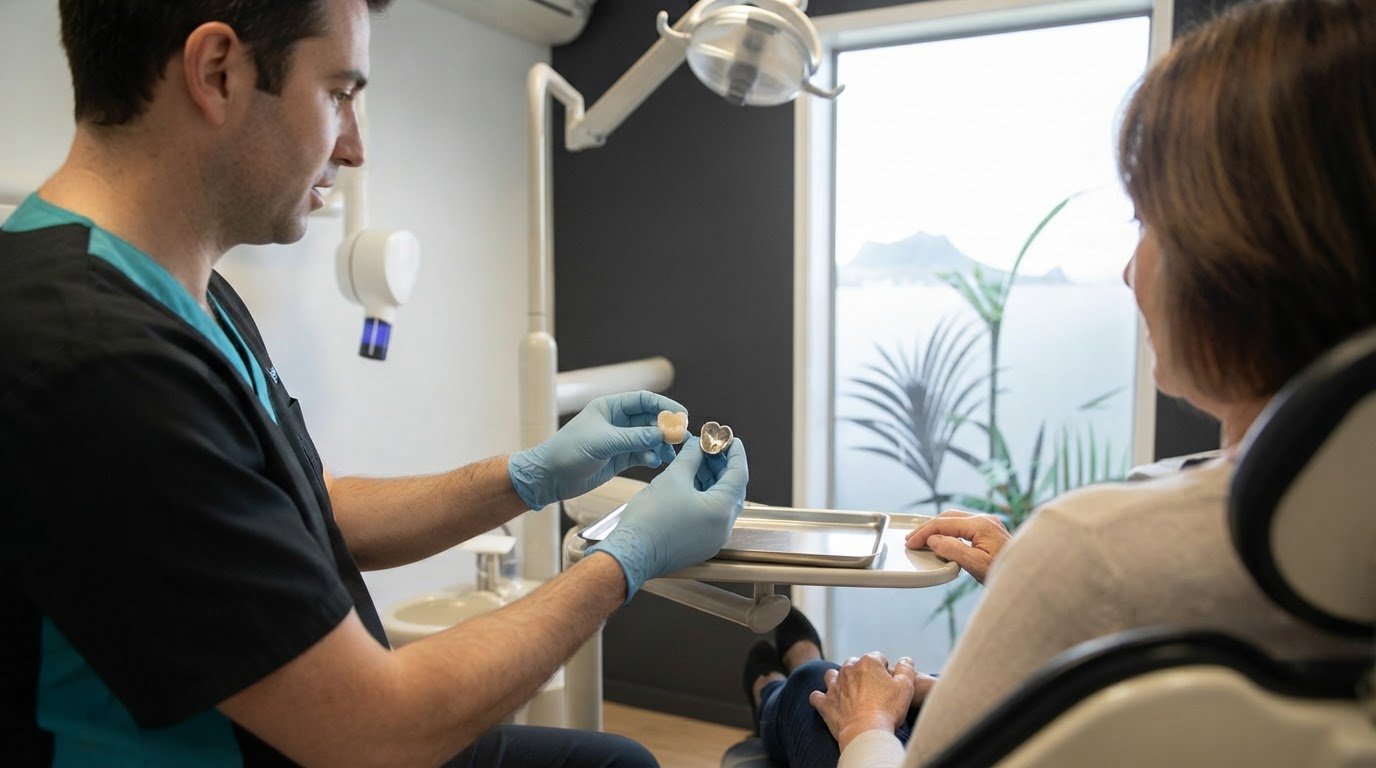
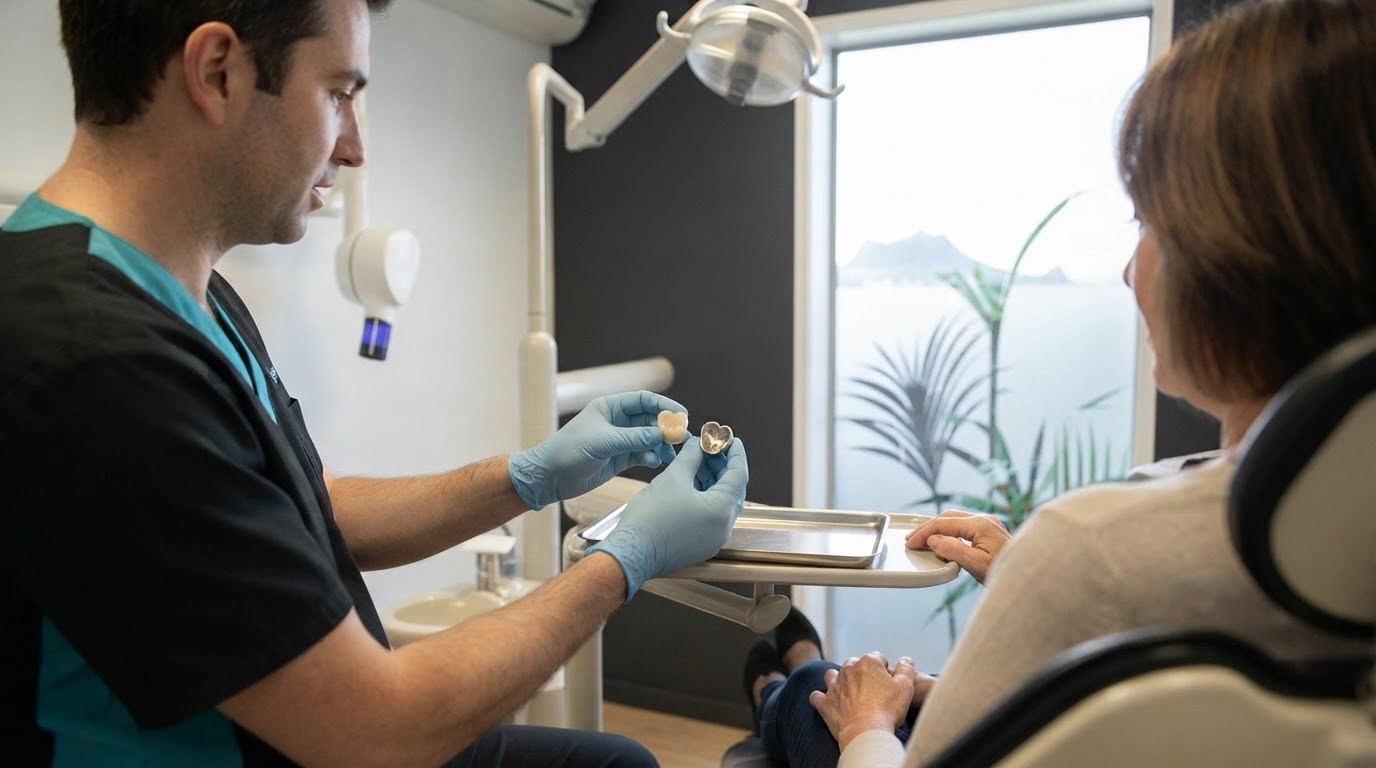
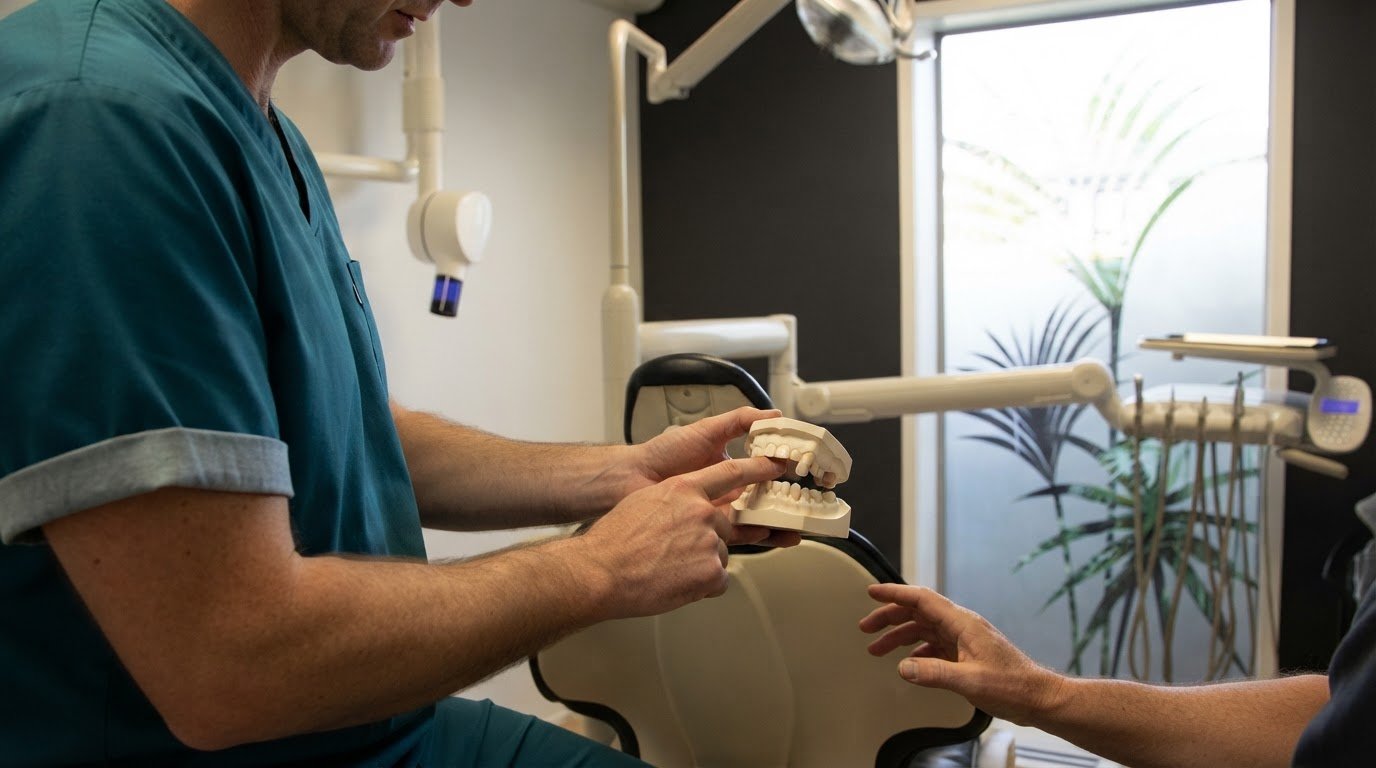
Clear explanations can make an unfamiliar visit easier to follow. You can ask what an examination involves, why a treatment is being suggested and what choices you have before deciding how to proceed. If you understand the purpose and likely steps of care, you have more information to work with. That can reduce uncertainty, although it can’t guarantee how you’ll feel during an appointment.
How communication can help you feel more in control
Before care begins, tell the dental team what you’re worried about. Be as specific as you can, but it’s fine if you’re still working out what feels difficult. You could mention a previous experience, concern about discomfort, sensitivity to sounds or uncertainty about what a procedure involves. Ask for explanations in plain language and let the clinician know what you want to understand before making a decision.
“Could you explain what you’re recommending and why?”
“What should I expect during this part of the appointment?”
“Could we talk through the options before I decide?”
These questions don’t require you to commit to a particular approach. They can help you take part in the conversation and clarify what matters most to you. The American Dental Association also shares strategies to overcome dental anxiety, including ways to discuss concerns and prepare for care.
When sedation may be part of the conversation
Communication and planning are non-medication forms of support; sedation is a clinical option that may be considered separately. Clear information and discussing expectations may be helpful starting points for some patients, while others may wish to ask whether sedation could suit their circumstances. Neither approach is automatically right for everyone, and feeling nervous doesn’t mean you must have sedation.
Dental Plus offers sedation for patient comfort. A clinician considers whether it’s suitable and what approach is appropriate based on individual circumstances. Share relevant health information and any questions you have so the clinician can discuss your situation and the care being considered. You don’t need to work out the decision on your own.
If you’re considering care, you can explore Dental Plus dental care and raise your concerns as part of discussing what may be appropriate for you.
Sedation or other comfort support: how to think through your options
Sedation can be an important option to discuss, but it isn’t the only way to approach a dental visit when you feel anxious. Communication, planning and routine care each have a different role. Thinking about what you find difficult can help you have a more focused conversation with your dentist, rather than feeling you need to choose a treatment or support option on your own.
The approaches below aren’t ranked. They address different needs and can be discussed in relation to the care being considered.
What non-sedation support can involve
Support without sedation can begin before you sit in the dental chair. You might write down what concerns you, note questions about a proposed procedure or ask for an explanation in plain language. For example, if you’re unsure why an examination or X-ray is being recommended, ask what the dentist is looking for and how it relates to your care. Your preferences are personal, so describe what would help you feel informed and heard.
Routine check-ups can also be a way to discuss your dental health and understand any care being considered. You don’t need to decide in advance that you need sedation. A dentist for nervous patients should take your concerns seriously and discuss them respectfully, while explaining which options are relevant to your circumstances.
What to understand before discussing sedation
Sedation is a clinical option, not a promise that you’ll be unconscious or a requirement for anyone who feels anxious. Dental Plus offers sedation for patient comfort, and a clinician considers its suitability individually. The discussion can take account of your concerns, relevant health information and the care planned, so you can understand what is being proposed before making a decision.
You can ask what sedation is intended to address in your situation, what to expect and whether there are other approaches to consider. Be open about your medical history and any questions or reservations; that information helps inform the clinical discussion. You don’t need to decide which option is right before speaking with the dentist. The aim is to understand the choices that may be appropriate, without assuming one approach will suit every patient.
How to prepare for a dental appointment when you feel anxious
A little preparation can make it easier to explain what you need, even if you’re not sure what would help. You don’t have to arrive feeling calm or have a complete plan. Think of preparation as a way to make your concerns easier to share and to help you understand the care being discussed.
Before you arrive: make your concerns easier to explain
Before booking or attending, take a few minutes to note what worries you, any relevant past experiences and the questions you want answered. When arranging an appointment, mention that you feel anxious so the team has context. Include relevant dental and medical history, particularly when discussing possible treatment or sedation.
When booking, say you feel nervous. You can keep it simple: “I’m anxious about dental visits and would like to talk through what to expect.” You don’t need to explain everything at once.
Write down your concerns and questions. Note specific triggers, such as sounds, needles or uncertainty about a procedure. Add questions about what a proposed step involves or why it’s being recommended.
Gather relevant history. Jot down previous dental experiences that may help explain your concerns, along with relevant dental or medical history. Share this information when discussing care, including sedation.
Get familiar with the check-up. If knowing the general purpose of an examination would help, the routine dental exam guide outlines what a modern check-up may involve.
At the appointment, speak up if something is unclear. Ask for a plain-language explanation before a proposed step, and take time to understand the information being shared.
Afterwards, reflect on what was useful. Note what helped, what remained difficult and anything you’d like the dental team to know next time.
During and after the appointment: keep the next step manageable
You’re allowed to ask questions as the conversation unfolds. If a recommendation or explanation doesn’t make sense, ask the dentist to clarify it before you decide how to proceed. You can also share which explanations or approaches felt helpful afterwards, so your preferences can inform future conversations. There’s no need to judge the visit as a success or failure; noticing one useful detail can be enough.
A practical first step is to write down one concern and one question, then share them when arranging or beginning your appointment. If you’re looking for a dentist for nervous patients in Tauranga, you can discuss your dental concerns with Dental Plus and take the conversation one step at a time.
Tauranga dentist for nervous patients at Dental Plus
Choosing where to seek care can feel like another decision to manage when dental visits already make you uneasy. Dental Plus is based in Mount Maunganui and serves patients in the Tauranga area, offering routine dental care and sedation for people who want to discuss anxiety as part of their care.
What Dental Plus offers nervous patients
Dental Plus offers sedation for patient comfort, alongside routine check-ups and digital X-rays. These services can form part of a conversation about your oral health and the care that may be appropriate. Feeling nervous doesn’t automatically mean sedation is needed; a clinician considers its suitability individually, in light of your circumstances and the care being discussed.
You can bring your concerns into that conversation. For instance, you might explain that you’re returning after a long gap, feel unsure about what a check-up involves or want to understand why an X-ray may be recommended. Sharing the reason for your concern can help make the discussion more relevant to you. You can ask questions and take time to understand the options before deciding how to proceed.
Routine check-ups are one way to discuss your dental health and understand what care may be needed. Digital X-rays may be used as part of dental assessment, depending on the clinical context. The dentist can explain the proposed care and discuss whether sedation is suitable for your circumstances. No single option is right for every patient, and talking through your needs is a reasonable starting point.
Take a comfortable next step in Tauranga
You don’t have to resolve every concern before making contact. A manageable next step might be to learn more about the practice, write down one question or arrange a visit when you feel ready. If you’re unsure how to begin, you could simply say that dental appointments make you anxious and that you’d like to discuss your concerns. There’s no need to apologise for feeling this way or to have a particular treatment plan in mind.
It may help to think about what you want from an initial conversation: perhaps a clearer understanding of routine care, an opportunity to explain what has felt difficult or information about sedation. These are useful topics to raise. The decision about care remains a discussion between you and the clinician, based on your individual circumstances.
If you’re looking for a dentist for nervous patients in Tauranga, Dental Plus offers a local place to explore routine care and discuss sedation. Take the next step at a pace that feels manageable, whether that starts with learning about the practice or arranging a visit. Explore Dental Plus and its dental care when you’re ready.
Take your next step at a pace that feels right
You don’t need to wait until every worry has disappeared before seeking dental care. A small step, such as writing down a question or explaining what feels difficult, can help you begin a conversation on your own terms. Support starts with making space for your concerns, not expecting you to feel a certain way.
If you’re looking for a dentist for nervous patients, let your questions guide the next step. You can take time to explore your options, consider what you’d like to discuss and decide when you’re ready to move forward. You don’t need to have everything figured out first.
Explore Dental Plus and take a comfortable next step when it feels right for you. A thoughtful conversation can be a meaningful beginning, and you deserve care that treats your concerns with respect.
Frequently Asked Questions
Is it normal to feel nervous about going to the dentist?
Yes, dental anxiety is a common experience, and people can feel it for different reasons. You might feel uneasy about an unfamiliar procedure, worry about discomfort or carry memories of a previous visit. Feeling nervous doesn’t make you difficult or unreasonable. Try identifying one thing that would help you feel more informed, such as knowing why an examination is recommended, then bring that question to your dental appointment.
Can I visit a dentist if I have not had a check-up for years?
Yes, you can arrange a visit even if it’s been years since your last check-up. If embarrassment is holding you back, you could say when booking, “It’s been a while, and I’m feeling self-conscious.” This gives the practice context without requiring a long explanation. The dentist can assess your current oral health and discuss any next steps, rather than judging you for the time that has passed.
Do I need sedation if I am a nervous dental patient?
No, feeling anxious doesn’t automatically mean you need sedation. Some people begin by asking for an explanation of what a proposed procedure involves; others want to discuss sedation as one possible comfort option. A dentist for nervous patients can consider your circumstances and the planned care when discussing whether sedation may be suitable. Share relevant medical information and ask what the option is intended to address before making a decision.
How can I tell my dentist that I am anxious?
Tell the dentist plainly, using the detail you’re comfortable sharing. For example, you could say, “I’m worried about needles,” or “I feel more anxious when I don’t know what’s happening.” If speaking feels difficult, write a note on your phone and show it at the appointment. Mention any relevant health information too, especially if you’re discussing treatment or sedation, so the clinician can consider your individual circumstances.
What should I do if I feel overwhelmed during a dental appointment?
Let the dental team know you’re feeling overwhelmed and ask to talk through what happens next. You might say, “I’m not following this step. Could you explain it again before we continue?” If you have a preference about how to communicate when you need clarification, raise it with the practice before care begins rather than assuming a particular arrangement is in place. You can then discuss the available options with the dentist.
Can I book a dental check-up even if I am not ready for treatment?
You can arrange a check-up to discuss your oral health, but what happens at the appointment depends on your clinical needs and the conversation with your dentist. If you’re unsure whether a particular treatment will be proposed, explain that you’d like to understand any recommendations before deciding. You can ask what a suggested next step involves, why it may be appropriate and whether there are alternatives to consider.
Does Dental Plus offer sedation for nervous patients in Tauranga?
Yes, Dental Plus offers sedation for patient comfort at its practice in Mount Maunganui, Tauranga. Whether sedation is suitable depends on the individual and the care being considered, so a clinician needs to discuss it with you. You can also describe what makes visits difficult, as that context matters to the conversation. Sedation is one option to consider, not an automatic requirement for nervous patients.
Comments