
Dental X-rays in Tauranga: Your 2026 Guide to Safe Digital Imaging
- DentalPlus Team
- 23 hours ago
- 12 min read

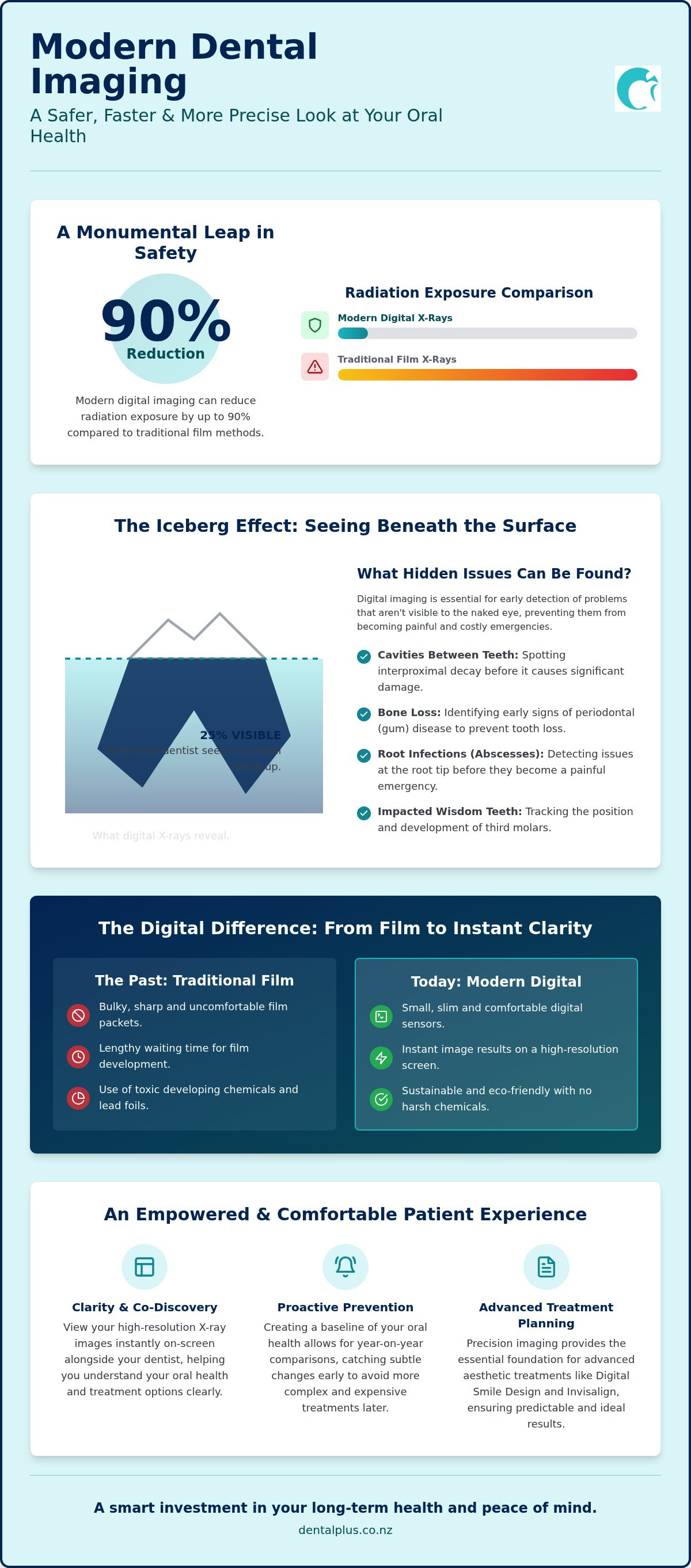
Did you know that modern digital imaging can reduce your exposure to radiation by up to 90% compared to the traditional film methods of the past? It is a staggering leap in safety that many people don't realise has become the new standard for clinical excellence. It's completely natural to feel a bit of hesitation when a practitioner suggests a scan, especially if you're concerned about radiation levels or the physical discomfort of biting down on those old, sharp plastic tabs. You deserve to feel confident that your dental team is using the most gentle and precise tools available to protect your long-term health.
In this guide, you will discover how the latest dental x-rays Tauranga residents can access provide a faster, safer, and far more accurate way to look after your smile. We will explain why these digital advancements are a vital preventive investment that can actually save you money by catching issues before they become costly problems. From understanding the strict 2026 New Zealand safety regulations to finding a supportive dentist in Mount Maunganui who puts your peace of mind first, this article provides everything you need to feel comfortable and informed at your next appointment.
Table of Contents
Why Dental X-rays are Essential for Your Oral Health in Tauranga
When you sit in the dental chair, your dentist's primary goal is to ensure every aspect of your oral health is functioning perfectly. While a visual inspection is a vital first step, it only tells part of the story. Digital dental x-rays Tauranga are a sophisticated, non-invasive diagnostic tool that allows us to see through the hard tissues of your mouth. By using advanced digital imaging technology, we can capture high-resolution pictures of your teeth and jawbone with incredible precision, ensuring nothing is left to chance.
Think of your teeth like an iceberg. During a standard physical examination, a dentist can only see about 25% of the total tooth structure. The remaining 75% is hidden beneath the gum line or tucked away in the jawbone. Digital imaging acts as our eyes below the surface, revealing the health of the roots and the density of the supporting bone. This is particularly important for identifying interproximal decay, which are cavities that form in the tight spaces between teeth. These often remain invisible to the naked eye until they have caused significant damage and pain.
Beyond decay, these scans are essential for spotting the early signs of periodontal disease. Chronic gum issues often lead to bone loss around the base of the teeth, a process that happens silently and gradually. By identifying this bone recession early, we can implement a tailored hygiene plan to stabilise your oral health and prevent future tooth loss.
Spotting Hidden Issues Before They Become Emergencies
Precision imaging allows us to identify infections at the very tip of the root, known as abscesses, before they develop into a painful dental emergency. We also use these scans to monitor the integrity of your existing fillings, crowns, and bridges. Over time, dental work can develop "leakage" or secondary decay underneath the restoration. Catching these small changes early means we can often perform a simple repair rather than a full replacement. For younger patients, we also use these images to track the position of impacted wisdom teeth, ensuring they don't crowd your smile or damage adjacent molars.
A Vital Component of a Routine Dental Exam
A comprehensive dental check up Mount Maunganui relies on these images to create a complete baseline of your oral health history. This baseline is a powerful preventive tool; it allows your dentist to compare scans year-on-year to detect even the most subtle changes in your anatomy. This proactive approach is a smart investment in your long-term health. By identifying potential issues in their infancy, you can avoid the need for complex, invasive, and more expensive treatments later on, giving you total peace of mind that your smile is protected.
Understanding Modern Digital Imaging Technology and Precision
The transition from traditional film to the modern dental x-rays Tauranga patients now experience is much like moving from an old polaroid camera to a high-end digital SLR. Instead of biting down on bulky, uncomfortable film packets, we use small, slim digital sensors. These sensors capture data electronically and transmit it instantly to our computer system. This shift has also allowed us to embrace a more sustainable, eco-friendly approach to dentistry. By eliminating the need for toxic developing chemicals and lead foils, we've made our practice a cleaner space for both our patients and the local environment.
One of the most empowering aspects of this technology is the way it bridges the gap between clinician and patient. We can pull up your images on a high-resolution screen right in front of you, allowing you to see exactly what we see. You aren't just hearing a diagnosis; you're observing the health of your teeth in real time. For complex cases involving implants or wisdom teeth, we may utilise 3D imaging. You can find detailed FDA information on dental CBCT to understand how these advanced three-dimensional scans provide a comprehensive view of your oral anatomy with remarkable clarity.
The Speed of Digital Diagnostics
There's no longer any need to sit and wait while film develops in a darkroom. Whether you've popped in for a quick check-up during your lunch break or a late arvo visit, the results are ready for discussion within seconds. This efficiency means we can spend more time talking through your treatment options and less time waiting for equipment. If your care requires a multidisciplinary approach, these digital files can be shared seamlessly with specialists across the Bay of Plenty, ensuring your journey remains coordinated and fast.
Enhanced Accuracy for Better Outcomes
Precision is where digital imaging truly shines. Unlike old-fashioned film, digital images can be magnified and adjusted for brightness or contrast. This allows us to identify micro-cavities or subtle bone changes that might have been missed in the past. This level of detail is a cornerstone of cosmetic dentistry Tauranga, where every millimetre matters when planning a smile transformation. By reducing the margin for error, we also significantly decrease the need for repeat scans. If you're looking for a clearer picture of your oral health, our team is ready to provide a thorough digital assessment during your next visit.
Safety First: Comparing Radiation Levels in Digital X-rays
Safety is the cornerstone of modern dentistry. One of the most common questions we hear regarding dental x-rays Tauranga is whether the exposure is safe. The answer lies in the "90% Reduction" rule. Because digital sensors are far more sensitive to radiation than old-fashioned film, they require a significantly smaller burst of energy to create a high-resolution image. This technological leap has transformed dental imaging from a necessary concern into a routine, low-risk part of your oral health care. It's a fundamental shift that ensures we can gather vital diagnostic data while keeping your wellbeing at the forefront.
Dental X-rays vs. Everyday Life
It's helpful to put radiation doses into a real-world perspective. We're all exposed to natural background radiation every day from the sun and the earth. For instance, a set of four bitewing X-rays involves about the same amount of radiation as a short domestic flight. If you've ever flown from Tauranga to Christchurch, you've likely received a similar dose just from being at a higher altitude for an hour. In the scientific community, we sometimes use the "Banana Equivalent Dose" to explain low levels of radiation. Eating a single banana exposes you to a tiny amount of naturally occurring radioactive isotopes. A standard dental X-ray is roughly equivalent to eating a few dozen bananas over the course of a year. While the risk is incredibly low, we still provide lead aprons and thyroid collars as an extra layer of reassurance, especially for our younger patients and expectant mothers.
How Often Do You Really Need X-rays?
We don't believe in a one-size-fits-all approach. Your X-ray schedule is customised based on your unique risk factors for decay and gum disease. We strictly adhere to the ALARA principle, which stands for "As Low As Reasonably Achievable." This means we only recommend imaging when there is a clear clinical benefit. For new patients, a baseline set of images is essential. These initial scans allow us to track changes in your tooth structure and bone density over time. If you have a history of excellent oral health, you might only need a new set every two years. Conversely, if you're prone to cavities, we might suggest more frequent checks to catch problems while they're still small and manageable. This targeted approach ensures you receive the highest standard of care with the lowest possible exposure.
What to Expect During Your X-ray Appointment in Mount Maunganui
Stepping into a dental clinic should never feel like a source of stress. When you arrive for your appointment, our team focuses on making the process of capturing dental x-rays Tauranga as seamless and relaxing as possible. The entire procedure is quick and entirely painless. Most patients find that the most time-consuming part is simply getting settled in the chair. Because we use modern digital sensors, the physical experience is much more comfortable than the bulky film packets used in decades past. These slim sensors are designed with rounded edges to sit gently against your gums, significantly reducing the gag reflex or any sharp discomfort.
Before we begin, we will ask you to remove any metal objects from the head and neck area. This includes jewellery, such as earrings or facial piercings, and glasses. Metal can interfere with the digital sensors and create "ghost images" or shadows that might obscure vital details. By taking a moment to prepare, we ensure we capture a crystal-clear image on the first try, which keeps your appointment moving efficiently. Our clinicians are highly trained to guide you through every step, ensuring you feel supported and informed throughout the brief scanning process.
Bitewings vs. OPG: Which X-ray Do You Need?
Depending on your clinical needs, we may use different types of scans. Bitewing X-rays are the most common; these focus on the crowns of your back teeth to find decay between the teeth or under existing fillings. If we need a broader view, we might recommend an OPG (Orthopantomogram). This extraoral scan involves a machine that moves in a circle around your head to capture a panoramic view of your entire jaw, including your wisdom teeth and jaw joints. For a detailed look at a specific tooth from the crown right down to the root tip, we use periapical X-rays, which are essential for diagnosing root infections or planning a crown.
How to Prepare for Your Dental Scan
Preparation is simple and straightforward. It is important to let our team know if you are pregnant or if you have had recent dental imaging at another clinic. While the radiation dose is extremely low, we always follow the safest protocols for expectant mothers. During the scan, we will ask you to stay perfectly still for a few seconds to prevent blurring. Once the images are captured, there is absolutely no downtime or discomfort. You can head straight back to work or your daily activities with total confidence. If you are ready to experience a more comfortable approach to diagnostics, you can book your routine check-up and digital assessment with our friendly team today.
The Dental Plus Difference: Advanced Diagnostics for Personalised Care
At Dental Plus, we believe that world-class dentistry is built on a foundation of precision and empathy. While dental x-rays Tauranga patients receive elsewhere might sometimes be treated as a simple checkbox, we view them as the essential blueprint for your unique smile journey. Our commitment to innovation means we don't just look for problems; we look for possibilities. By integrating advanced imaging into every facet of our practice, we ensure that your care is as predictable as it is beautiful, focusing on the long-term success of every treatment we provide.
Integrated Treatment Planning
Modern aesthetic dentistry requires more than just a keen eye; it demands data. This is why our digital scans form the backbone of Digital Smile Design (DSD). This revolutionary process allows us to virtually plan your transformation before we even begin, giving you a clear vision of the final result. For those considering crowns and veneers Tauranga, high-resolution X-rays ensure that your new restorations are placed on healthy, stable foundations. Similarly, when we map out your Invisalign Mount Maunganui journey, these images allow us to track tooth movement and root positioning with microscopic accuracy. Whether it's a complex full-mouth restoration or subtle dental bonding, our technology-led approach removes the guesswork.
Supportive Care for the Tauranga Community
We understand that for some, a trip to the dentist can feel daunting. That's why we've cultivated a "no worries" environment where patient education and comfort are our highest priorities. Our trusted dentists take the time to walk you through every scan on a high-definition screen, ensuring you feel like an active partner in your health rather than just a patient in a chair. This transparent approach helps alleviate anxiety and builds a relationship of trust that lasts for years.
To make this high standard of modern care accessible to everyone in the Mount, we offer flexible payment options through Afterpay and Qcard. This allows you to prioritise your preventive imaging and essential treatments today while managing the costs in a way that suits your lifestyle. Mount locals trust our clinic because we balance this sophisticated technology with genuine, compassionate care. If you're ready to experience a different kind of dentistry, our team is here to guide you through your next comprehensive exam and digital assessment with the gentleness you deserve.
Take the Next Step Toward a Healthier, More Confident Smile
We've explored how digital imaging has revolutionised modern dentistry by providing a safer, faster, and more accurate way to protect your oral health. By utilising leading-edge technology that offers a 90% reduction in radiation compared to traditional film, we ensure your safety remains our absolute priority while uncovering the hidden issues that a visual exam alone cannot detect. Investing in modern dental x-rays Tauranga is one of the most proactive steps you can take to avoid costly emergencies and plan your future smile with total precision.
Our friendly, professional team in Mount Maunganui is dedicated to providing a gentle, anxiety-free experience that is tailored to your unique needs. With flexible payment options like Afterpay and Qcard, accessing high-quality preventive care has never been more straightforward. Book your comprehensive exam and digital X-rays at Dental Plus today to see the difference that advanced diagnostics can make for your wellbeing. We look forward to welcoming you to our clinic and helping you maintain a vibrant, healthy smile for years to come.
Frequently Asked Questions
Are digital dental X-rays safe for children and pregnant women?
Yes, digital imaging is considered very safe for both children and expectant mothers. Because the sensors are so sensitive, they require a minimal dose of radiation to produce a clear image. For children, we use specific "child-sized" settings to further reduce exposure. While the risk to a developing bub is virtually non-existent, we still use lead aprons as a standard precaution and typically only perform essential scans during pregnancy.
How often should I have dental X-rays taken at my Tauranga dentist?
The frequency of your scans depends entirely on your unique oral health profile and risk for decay. If you have a history of frequent cavities or gum disease, we might suggest bitewing images every six to twelve months. For our patients with excellent oral health and no recent issues, a set of dental x-rays Tauranga every two years is usually sufficient to monitor for any silent changes beneath the surface.
Will I feel any pain or discomfort during the X-ray process?
The process of capturing digital images is completely painless and very quick. You might feel a slight pressure as the slim sensor is positioned against your gums, but modern digital sensors have smooth, rounded edges to prevent the sharp poking sensation common with old-fashioned film. Our team is very gentle and will ensure you're comfortable before taking the scan, which only takes a few seconds of your time.
What is the difference between a bitewing and an OPG X-ray?
Bitewings and OPGs serve different diagnostic purposes. A bitewing is a small, detailed scan that focuses on the crowns of your upper and lower back teeth to find decay in between them. An OPG, or Orthopantomogram, is a panoramic scan that captures your entire jaw in one wide image. This is ideal for checking the position of wisdom teeth, jaw joints, and the overall health of your facial bone structure.
Can digital X-rays detect things other than cavities?
Absolutely, imaging is about much more than just finding holes in teeth. We use these scans to identify infections at the root tip, cysts, and even some types of tumours that aren't visible to the naked eye. They are also vital for spotting early bone loss from periodontal disease. This detailed information is essential when we are planning complex treatments like Invisalign, dental implants, or restorative crowns and veneers.
How much radiation am I actually exposed to during a dental X-ray?
The amount of radiation is incredibly small. Modern dental x-rays Tauranga patients receive at our clinic use up to 90% less radiation than traditional film methods. To put it in perspective, a set of routine bitewings involves roughly the same amount of radiation you would absorb from natural environmental sources during a few hours of normal daily living. It is a very low-risk procedure with significant health benefits.
Do I need to have X-rays if I’m not currently in any pain?
Yes, because many dental problems don't cause pain until they have reached a severe stage. Waiting for a toothache often means the problem has moved from a simple filling to a more complex root canal or extraction. Digital imaging allows us to catch decay and infections in their infancy. This proactive approach saves you from unnecessary discomfort and helps keep your long-term dental costs as low as possible.
Can I get a copy of my digital X-rays to take home?
You certainly can. One of the main advantages of digital technology is the ease of sharing information. Since your images are stored as high-resolution digital files, we can email them directly to you or forward them to a specialist in seconds. This makes your dental records highly portable and ensures that any other healthcare providers in your journey have the most accurate and up-to-date information about your oral health.


Comments