
Dental Crowns Tauranga: Your 2026 Guide to Restoring a Natural, Confident Smile

Updated: Oct 12
What if restoring a damaged tooth could protect your bite and still look like it belongs in your smile? It’s understandable to worry that a crown might look unnatural, feel uncomfortable or leave you unsure which material to choose. With dental crowns Tauranga patients can explore options designed to balance appearance and function, rather than settle for a one-size-fits-all result.
This guide compares zirconia and porcelain crowns, explains how a dentist can match a material to the tooth and your needs, and outlines what to expect during treatment. You’ll also learn how Digital Smile Design can help plan a restoration with your smile in mind. If dental visits make you anxious, sedation options can help you feel more at ease. We’ll also cover how Afterpay and Qcard can help you manage restorative care, so you can make an informed choice.
Table of Contents
Restoring Your Smile in Tauranga: When is a Dental Crown Necessary?
A tooth can look intact on the surface yet be weakened by decay, a crack or a large filling. A dental crown is a custom-fitted cap that covers the visible part of a tooth, restoring its shape, size and strength. By surrounding and supporting the remaining tooth, it can help protect it during everyday biting and chewing. The dental crown overview explains how crowns restore damaged teeth and describes common materials and treatment steps.
Your dentist may recommend a crown if a tooth has a large fracture, severe decay or has undergone root canal treatment and needs additional protection. The right option depends on how much healthy tooth remains, where the tooth sits and how much force it takes when you bite. An examination helps determine whether a crown is appropriate or another restoration may better suit the tooth.
Putting off an assessment can allow damage to progress. A crack may extend, or decay may weaken more of the tooth, potentially making it harder to restore. If the tooth can no longer be saved, it may need to be removed, and replacing a missing tooth can involve additional treatment, such as a bridge. Early advice gives you a clearer picture of the options before the problem becomes more complex.
Protecting Weakened or Cracked Teeth
A tooth with a large existing silver filling has less natural structure to withstand biting pressure, which can leave its remaining walls vulnerable to splitting. A crown covers and supports the weakened tooth, helping it cope with everyday use. It acts like a protective cover for a compromised tooth, shielding what remains while restoring a useful biting surface. That support matters when you’re enjoying local Bay of Plenty produce, from crisp apples to corn on the cob.
Cracks can be difficult to judge at home, so don’t wait for sharp pain before booking an assessment. Sensitivity when biting, discomfort that comes and goes, or a visible fracture are reasons to have the tooth checked. Prompt attention can help clarify whether a crown or another treatment is needed.
Aesthetic Upgrades and Smile Alignment
Crowns can also form part of a cosmetic smile makeover. For a tooth with severe discolouration that whitening can’t address, a crown may cover the affected surface and create a more even appearance. In selected cases, crowns can reshape teeth to close small gaps or make a smile look straighter without years of braces. They don’t move teeth like orthodontic treatment, though, and preparation involves changing the tooth, so suitability needs careful consideration.
At Dental Plus in Mount Maunganui, Digital Smile Design helps plan restorations with your facial proportions and smile in mind. If you’re weighing up different ways to refresh your appearance, explore our guide to cosmetic dentistry in Tauranga for more on treatment options. A personalised assessment can help you understand what may improve your smile while protecting your long-term oral health.
Choosing the Right Material: Zirconia, Porcelain, and E-max Crowns
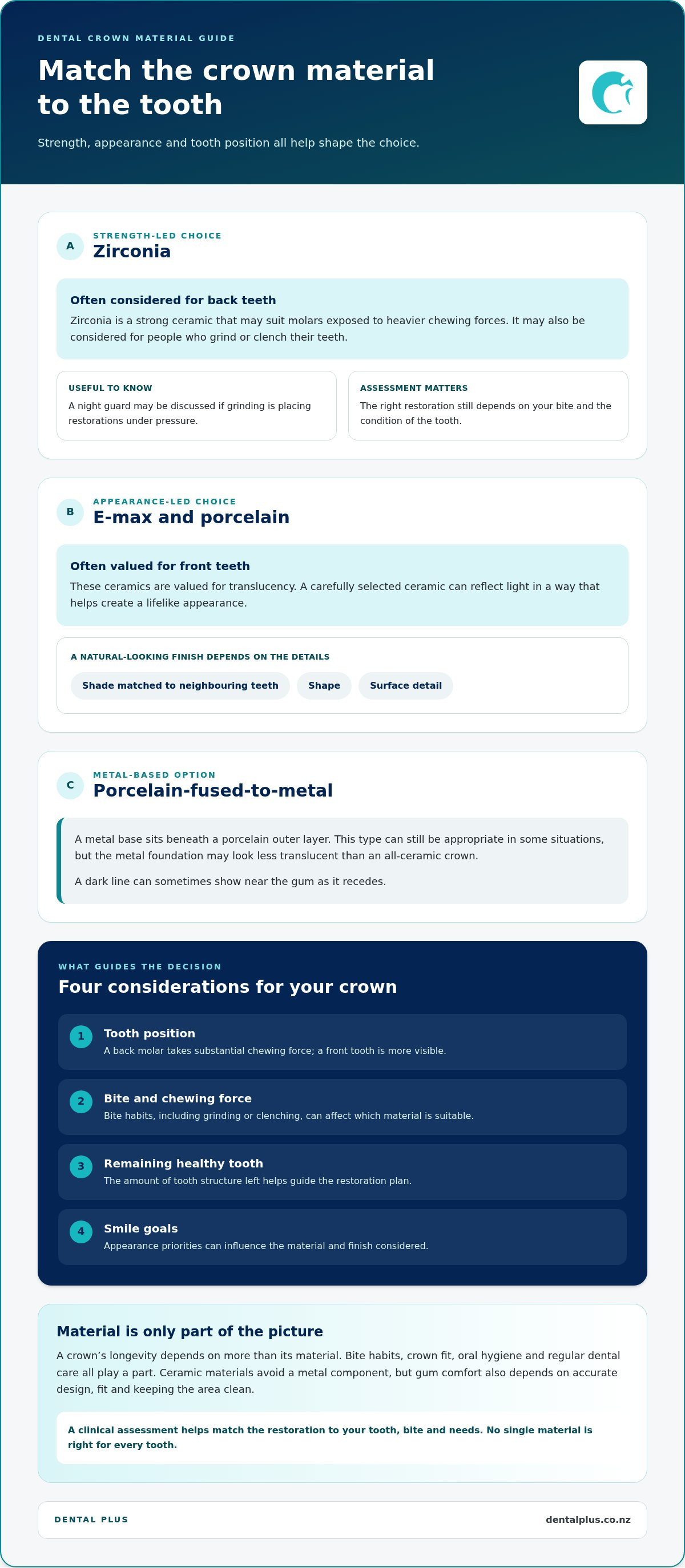
The best crown material balances strength, appearance and the position of the tooth. A back molar takes substantial force as you chew, while a front tooth is more visible and needs to blend with the light and colour of its neighbours. Your bite, the amount of remaining tooth and your smile goals all help guide the choice. For a general overview of crown materials and treatment, see MedlinePlus dental crowns.
Zirconia: The Powerhouse for Back Teeth
Zirconia is a strong ceramic often considered for molars that handle heavy chewing. It may suit people who grind or clench their teeth, known as bruxism, although the right restoration depends on an individual assessment of bite and tooth condition. Strength isn’t a substitute for good fit or regular care, and a night guard may be discussed if grinding is putting restorations under pressure. For a closer look at the trade-offs, explore our Zirconia vs Porcelain crowns Tauranga guide.
E-max and Porcelain: The Gold Standard for Front Teeth
E-max and other porcelain ceramics are valued for their translucency. Because natural enamel allows light to pass and reflect in subtle ways, a carefully selected ceramic can create a lifelike appearance on a front tooth. Shade, shape and surface detail matter as much as the material. Matching the colour to surrounding teeth helps the restoration sit naturally within your smile rather than stand out as a noticeably different shape or tone.
Traditional porcelain-fused-to-metal crowns combine a metal base with a porcelain outer layer. They can still be appropriate in some situations, but the metal foundation may make the restoration look less translucent than an all-ceramic option, and a dark line can sometimes show near the gum as it recedes. Modern ceramics offer an alternative for people prioritising a natural-looking result. No single material is right for every tooth.
Material choice also affects how a crown responds to daily use over time. Zirconia’s strength can be helpful under heavier chewing forces, while highly aesthetic ceramics may be considered where appearance is especially important. Longevity depends on more than the material alone: bite habits, crown fit, oral hygiene and regular dental care all play a part. Tauranga’s climate isn’t a reason by itself to favour one crown material over another; your tooth and oral environment are more relevant.
Biocompatibility is another consideration. Ceramic materials avoid a metal component, which may be preferred by some patients, but gum comfort depends on accurate design, fit and keeping the area clean. At Dental Plus, Digital Smile Design supports personalised planning, while a clinical assessment helps match the restoration to your needs. If you’re considering dental crowns Tauranga, explore crown care at Dental Plus as a starting point for understanding your options.
The Digital Smile Design (DSD) Advantage for Crown Planning
A crown is part of your smile, not just a repair to an individual tooth. Digital Smile Design (DSD) helps plan a restoration in relation to your facial proportions, lips and surrounding teeth, so the intended result feels harmonious rather than isolated. For people considering dental crowns Tauranga, this approach adds a visual planning stage before treatment, making it easier to discuss the shape and appearance you’d like.
Visualising Your Result with DSD
Planning may begin with photographs and a digital assessment of your smile. These records help your dentist consider how the tooth appears when you speak and smile, not only how it looks in a close-up view. Digital scans can also capture the tooth’s shape without the traditional tray of impression putty, which some patients find uncomfortable. The records used depend on your treatment plan.
With a smile simulation, you can preview a proposed design on screen before the crown is made. Think of it as a way to discuss the planned look, not a guarantee that the final restoration will be identical to an image. You can share feedback about details such as the crown’s apparent length, shape and how it sits alongside neighbouring teeth. That conversation gives your dentist a chance to refine the plan around your preferences and clinical needs.
DSD planning is especially useful when a crown is visible as you smile or forms part of a wider cosmetic restoration. A tooth may look different on its own than it does in context: the lip line, facial proportions and adjacent teeth all influence how balanced the final smile appears. Explore our Digital Smile Design explainer to learn more about visualising a planned smile.
Precision Fitting and Longevity
The visual plan addresses appearance, while careful clinical preparation and accurate records help guide the crown’s fit. In modern restorative and aesthetic dentistry, clinics such as modent.eu demonstrate how microscopic precision can assist in preparing seamless tooth margins. The edge where a crown meets the natural tooth is called the margin. A well-fitting margin helps reduce gaps where plaque could collect, although no crown can remove the need for daily brushing, cleaning between teeth and routine dental care. Fit, bite and ongoing maintenance all matter to the restoration’s performance.
Digital planning also supports communication between your dentist and the dental technician making the crown. Photographs, scans and agreed design details can help convey the intended shape and shade, while the technician’s craft brings that plan into a finished restoration. The dentist then assesses how the crown fits and functions before it’s placed. This partnership between planning and skilled laboratory work helps unite appearance with everyday use.
At Dental Plus in Mount Maunganui, DSD brings a considered, collaborative element to crown planning. You can take part in decisions about your smile, while your dentist guides the choices to keep the restoration practical as well as natural-looking.
The Patient Journey: What to Expect During Your Crown Procedure
Knowing what will happen at each visit can make crown treatment feel more manageable. At our Mount Maunganui clinic, the process starts with an assessment and a plan tailored to your tooth, bite and smile. A traditional lab-made crown usually involves preparation at one appointment, followed by fitting the finished restoration at a later visit. Your dentist will explain your treatment plan and what to expect along the way.
Consultation and digital scan: Your dentist examines the tooth, discusses your concerns and takes digital records to help plan the crown. Digital scanning can avoid the messy putty impression some patients find uncomfortable.
Preparation and temporary crown: The tooth is carefully shaped to make room for the restoration. A temporary crown protects it while the custom crown is made.
Final fitting: At a later appointment, your dentist checks the crown’s fit, appearance and bite before bonding it in place. Adjustments can be made to help it feel comfortable and function naturally.
Is the procedure painful? Local anaesthetic is used to numb the area during tooth preparation, so you should feel pressure rather than sharp pain. Sensations vary, and it’s fine to let your dentist know if you’re uncomfortable at any point. The temporary crown may feel different at first, so follow the care guidance provided and avoid putting undue force on it while you wait for the final fit.
Sedation Options for Nervous Patients
If dental anxiety makes treatment difficult, tell your dentist. Dental Plus offers sedation to support nervous patients, alongside a gentle, reassuring approach. Your dentist can discuss whether sedation is suitable for your circumstances and explain what it involves, so you know what to expect. Restorative care should be approached with support and clear communication, not pressure.
Caring for Your New Crown
A crown needs the same consistent care as your natural teeth. Brush twice daily with a soft-bristled toothbrush, clean between teeth every day and keep up with routine dental and hygiene visits. Pay attention to the gumline around the crown, where plaque can collect. A professional dental hygiene appointment helps maintain gum health and gives your dental team the chance to monitor your restoration over time.
Use teeth for chewing, not as tools. Don’t open packets, bite fingernails or crack hard objects with your crown, as excessive force can damage a restoration or the tooth beneath it. If your bite feels uneven or the crown becomes loose, arrange a dental review rather than trying to adjust it yourself.
Considering dental crowns Tauranga? Understanding the steps, comfort options and aftercare can help you feel prepared. Book a crown consultation with Dental Plus to discuss your tooth and treatment plan.
Investing in Your Smile: Costs and Financing in Tauranga
A crown restores a tooth so it can function and look more like a natural part of your smile. It’s also an investment in protecting the tooth, but no restoration lasts forever. A 10-15 year timeframe can be a useful planning guide, not a guarantee: longevity depends on factors such as the tooth’s condition, your bite, daily care and regular dental reviews.
The cost of a crown varies because each tooth and treatment plan is different. Material choice can affect the overall fee, as can the amount of preparation needed and the complexity of restoring the tooth. If additional treatment is needed before the crown can be placed, that may also affect the plan. A clear quote should explain the recommended treatment and its costs before you decide to proceed, so you can understand what’s included and plan with confidence.
Flexible Payment Plans: Afterpay and Qcard
Paying for restorative care all at once may not suit every household budget. Dental Plus offers Afterpay and Qcard, which can help eligible patients spread payments over time, subject to each provider’s terms. Consider how repayments fit alongside your regular expenses, and review any applicable fees, interest or payment conditions before committing. Knowing the repayment schedule can help you prioritise your oral health while making a considered choice.
If you’re comparing options, discuss the proposed crown and payment methods as part of your treatment planning. That way, you can weigh the material and clinical needs alongside the financial arrangements, rather than choosing a restoration on cost alone.
Why Choose Dental Plus for Your Crowns?
Dental Plus provides crown and veneer care alongside Digital Smile Design, bringing a modern planning approach to restorative treatment in Mount Maunganui. The process keeps your smile goals in view while your dentist considers what’s practical for the tooth. Our trusted dentists take a patient-centred approach, explaining the options so you can make an informed decision without feeling rushed.
For people comparing dental crowns Tauranga options, the right choice is one that supports the tooth, suits your smile and fits your circumstances. A conversation about the treatment plan can help clarify those priorities and the available payment options.
Book your crown consultation at Dental Plus today to discuss your tooth, restoration options and payment arrangements.
Take the Next Step Towards a Smile That Feels Like You
Choosing a restoration is a personal decision, and you don’t need to have every answer before beginning. A conversation with a dentist can help you understand what your tooth needs, what outcome feels right for you and how to approach treatment at a comfortable pace. For dental crowns Tauranga patients can feel confident choosing, the first step is getting advice tailored to their smile and priorities.
At Dental Plus, Digital Smile Design helps you consider your crown in the context of your smile, while compassionate care and sedation support are available if dental anxiety is part of your experience. Afterpay and Qcard are also available to help you consider payment arrangements alongside your treatment plan.
Ready to explore your options? Book your smile consultation at Dental Plus Mount Maunganui and take a considered first step towards restoring your smile. You deserve care that helps you feel informed, supported and comfortable moving forward.
Frequently Asked Questions
How long does a dental crown typically last?
A dental crown can last from five to over 30 years, although lifespan varies from person to person. The fit, the tooth underneath, your bite and habits such as grinding all affect how it holds up. Regular dental reviews can help identify wear or problems early. If a crown feels loose, chipped or different when you bite, arrange an assessment rather than waiting for discomfort to worsen.
Will my dental crown look fake or stand out?
A well-planned crown can be made to blend with neighbouring teeth in shape and shade. The material, colour and translucency influence how it looks, especially on a front tooth. Your dentist can consider these details when planning the restoration and discuss your preferences before treatment. Keep in mind that teeth vary naturally, so the goal is a harmonious result, not necessarily an exact match in every lighting condition.
Does getting a dental crown hurt?
The area is numbed with local anaesthetic during tooth preparation, so you should feel pressure rather than sharp pain. You may notice temporary tenderness or sensitivity afterwards as the tooth settles. Let your dentist know if you feel uncomfortable during treatment, as they can pause and check how you’re feeling. If anxiety is a concern, Dental Plus offers sedation to support nervous patients.
What is the difference between a crown and a veneer?
A crown covers the visible part of a tooth to restore or protect it, while a veneer is a thinner covering bonded to the front surface, often to change appearance. The choice depends on how much of the tooth needs repair and how much healthy structure remains. For example, a tooth weakened by extensive damage may need the coverage of a crown, while a veneer may suit a cosmetic concern.
Can I get a dental crown on the same day in Tauranga?
Same-day crowns are possible in dental practices using in-house computer-aided design and manufacturing, but this approach isn’t suitable for every tooth or treatment plan. Lab-made crowns generally involve preparation first and fitting at a later appointment. Your dentist will plan the process around the restoration required and explain the expected steps, including whether a temporary crown is needed while the final one is made.
How much does a dental crown cost at a Tauranga dentist?
There isn’t one fixed fee for dental crowns Tauranga patients can expect at every practice. The cost depends on factors such as the material, the condition of the tooth and the complexity of treatment. An assessment helps establish what the tooth needs and which restoration is suitable. Before proceeding, ask for a clear explanation of the recommended treatment and associated costs so you can plan your decision.
Can I use Afterpay for my dental crown treatment?
Yes, Afterpay is available at Dental Plus for dental treatment, including crowns. It allows eligible patients to split a payment into instalments, subject to Afterpay’s terms and conditions. Review the repayment schedule and any applicable conditions to check that it fits your budget. Dental Plus also offers Qcard, giving patients another payment option to consider when planning restorative care.
What happens if I don’t get a crown on a cracked tooth?
A crack can extend under continued biting pressure, potentially causing more pain and making the tooth harder to restore. If it reaches the inner part of the tooth, further treatment may be needed; in severe cases, the tooth might not be salvageable. Avoid chewing hard foods on the affected side and arrange a dental assessment promptly. Only an examination can show how far the crack extends and what care is appropriate.


Comments