
Dental Care in Tauranga: A Clear Guide for 2026

Searching for dental care in Tauranga can leave you wondering whether to book a routine check-up, ask about a cosmetic treatment or discuss orthodontic options. Appointments can also feel daunting, especially if you’re worried about treatment discussions or being judged. You don’t need to know the name of a treatment before you start. A good conversation begins with what you’ve noticed and what matters to you.
This guide explains how preventive care, smile-focused treatments and teeth-straightening options fit together. It also covers what to note before an appointment, how to discuss your priorities and what questions can help you understand possible next steps.
Dental Plus in Mount Maunganui, Tauranga, provides routine check-ups, professional dental hygiene and digital X-rays, as well as Digital Smile Design, whitening, bonding, crowns, veneers, Invisalign and traditional braces. Your goals and comfort can help shape a considered care plan. Whether you’re due for a check-up or exploring a change to your smile, the next step can be a simple, informed conversation.
Key Takeaways
Good denta care connects prevention, assessment and treatment planning, helping you decide what to discuss at your next visit.
Sharing your concern and reviewing the findings with your dentist can clarify possible next steps, including whether digital X-rays may support an assessment.
Routine, cosmetic and orthodontic care address different goals. Use your priorities to guide a conversation about suitable options.
Before your appointment, note your main concern, relevant dental history and questions. Tell the team about any nervousness or comfort preferences.
Dental Plus supports patients in Mount Maunganui and Tauranga with preventive, cosmetic and orthodontic care, including Invisalign and traditional braces.
Table of Contents
What does dental care in Tauranga include?
Dental care covers prevention, assessment and treatment planning. It can include routine check-ups, professional dental hygiene and appointments to address a particular concern. A practical denta care plan starts with what you’ve noticed and what you want help with, then considers appropriate next steps with a dental professional.
At a routine visit, you can raise changes or concerns and have your teeth and gums assessed. The dentist can explain any findings and discuss whether they need follow-up. Recommendations depend on your individual assessment, so a routine visit cannot guarantee that every concern will be identified or prevented.
How preventive and treatment-focused dental care work together
Preventive care and treatment are related, but they have different purposes. A check-up focuses on assessment and discussion. A professional hygiene visit provides a clinical cleaning appointment that complements daily home care. A treatment appointment focuses on a particular finding or concern. One type of visit does not automatically replace the others.
Check-up: An opportunity to assess your teeth and gums and raise questions, even if you haven’t noticed a specific problem.
Professional hygiene: A clinical cleaning appointment that complements regular brushing and cleaning at home.
Treatment appointment: A visit focused on a next step discussed after an assessment.
If a check-up identifies something to explore, the dentist can explain the finding and discuss whether another appointment or further assessment is appropriate. Ask what the recommended next step is for, what it involves and whether there are alternatives. For broader background on the scope of the profession, see Dentistry and Oral Health.
What local dental care can look like in Tauranga
For people in Mount Maunganui and Tauranga, a local private practice can bring preventive visits and treatment discussions together in one ongoing relationship. Dental Plus is an independent practice in Mount Maunganui, offering routine check-ups, professional dental hygiene and digital X-rays alongside cosmetic and orthodontic care. You can explain your concern and comfort preferences so the conversation reflects your circumstances.
Private-practice services and national public-service guidance are different. Health New Zealand provides general information about public dental services and eligibility. Criteria can depend on the service and a person’s circumstances, so refer to its guidance for details relevant to you. This article describes care available through a local practice, rather than public funding rules.
Whether you’re maintaining your oral health or have a concern you’d like to understand, you don’t need to arrive with a diagnosis. Note what feels different, explain your priorities and ask what the assessment shows. Your dentist can help you understand which type of care may fit and what a manageable next step could be.
How do dentists assess your needs and plan care?
A useful assessment includes a conversation as well as a clinical check. You explain what has brought you in, the dentist considers relevant information and findings, and then you discuss possible next steps together. You don’t need to arrive with a diagnosis or know the name of a treatment to get started.
A care plan follows an individual clinical assessment and reflects the findings, your needs and the options discussed.
Share your concern. Describe what you’ve noticed, when it began and what you’d most like to address.
Discuss the assessment. The dentist can explain what they’ll assess and whether additional information, such as digital X-rays, may be useful in your situation.
Review the findings. Ask what the dentist observed and how it relates to your concern.
Consider next steps. Discuss suitable options, their purpose and how they fit your priorities before deciding how to proceed.
What to share during a dental assessment
A few notes can help you organise your thoughts, especially if you’re feeling nervous. Mention when the concern started, whether anything seems to change it and what you hope to understand. Share relevant dental history and previous experiences, too. You don’t need to work out the cause yourself. Describing what you’ve noticed gives the dental professional a useful starting point.
What you’ve noticed and when it began
Relevant dental history or previous experiences
Your main priority and any questions you’d like answered
Any anxiety or comfort preferences you’d like the team to know about
How a care plan turns findings into options
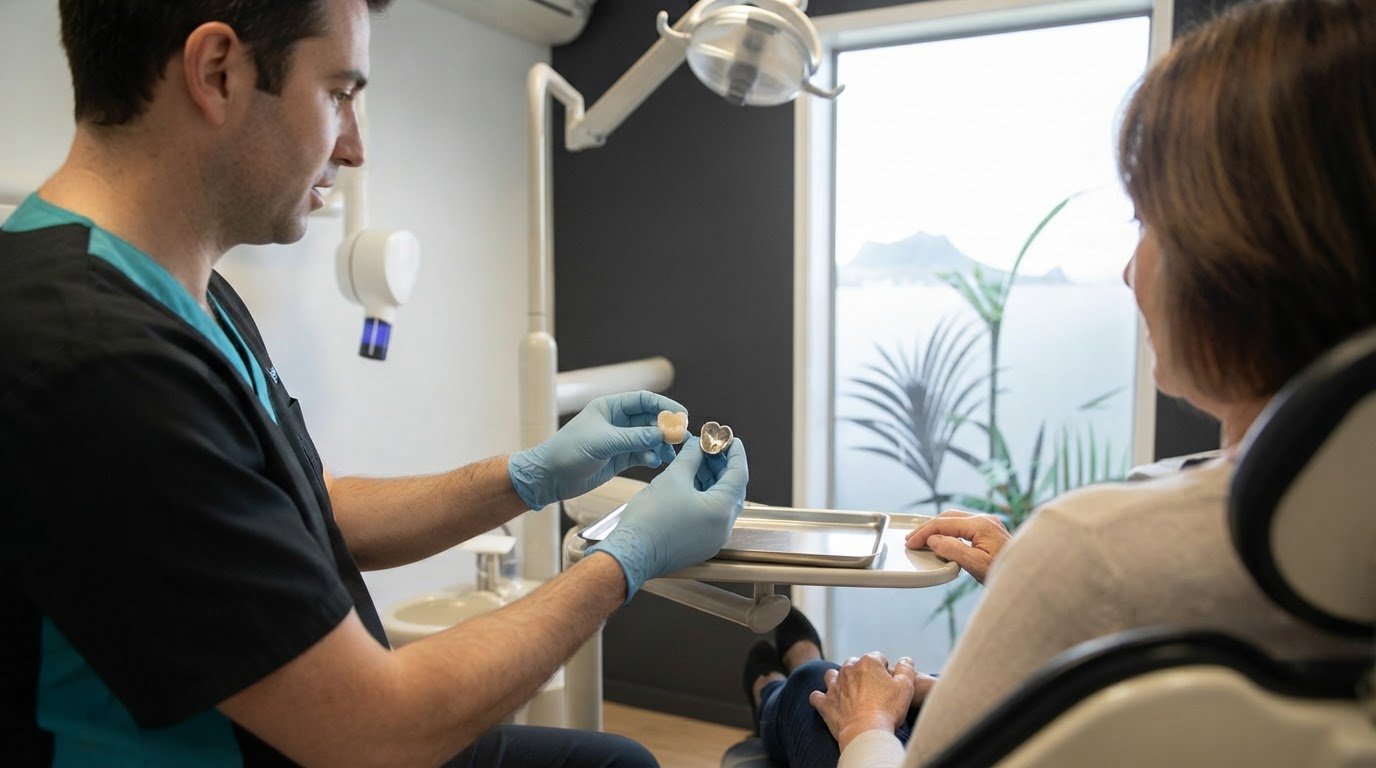
After reviewing the assessment, the dentist can explain relevant options in plain language, including what each is intended to address. Ask what a finding means, what the proposed next step involves and whether there are alternatives. You can also explain which priorities matter most, such as addressing a particular concern or understanding how different choices fit your goals.
Digital X-rays are one assessment tool. They may provide useful information when clinically appropriate, but they aren’t needed for every person or every visit. Your dentist can explain why imaging is being considered in your circumstances and discuss what the findings show. For wider context on oral health and prevention, the World Health Organization’s Global Oral Health Overview describes the impact of oral health and approaches to preventing and treating oral disease.
You can ask for an explanation at any point or say if you need a moment before discussing a decision. If you’re ready to talk through a concern, Dental Plus dental care in Tauranga offers a local starting point for a considered conversation about your needs.
Which dental care option fits your needs in Tauranga?
The right starting point depends on what you want help with. You might be maintaining your oral health, exploring a change to your smile or asking about tooth alignment. You don’t need to choose a treatment before speaking with a dentist. Identify your main goal and use it to guide a discussion about which type of care may suit your needs.
Use the table as a conversation guide, not as a diagnosis or substitute for assessment. Your priorities may overlap. For example, you might want to discuss a smile change while keeping up with routine care. A dentist can help clarify what to address first and whether an option fits your circumstances. This keeps denta care focused on your needs, rather than on choosing a procedure from a list.
When preventive care may be the right starting point
If your aim is to maintain oral health, a routine check-up and a professional hygiene visit are related but distinct. An examination gives you an opportunity to discuss your oral health and any concerns. A hygiene appointment focuses on professional cleaning alongside your daily home-care routine. Discuss the timing and recommendations for either with a dental professional, based on your circumstances. The routine dental exam guide explains more about what a check-up can involve.
When to discuss cosmetic or orthodontic goals
Appearance-focused goals and alignment concerns are different starting points, even if both relate to how your smile looks. Describe the change you’d like to explore, or explain what concerns you about the position of your teeth. An assessment helps determine whether a particular option is appropriate for you. No single approach suits everyone. For ideas about appearance-focused care, explore the cosmetic dentistry guide.
Before your appointment, consider which goal matters most and what you’d like to understand by the end of the conversation. A clear question, such as “What options fit my concern?” can help you leave with a manageable next step, even if you’re not ready to make a treatment decision.
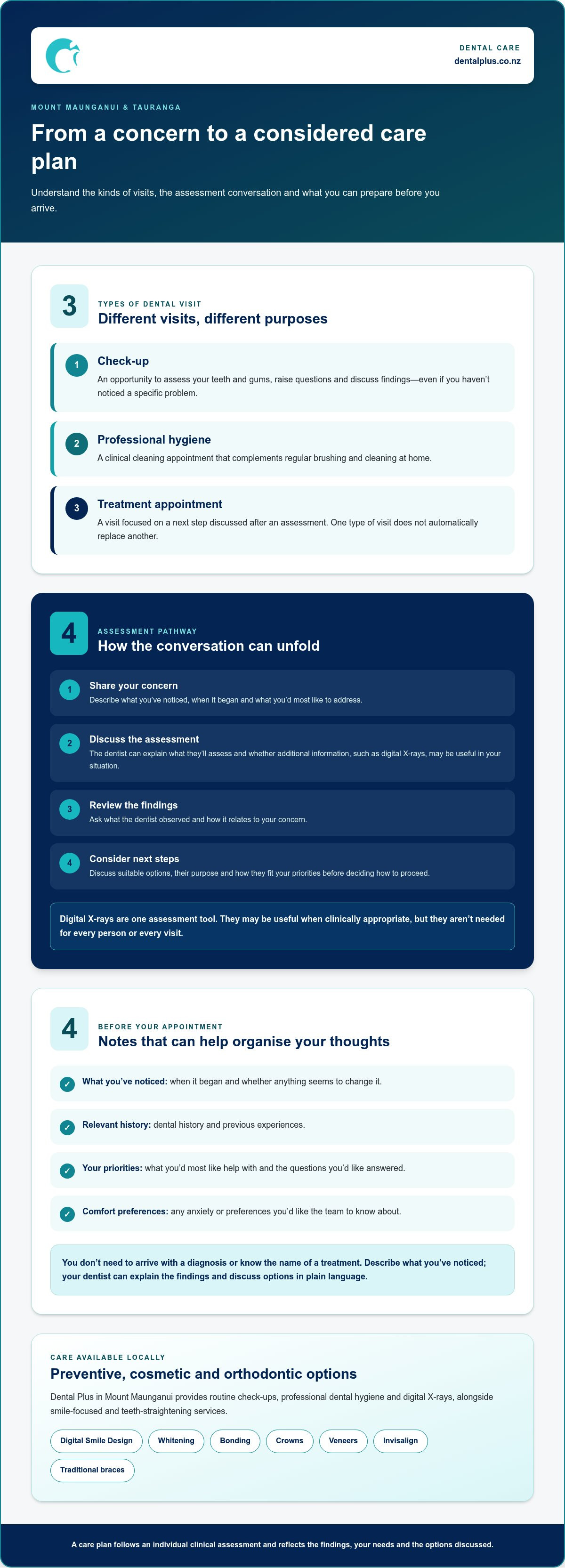
How can you prepare for a comfortable dental visit?
A little preparation can make it easier to explain what you need and get clear answers. You don’t need to know the name of a treatment or diagnose a concern before you arrive. Notes about what you’ve noticed, your dental history and what you’d like to ask can make denta care feel more manageable.
Before your visit, jot down:
Your main concern, including what you’ve noticed and when it began.
Relevant dental history, previous treatment or experiences you think the team should know about.
Questions about your concern, possible next steps or anything you’d like explained in plain language.
Any nervousness or comfort preferences you’d like to discuss.
Questions that can make treatment discussions clearer
If care is recommended, take time to understand what it is intended to address. Ask about alternatives and how the options relate to your priorities. It’s also reasonable to ask what the sequence of care may involve and what to expect at a follow-up appointment, if one is proposed. Clear answers help you consider the plan at your own pace.
What is this recommendation intended to address?
Are there other options that may suit my needs?
What would the next step or appointment involve?
What payment arrangements are available for planned care?
Discuss payment before proceeding with planned treatment so you understand the arrangements as part of your decision. Dental Plus offers Qcard and Afterpay as payment options. Raise these during the treatment discussion and ask how they apply to the care being considered. You don’t need to decide before you have the information you need.
Making comfort part of the conversation
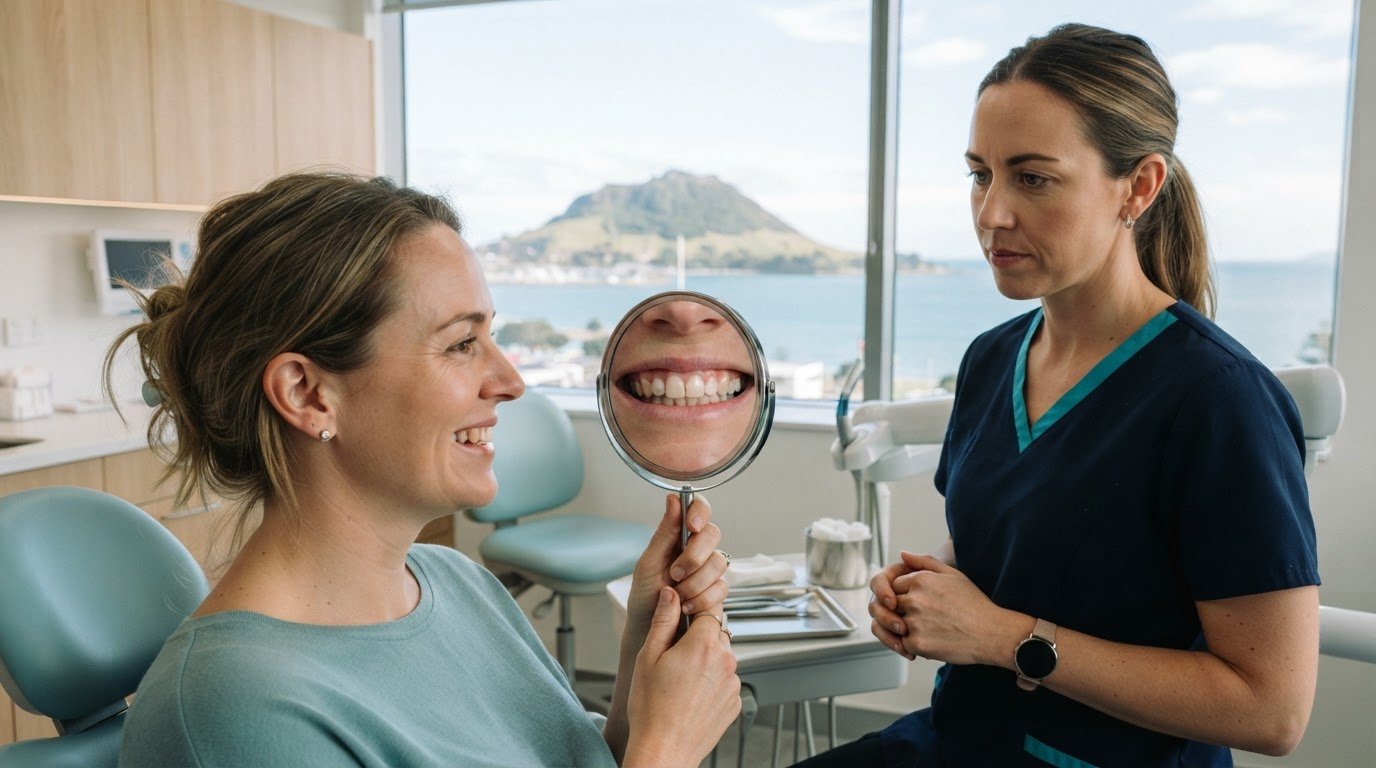
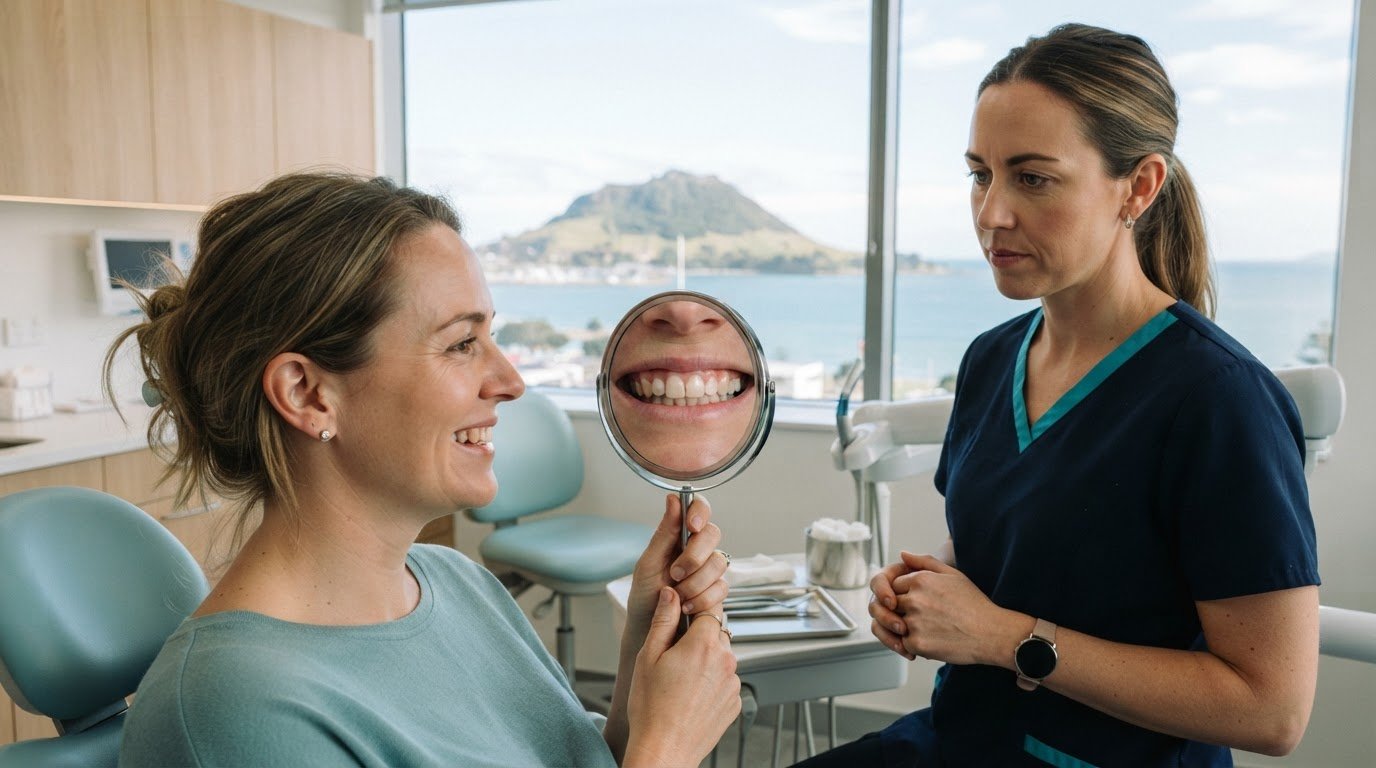
Tell the team what feels difficult, whether it’s uncertainty about what will happen, a previous experience or feeling anxious in the dental chair. You can also discuss how you’d prefer to communicate during the visit, such as agreeing on a signal if you need a pause. Sharing this helps the team understand your needs and discuss what may make the appointment feel more comfortable.
Sedation is available at Dental Plus. Whether it’s appropriate depends on your circumstances and the care being discussed. Ask the dentist to explain the option and how it relates to your needs. No approach can guarantee a pain-free experience, but you can raise concerns, ask for explanations and discuss comfort before making a decision.
A visit can be a conversation, not a commitment to proceed with treatment. If you’re ready to discuss your needs, arrange a dental visit with Dental Plus and bring along your notes and questions.
How Dental Plus supports dental care in Mount Maunganui and Tauranga
Dental Plus is an independent dental practice in Mount Maunganui, supporting people looking for local dental care in Tauranga. The practice provides preventive, cosmetic and orthodontic options, so you can discuss your oral health, smile goals or tooth alignment. If you’re exploring denta care and aren’t sure where to begin, the team can help you understand which type of care may be relevant to your needs.
A range of care under one local practice
For ongoing oral health, Dental Plus provides routine check-ups, professional dental hygiene and digital X-rays. These preventive and assessment services sit alongside cosmetic options for people interested in a change to their smile, and orthodontic care for those considering tooth alignment.
Depending on the goal you’d like to discuss, services include:
Preventive and assessment care: routine check-ups, professional dental hygiene and digital X-rays.
Cosmetic dentistry: Digital Smile Design, smile whitening, dental bonding, crowns and veneers. These options give you different approaches to discuss in relation to your smile goals.
Orthodontic care: Invisalign and traditional braces for patients who want to explore alignment options.
These categories are starting points, not a checklist of treatments you need. You might come in focused on a particular smile change, then discuss how that goal relates to your overall care. Or you may want to understand the orthodontic options available. A conversation about your priorities keeps the discussion centred on what you want to address.
Comfort can be part of the discussion, too. Dental Plus offers sedation, and you can raise any concerns or preferences as you talk through your care. Qcard and Afterpay are available if payment options are relevant to your planning.
Taking your next step with Dental Plus
Start by considering what you’d like help with: maintaining your oral health, exploring cosmetic options or talking about alignment. You don’t need to have a treatment choice ready. A question or a clear description of your goal is enough to begin a useful conversation. Ask for explanations in language that feels clear to you.
As an independent practice in Mount Maunganui, Dental Plus provides a local setting for discussing care in Tauranga. Your questions, priorities and comfort preferences belong in the conversation, whether you’re planning a routine visit or exploring a specific concern.
To learn more about the practice and its care options, explore Dental Plus. When you’re ready, choose a next step that feels manageable and bring along the questions you’d like answered.
Make your next step a manageable one
You don’t have to plan your entire dental journey before you begin. Choose one question you’d like answered or one concern you’d like to understand better. That focus can make a conversation about denta care feel more approachable and give you a clearer sense of what to consider next.
Your priorities can guide the discussion, whether you’re thinking about ongoing care, a change to your smile or comfort during appointments. Ask for explanations in plain language, take time to consider the options and share what matters to you. A thoughtful next step is one that feels informed and suited to your circumstances.
Explore the care options available at Dental Plus and consider what you’d like to discuss. Explore dental care at Dental Plus, then take the next step at a pace that feels right for you.
Frequently Asked Questions
How often should I visit a dentist for dental care?
There isn’t one visit schedule that suits everyone. Your dentist can recommend an interval based on your oral health and individual needs. If you’re unsure when you’re due, ask at your next appointment and note the suggested timing. Mention a new or changing concern rather than waiting for a routine visit. Keeping track of your last check-up can make planning ongoing denta care easier.
What happens during a routine dental check-up?
A routine check-up usually involves discussing your oral health and having your dentist assess your teeth and gums. They may ask whether anything has changed since your last visit, so mention new sensitivity, discomfort or other concerns. Depending on your circumstances, the dentist may discuss whether further assessment is useful. Ask what they’ve observed and what, if anything, they recommend considering next.
Is professional dental hygiene the same as a dental check-up?
No. A check-up and a professional hygiene visit have different purposes. A check-up focuses on assessing your oral health, while a hygiene visit is a professional cleaning appointment. Ask which type of visit best matches your current needs, or whether both should be part of your care. Keep up your regular home-care routine between appointments. Professional hygiene complements it rather than taking its place.
Can I ask for sedation if I feel anxious about dental care?
Yes, you can raise your anxiety and ask about sedation. Dental Plus offers sedation, but the dentist needs to discuss whether it’s appropriate for you and the care being considered. Explain what makes you uneasy, including any past experiences, and share relevant health information or medicines you take. You can also discuss other comfort preferences, such as agreeing on a signal if you need the appointment to pause.
How much does dental care cost in Tauranga?
The cost depends on the care involved and your individual assessment, so there isn’t one price that applies to every patient. Before planned treatment proceeds, ask for an explanation of the proposed care and its costs, including any options you’re considering. Dental Plus offers Qcard and Afterpay as payment options. Discussing payment arrangements as part of planning can help you understand the financial commitment before making a decision.
What should I do if I have urgent dental pain?
Seek urgent dental advice rather than waiting for a routine appointment, and describe when the pain began and whether it’s changing. A dental professional can advise on an appropriate next step. If you have difficulty breathing or swallowing, or rapidly worsening swelling, call 111 in New Zealand for emergency help. Don’t rely on this general guidance to diagnose the cause. Urgent symptoms need prompt professional attention.
Comments