
Cost to Fix a Chipped Molar in NZ: What Shapes Your Quote?

Could a small-looking chip need more than a simple repair? The cost to fix a chipped molar NZ depends on what the dentist finds, because damage beneath the surface can affect which approach is appropriate. It’s understandable to want a clear estimate straight away, especially if the tooth feels sensitive or chewing is uncomfortable, but appearance alone can’t tell the whole story.
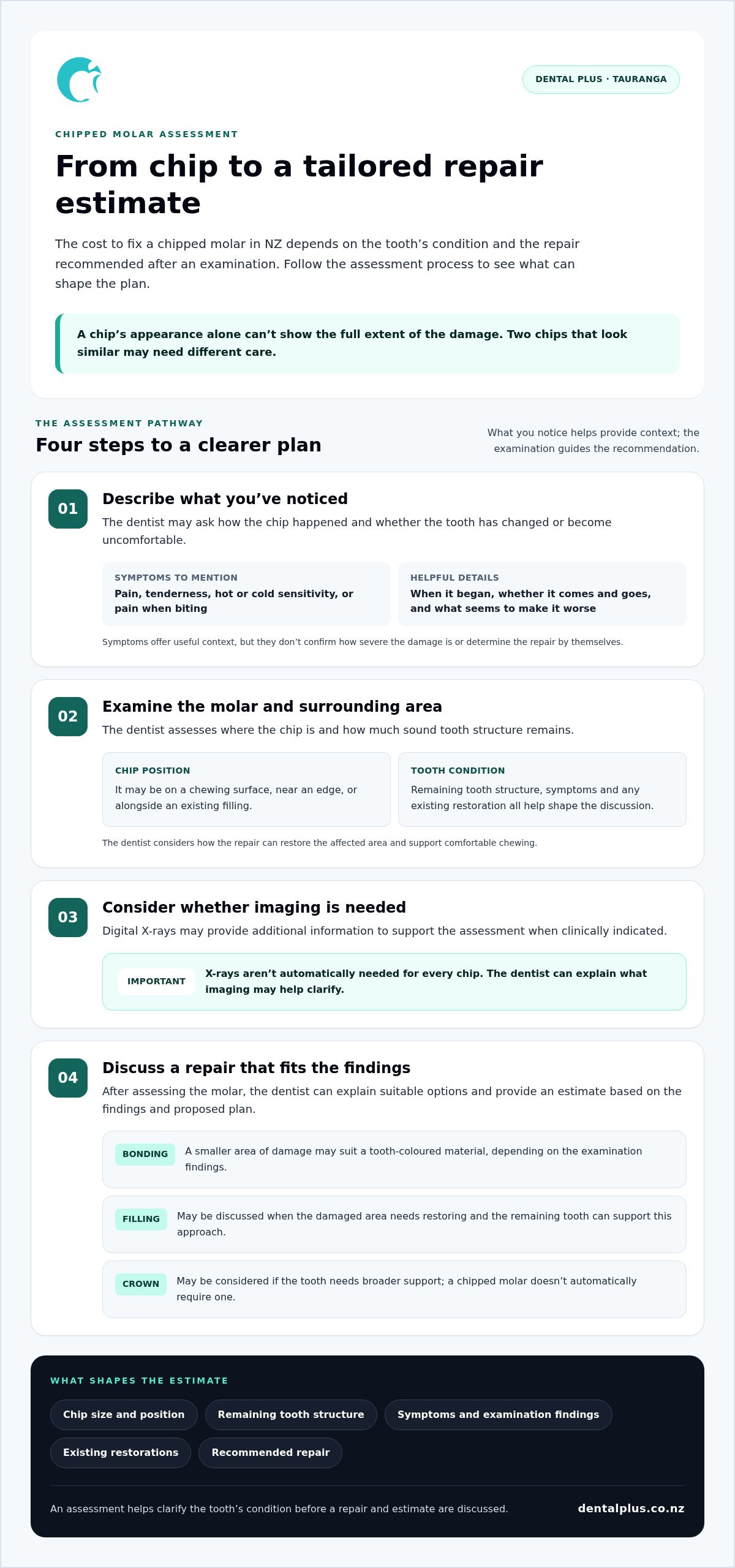
A dental assessment helps clarify the chip’s size, the tooth’s condition and how much support it needs. Depending on those findings, options may include bonding or a crown, but neither is right for every case. At Dental Plus in Mount Maunganui, Tauranga, an assessment and digital X-rays can help build a clearer picture before treatment is recommended. Your estimate can then reflect the findings and the proposed plan.
This guide explains the factors that shape a quote, the repair approaches a dentist may consider and what to expect at your assessment. You’ll also find practical questions to ask about comfort and payment options, including Qcard and Afterpay, so you can understand the next steps with greater confidence.
Table of Contents
Cost to fix a chipped molar in NZ: why there is no single fee
The fee depends on the tooth’s condition and the restoration the dentist recommends. A small chip may need a different approach from damage that affects more of the molar, so the cost to fix a chipped molar NZ can’t be determined accurately from its appearance alone. An examination helps the dentist outline an individual treatment plan and estimate.
A personalised dental estimate is an assessment-based outline of the likely repair and its cost, informed by the tooth’s condition and the treatment recommended for it. The dentist considers how much tooth structure remains, where the chip is, whether you have symptoms and whether the molar has an existing restoration. These findings help explain why two chips that look similar may call for different care.
Why a molar chip can need different levels of repair
A small enamel chip may involve less of the tooth than damage extending into deeper or previously restored areas. The visible edge doesn’t always reveal the full extent. The term enamel fracture describes a break in the tooth’s outer layer, but a dentist needs to assess the individual tooth to understand what the chip involves.
Tell the dentist if you’ve noticed pain, sensitivity to hot or cold, or discomfort when chewing. These details help guide the assessment, but they don’t confirm how severe the damage is. A photograph or description can’t reliably establish what treatment is needed.
What a dental assessment can establish
The dentist will ask how the chip happened and whether you’ve had symptoms or noticed a change in how the tooth feels. They’ll examine the molar and surrounding area, including the remaining tooth structure and any existing restoration. This helps identify factors that may affect the repair and which options are appropriate to discuss.
What determines the cost of repairing a chipped molar?
The cost to fix a chipped molar NZ is influenced by what needs to be restored, not just how large the chip looks. A dentist considers the chip’s position, how much sound tooth remains, any symptoms and whether the molar already has a filling or other restoration. These findings help determine the repair needed to restore the tooth and support comfortable chewing.
A small chip that leaves most of the tooth intact may call for a different approach from damage that affects a larger area. The aim isn’t to choose the most extensive repair by default. It’s to match treatment to the tooth’s condition while considering how the repaired area will cope with everyday biting forces.
How the chip’s size and location can affect treatment
Molars do much of the work of grinding food, so the position and extent of a chip matter. A dentist looks at whether the damage is on a chewing surface, near an edge or alongside an existing filling, and assesses how much strong tooth structure remains. A crown may be considered if the tooth needs broader support, but a chipped molar doesn’t automatically require one.
Existing restorations can also affect the plan. A chip beside or within a filling may need a different assessment from one on otherwise intact tooth structure. The dentist will consider the condition of the restoration and the surrounding tooth before discussing options.
How symptoms and examination findings shape an estimate
Tenderness, sensitivity, pain when biting and visible damage are useful clues, but symptoms alone don’t establish a diagnosis or dictate a repair. Note when each symptom began, whether it comes and goes, and what seems to make it worse, such as chewing or hot and cold foods. That detail gives the dentist helpful context alongside the examination.
The care discussion may cover the assessment, any imaging the dentist considers clinically indicated and the treatment itself. Imaging isn’t automatically needed for every chip. If it’s recommended, the dentist can explain what it may help clarify. The proposed restoration and estimate can then reflect the findings rather than assumptions based on appearance.
At Dental Plus in Mount Maunganui, Tauranga, an assessment can help you understand the condition of the molar and the restorative options being considered. Arrange a chipped-tooth assessment to discuss the next steps and a treatment plan tailored to your tooth.
Bonding, filling, or crown: comparing possible molar repairs
A dentist may discuss bonding, a filling or a crown after assessing the chip. Each approach restores the tooth differently, and the right option depends on how much structure is affected and what the molar needs to function comfortably. The aim is to preserve healthy tooth where possible while restoring the damaged area, not to choose the most extensive treatment by default.
When bonding or a filling may be discussed
If a chip is limited and enough healthy tooth remains, a more conservative repair may be considered. Bonding uses tooth-coloured material to rebuild an area, while a filling may restore a damaged part of the tooth. Neither is automatically suitable. The dentist assesses the chip’s location, the molar’s condition and how the repair may cope with biting forces.
For more background on how bonding differs from veneers, read this dental bonding and veneers comparison. It can help you understand the treatments, while an individual examination determines what may suit a chipped molar.
When a crown may be considered for a molar
A crown may be discussed if a larger area needs restoring or the tooth needs more coverage. It isn’t required for every chipped, cracked or painful molar. The dentist weighs the amount and condition of the remaining tooth against the support and function the restoration needs to provide.
Explore the crowns and veneers guide for Tauranga for general information about crowns. At your assessment, ask what tooth findings support the proposed option and whether a less extensive repair could address the damage. You can also ask what each option would involve and how it relates to your estimate. That conversation helps you understand the recommendation without assuming that the highest level of treatment is always the safest or best choice.
How to prepare for a chipped-molar assessment in Tauranga
A little preparation can help you explain what’s changed and make the assessment more useful. Until the molar has been checked, avoid chewing hard foods on that side. If pain is getting worse, swelling develops or the damage seems significant, seek prompt professional dental advice rather than waiting for symptoms to settle.
What to do while waiting to be seen
1. Note your symptoms. Record any tenderness, sensitivity, pain when biting or trouble chewing, including when each symptom started and whether it’s changing.
2. Protect the tooth. Choose softer foods and avoid hard or sticky items that could put extra pressure on the affected molar. Try to chew on the other side.
3. Keep the area clean. Gently rinse your mouth with water. If you’ve recovered a piece of tooth, keep it safe and bring it to your appointment.
4. Arrange an assessment. A dentist can examine the tooth and discuss what may be contributing to discomfort or damage.
5. Discuss the findings and options. Ask what the examination shows, what treatment may be appropriate and what the next steps involve.
Don’t try to judge the extent of the chip by appearance alone. A visible fragment may not show the full condition of the tooth, and symptoms can’t confirm a diagnosis. An assessment helps establish what’s going on before a personalised repair plan is discussed.
What to tell the dentist at your appointment
Think through how and when the chip happened, such as whether it followed a bite on something hard or an impact. Mention any changes since then, including sensitivity to hot or cold, pain when biting, tenderness or difficulty chewing. Even if discomfort comes and goes, explaining what brings it on can give the dentist useful context.
The dentist can discuss the examination findings and suitable next steps, including whether further checks are needed and which restorative options may be considered. This information helps make sense of how the tooth’s condition informs the cost to fix a chipped molar NZ, without assuming a treatment based only on symptoms.
If you’d like to know what a routine check-up may involve, read this routine dental exam guide for Tauranga. To have a chipped molar assessed, arrange a dental assessment with Dental Plus in Mount Maunganui.
Getting a chipped molar assessed at Dental Plus
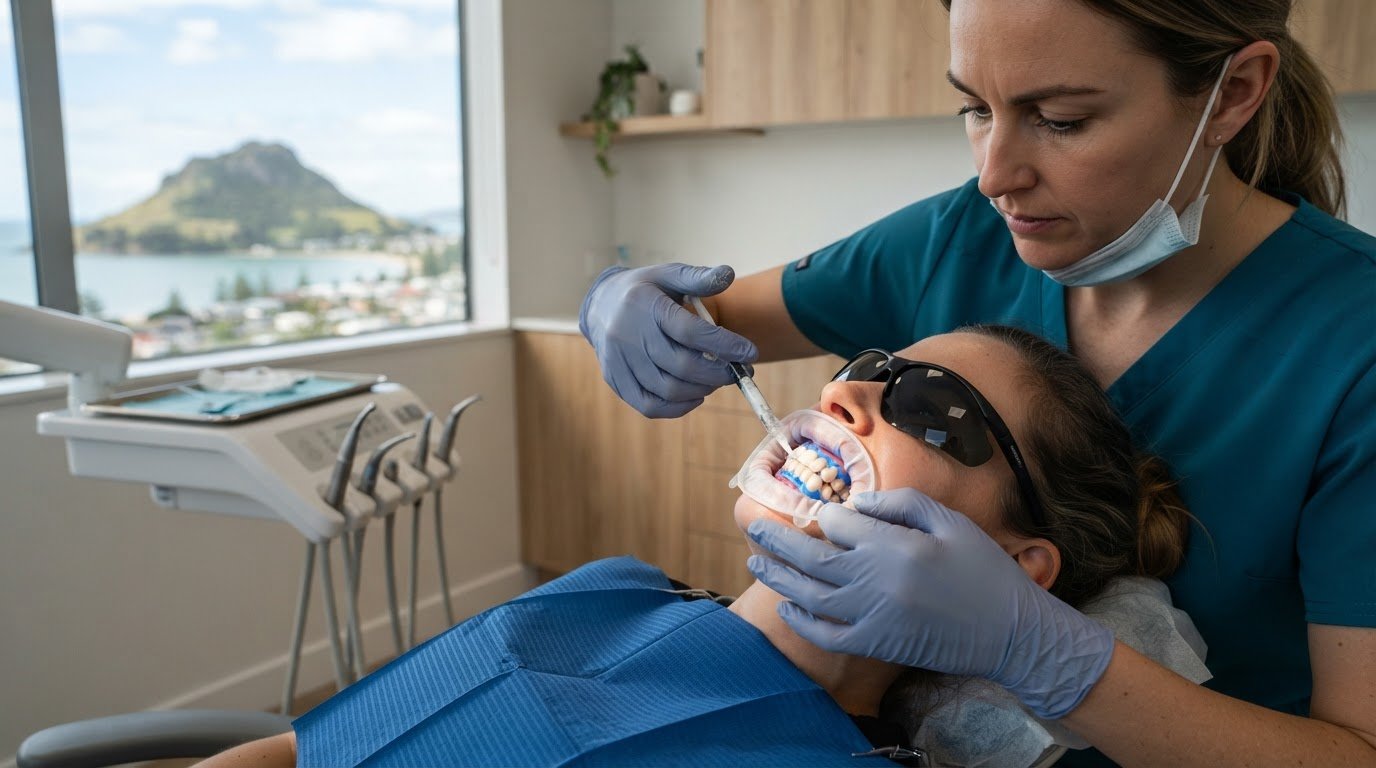
A dental assessment is the clearest way to understand what a chipped molar needs. At Dental Plus in Mount Maunganui, the dentist can examine the tooth, consider any symptoms and discuss a restorative plan suited to the clinical findings. Dental bonding and crowns are among the options available, but the right approach depends on the individual tooth. Digital X-rays may also be used when they’re clinically indicated.
What to expect from a personalised treatment discussion
Your dentist will explain what they find in clear, straightforward language, then talk through possible next steps. The discussion may include how much tooth structure remains, what the repair needs to restore and whether further assessment is needed. A plan is tailored to the tooth’s condition and your symptoms, rather than based on the chip’s appearance alone.
The estimate should relate to the examination findings and the treatment plan you agree on. If you’re unsure why a particular restoration is being considered, ask the dentist to explain how it may help protect the tooth or restore comfortable chewing. You can also ask what each step involves and what is included in the estimate before deciding how you’d like to proceed. Understanding the reasoning can make the cost to fix a chipped molar NZ easier to discuss in context.
Discussing payment options and next steps
Once you understand the recommended treatment, you can talk through the estimate and any questions about the proposed care. Dental Plus offers Qcard and Afterpay as payment options. Ask how these options fit with the plan as you consider your next steps.
It’s understandable to feel uncertain before an assessment, especially if the molar is sensitive or chewing feels different. The appointment is an opportunity to have the tooth examined, understand the findings and discuss options at a pace that feels comfortable. You don’t need to decide what repair is right before the dentist has assessed it.
For a tailored assessment and a clear discussion of possible restorative care, book a chipped-molar assessment with Dental Plus in Mount Maunganui.
Take the next step towards a comfortable, confident smile
The cost to fix a chipped molar NZ depends on the tooth’s condition and the repair recommended after an assessment. A smaller chip and damage involving more of the tooth may call for different approaches, so an examination is the best way to understand your options and receive an estimate based on your treatment plan.
At Dental Plus in Mount Maunganui, the dentist can discuss whether dental bonding or a crown may be appropriate for your molar. Digital X-rays can provide more information when clinically indicated. You’ll have the opportunity to understand the findings, ask questions and talk through the proposed steps. Qcard and Afterpay are available payment options to discuss as you consider your care.
If chewing feels uncomfortable or you’re unsure how extensive the chip is, you don’t have to work it out alone. Arrange an assessment with Dental Plus to discuss the tooth and a personalised plan. With clear information and thoughtful guidance, you can take your next step with greater confidence.
Frequently Asked Questions
How much does it cost to fix a chipped molar in NZ?
There isn’t one set fee: the cost to fix a chipped molar NZ depends on the tooth’s condition and the restoration recommended after an assessment. A dentist considers the chip’s size and position, remaining tooth structure, symptoms and any existing filling. The estimate should reflect the examination findings and agreed treatment plan. At Dental Plus in Tauranga, an assessment helps clarify which options may suit your molar.
Can a chipped molar be repaired with dental bonding?
Yes, dental bonding may be considered for some chipped molars, depending on the examination findings. It uses tooth-coloured material to rebuild a damaged area, but suitability depends on the chip’s extent and position, how much sound tooth remains and the forces the molar handles when chewing. A dentist can assess whether bonding may meet the tooth’s needs or whether another restorative approach should be discussed.
Does a chipped molar always need a crown?
No, a crown isn’t automatically needed for every chipped molar. The dentist considers how much tooth structure is affected and whether the remaining tooth needs broader restoration or protection. A smaller chip may prompt discussion of a more conservative repair, while a crown may be considered for more extensive damage. An examination helps determine what’s appropriate for your tooth rather than assuming the most extensive option is best.
Should I see a dentist if my chipped molar does not hurt?
Yes, it’s sensible to arrange a dental assessment even if the chip isn’t painful. A lack of discomfort doesn’t show how much of the tooth is affected, and the visible chip may not reveal its full condition. A dentist can examine the molar and discuss whether it needs repair or monitoring. If pain, sensitivity, swelling or difficulty chewing develops, tell the dentist and seek prompt advice.
What should I do while waiting to have a chipped molar checked?
Protect the tooth by avoiding hard or sticky foods and chewing on the other side until it’s assessed. You can gently rinse your mouth with water, and if you find a fragment, keep it safe to show the dentist. Note any changes, such as sensitivity or pain when biting. If discomfort worsens, swelling appears or the damage seems significant, seek prompt professional dental advice.
Will I need an X-ray for a chipped molar?
Not necessarily. The dentist will examine the tooth and decide whether an X-ray is clinically appropriate to help assess it. Digital X-rays can provide additional information when needed, but they aren’t automatically required for every chip. Your dentist can explain why imaging is recommended and how it may inform the assessment and treatment discussion. The next steps will depend on the findings for your individual tooth.
Can I pay for chipped-molar treatment with Afterpay or Qcard at Dental Plus?
Yes, Dental Plus offers Afterpay and Qcard as payment options. Once the dentist has assessed your molar and discussed the recommended treatment, you can include these options in your payment conversation. The assessment helps clarify the care being proposed before you consider how to manage payment. Dental Plus is in Mount Maunganui, Tauranga, and can discuss the tooth’s condition and restorative options with you.


Comments