
Aligner Treatment: Is Clear Teeth Straightening Right for You?

Could clear aligners suit your teeth and your day-to-day routine? If you’re considering aligner treatment, it’s natural to wonder whether it can address your alignment concerns and whether you’ll remember to wear removable aligners consistently. The right choice depends on your teeth and bite, your treatment goals, and the habits you can maintain.
Aligners can be a discreet alternative to braces, but they aren’t suitable for every case. A dentist can assess your needs, explain how Invisalign compares with traditional braces, and outline what wearing aligners and caring for your smile after treatment may involve. Understanding the commitment can help you weigh up your options.
This guide explains how aligner treatment works, what suitability and daily wear involve, and why retainers matter after active treatment. You’ll also learn what to discuss with Dental Plus in Mount Maunganui, Tauranga, as you consider Invisalign and other orthodontic options.
Table of Contents
What is aligner treatment, and what can it help address?
Clear aligner treatment is a dentist-guided way to straighten teeth using a planned series of removable trays. Each tray fits over the teeth and applies planned pressure to guide selected teeth towards new positions over time. The sequence follows an individual treatment plan rather than a one-size-fits-all set of trays.
Clear aligners are removable trays that fit over the teeth, while fixed braces are attached to the teeth and stay in place during treatment. Both approaches aim to move teeth, but they work differently and aren’t interchangeable for every case. A dentist can explain the options after assessing your teeth and bite. For a general overview, see Clear aligners.
What dental concerns can clear aligners address?
Aligners may be considered for selected alignment and bite concerns, such as crowded or spaced teeth, or a bite that doesn’t meet evenly. These examples don’t establish whether aligners are right for you. The amount and direction of movement needed, along with how your teeth fit together, are important. More complex concerns may call for another orthodontic approach, such as braces.
The visible concern is only part of the picture. Two people with similar-looking front teeth may need different plans because their bite, tooth positions or goals differ. An assessment helps the dentist consider your whole mouth, not just the teeth you notice in the mirror, before discussing possible options.
Are clear aligners suitable for every patient?
No single orthodontic option suits everyone. Suitability for aligner treatment depends on factors such as your oral health, tooth positions, bite and what you’d like to change. An individual recommendation requires a dental assessment. General descriptions or online images can’t establish what your teeth need.
Be clear about your priorities, whether you’re concerned about a gap, crowding or how your teeth meet when you bite. The dentist can explain what may be addressed, any limitations and whether another approach may be more appropriate. Discussing alternatives is a normal part of treatment planning. At Dental Plus in Mount Maunganui, Tauranga, you can discuss Invisalign and traditional braces with your dentist.
How does dentist-guided aligner treatment work from assessment to retainers?
A dentist-guided journey has several connected stages. An assessment establishes what needs attention, planning maps out an approach, and fitting begins active treatment. Progress reviews let the dentist monitor tooth movement, while retainers help maintain tooth positions after the planned movement is complete. Your dentist tailors the plan to your clinical needs, so the details can differ from person to person.
What happens at an aligner assessment?
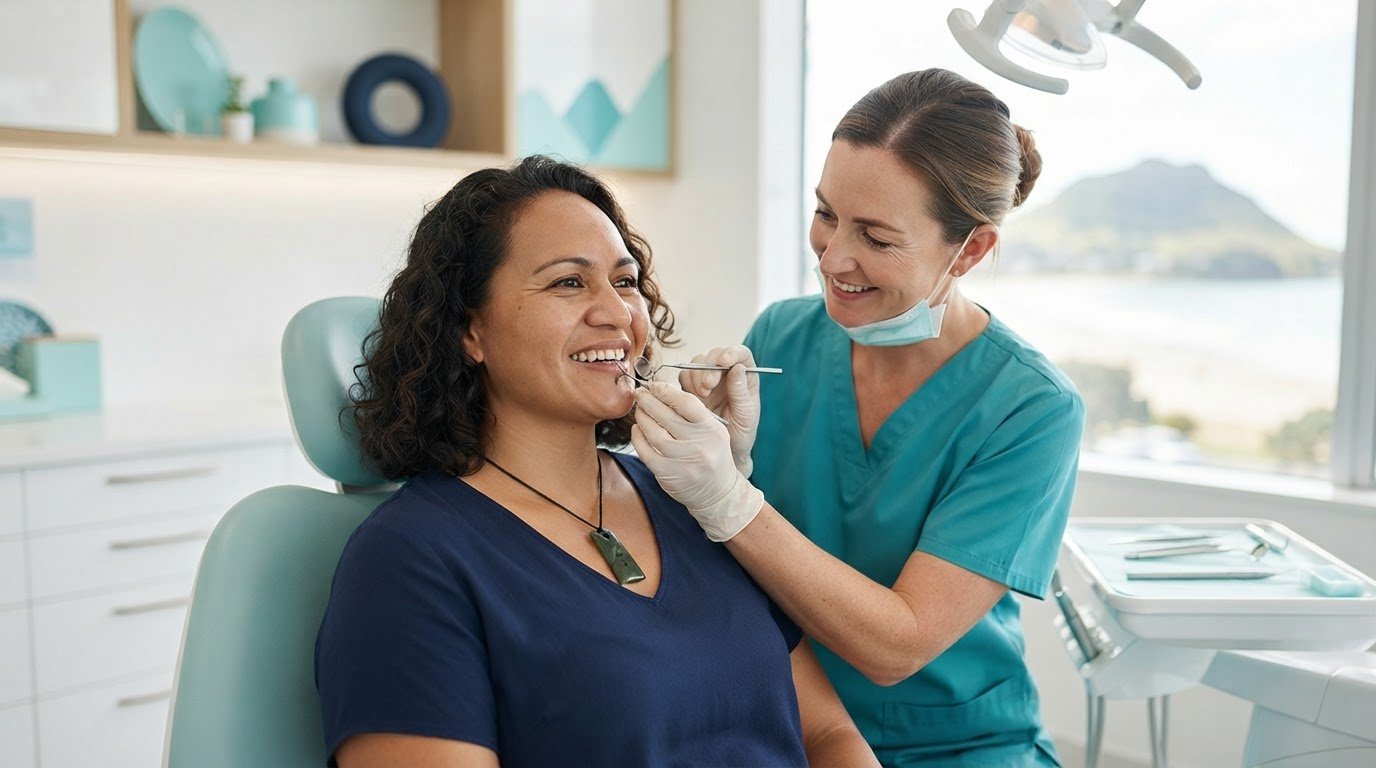
The first step is a conversation about what you’d like to change, your concerns and your oral health. The dentist assesses your teeth and bite, then discusses whether aligners are appropriate and what other options may suit. Use this time to explain your goals and ask questions. An assessment is not a commitment to start treatment.
If aligners are suitable, the planning stage sets out how treatment is intended to guide tooth movement. At the fitting stage, the dentist provides the trays and explains how to use and care for them. Follow the instructions you’re given, including when to change trays if that’s part of your plan. Wearing them as directed is one of your key responsibilities during treatment.
Why do progress reviews and retainers matter?
Reviews give the dentist an opportunity to assess whether treatment is progressing as planned. They’re also a chance to raise practical concerns, such as a tray that doesn’t seem to fit as expected. Your dentist can advise on next steps based on your progress, rather than leaving you to judge tooth movement alone.
Follow-up reviews help your dentist monitor planned tooth movement and guide treatment as it progresses.
After active aligner treatment, teeth can shift, so retention is an important part of the journey. Retainers help maintain tooth positions. Your dentist will advise on the type of retainer and how to wear it. Follow that advice and raise concerns if a retainer feels uncomfortable or doesn’t fit as expected. Finishing active treatment doesn’t mean teeth are guaranteed to stay in place without ongoing care.
If you’re considering Invisalign or traditional braces, you can discuss orthodontic options with Dental Plus in Mount Maunganui, Tauranga. A conversation can help you understand what an assessment may involve for your needs.
Aligners or braces: which treatment factors should you compare?
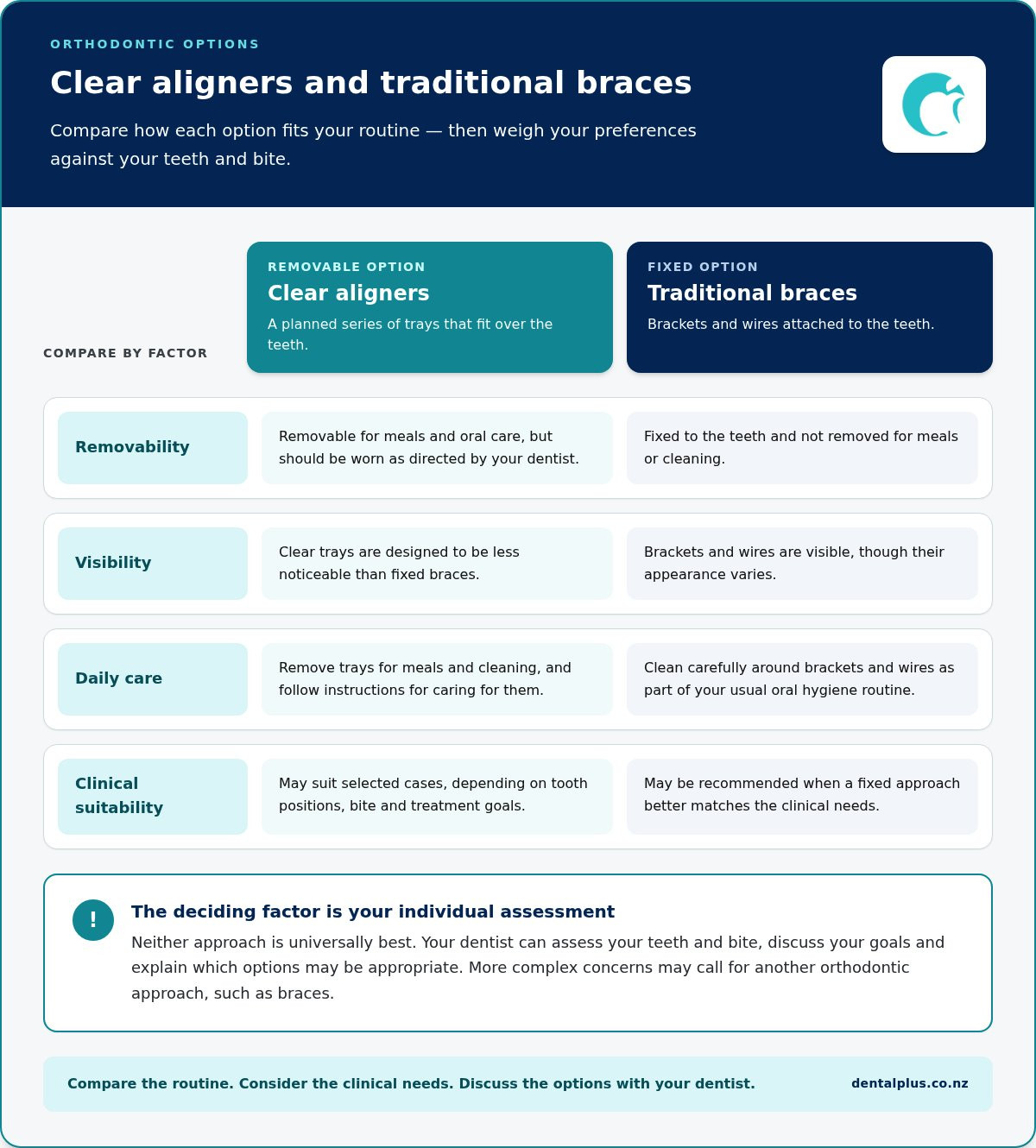
Choosing between removable aligners and fixed braces isn’t simply a matter of appearance. Consider how each option fits your routine, then weigh your preferences against what your teeth and bite need. Neither approach is universally best. A dentist’s assessment of your case should guide the decision.
When might removable aligners suit someone’s routine?
Removability can be useful if you’d rather take trays out to eat and brush your teeth. For example, you can remove them for lunch, clean your teeth afterwards, then put them back in according to your dentist’s instructions. That flexibility comes with responsibility. Aligners need consistent wear, so consider whether remembering to remove, clean and reinsert them fits comfortably into your day.
If you’re weighing up Invisalign, the Invisalign Mount Maunganui treatment guide offers further context on this clear-aligner option.
When might traditional braces be considered instead?
Braces remain a valuable option. Because they stay fixed to the teeth, they don’t rely on you remembering to put trays back in after meals. A dentist may recommend them if they’re a better match for the movements needed in your case. This doesn’t make one treatment inferior to the other. Your clinical needs and preferences both matter.
It can also help to be clear about your wider smile goals. If your concerns involve the appearance or structure of teeth as well as their position, restorative options may be part of a broader conversation. Dental Plus provides crowns and veneers in Tauranga, which address different concerns from orthodontic treatment.
Use the comparison as a starting point, not a verdict. Tell your dentist what matters most, whether that’s being able to remove your appliance or having a fixed option. The dentist can explain how those preferences fit your clinical needs.
What does wearing aligners involve day to day?
Clear aligners can fit into ordinary routines, but consistency matters. Follow your dentist’s instructions for how long to wear each set and when to move on to the next one. Because trays are removable, you’ll need a reliable routine around meals, oral hygiene and putting them back in. Returning your aligners to their case while eating can help prevent them from being misplaced.
How do aligners fit around meals and oral hygiene?
Before eating, remove your aligners and store them safely. After your meal, clean your teeth as directed, then reinsert the trays according to your dentist’s guidance. This routine helps you avoid leaving them out longer than your treatment plan allows. If you’re out for lunch, plan where you’ll keep the aligners while you eat.
Follow your dentist’s advice about drinks and aligner care, as instructions can depend on your treatment plan. Don’t assume every drink is suitable while wearing trays, and avoid improvising with cleaning products or methods. Keep your aligners clean in the way your dentist recommends. If you’re unsure what to do in a particular situation, ask your dentist for guidance.
Link reinserting your aligners to a routine you already have, such as brushing after breakfast or dinner. If a meal runs late or plans change, return to the wear instructions your dentist gave you. A manageable routine still needs to prioritise wearing the trays as directed.
What if an aligner feels uncomfortable or progress seems different?
You may notice pressure or tenderness as your teeth respond to treatment, but don’t assume every discomfort or change in fit is expected. Pay attention to what you’re experiencing and whether it persists. If an aligner doesn’t seem to fit properly, or discomfort continues, contact your dentist for advice.
If progress seems different from what you expected, raise your concern at a review or contact your dentist. They can assess the fit and your treatment progress, then advise you on what to do next. Avoid changing, forcing or adjusting an aligner yourself, and don’t switch to another tray unless your dentist has instructed you to. Getting advice can clarify the next step.
If you’re considering Invisalign and want to discuss wear, care and your individual needs, arrange an assessment with Dental Plus in Mount Maunganui, Tauranga.
Starting aligner treatment with Dental Plus in Tauranga
If you’re considering clear aligners, start with an assessment with a dentist. It gives you space to explain what you’d like to change and understand whether aligners suit your teeth and bite. It can also put your preferences in context: the option you find most appealing needs to be considered alongside your clinical needs and daily routine.
You don’t need to arrive with a treatment decision already made. Think about the parts of your smile you’d like to discuss and any questions you have about removable or fixed orthodontic treatment. The dentist can assess your needs and talk through suitable options, including Invisalign and traditional braces.
What should you bring up at your first conversation?
Be specific about what’s on your mind, whether it’s a gap, crowding, how your bite feels or wanting to understand your choices. Your daily routine may also be relevant. If you’re often out for meals, for example, ask how removable aligners may fit into your day and what consistent wear involves.
What you’d like to change about your smile
Any concerns about your teeth, bite or oral health
Whether you prefer a removable or fixed approach
How aligners might fit around your usual routine
Questions about treatment, reviews or aftercare
You don’t need to choose a treatment before the assessment. Sharing your priorities helps the dentist understand what matters to you, while the clinical assessment informs which options may be appropriate. You can talk through the differences and consider the recommendation before deciding how you’d like to proceed.
How can Dental Plus support a considered treatment decision?
Based in Mount Maunganui, Dental Plus offers Invisalign and traditional braces for patients to discuss with their dentist. A considered conversation looks at your goals alongside clinical suitability, so the choice isn’t based on appearance or convenience alone. If you have questions about comfort during dental care, sedation is available to support patient comfort. It isn’t a requirement of aligner treatment.
Practical considerations can be part of the discussion too. Qcard and Afterpay are available payment options at Dental Plus. You can raise questions about these as you consider what works for you, without needing to settle every detail before discussing treatment options.
Taking time to understand your choices can make the next step feel more straightforward. If you’re ready to discuss your goals and clinical suitability, discuss aligner treatment with Dental Plus in Tauranga.
Take the next step with confidence
You don’t need to have every answer before exploring your options. A conversation with a dentist can help turn an interest in aligner treatment into a clearer understanding of what may suit your needs. Bring your questions, share what matters to you and take the time you need to consider the advice.
Dental Plus is based in Mount Maunganui, Tauranga, and offers Invisalign and traditional braces. Sedation is available for patient comfort, and Qcard and Afterpay are payment options. These practical details can be part of a wider discussion about an approach that feels manageable for you.
Arrange a conversation about aligner treatment with Dental Plus to discuss your goals and explore your options in Tauranga.
Frequently Asked Questions
Is aligner treatment suitable for everyone?
No. Suitability depends on your oral health, tooth positions, bite and treatment goals, so an individual dental assessment is needed. A dentist may consider whether existing dental concerns need attention before orthodontic treatment is planned. Clear aligners may not suit every clinical situation, and discussing alternatives is a normal part of finding an approach that fits your needs.
Can I eat and drink while wearing clear aligners?
Remove your aligners before eating, then follow your dentist’s instructions about drinks while wearing them. This can take planning if you snack or sip drinks throughout the day. Before a meeting where food will be served, for example, think about where you’ll store your trays safely and how you’ll return to your prescribed wear routine afterwards. Your dentist can clarify any drink-specific guidance for your aligners.
How should I clean my teeth and aligners during treatment?
Keep up your usual oral hygiene and follow your dentist’s advice for cleaning your aligners. After meals, clean your teeth before putting the trays back in, using the oral-care routine recommended for you. Ask your dentist how to care for your specific aligners rather than choosing a cleaning product or method at random. If you’re away from home, plan ahead so you can follow your instructions as closely as possible.
What happens if I forget to wear my aligners?
If you realise you’ve left your aligners out, put them back in when you can, following the instructions you were given. Don’t try to make up for missed wear by changing to another tray early or altering your plan yourself. If they no longer fit as expected, or you’ve missed a longer period and aren’t sure what to do, contact your dentist for individual advice.
Will aligner treatment feel uncomfortable?
You may notice pressure or tenderness as your teeth respond to aligners, but experiences vary. Don’t assume persistent discomfort or a poorly fitting tray is something you need to put up with. If the sensation continues, becomes concerning or makes it difficult to wear your aligners as directed, contact your dentist. They can assess the fit and advise you on the appropriate next step.
Do I need to wear a retainer after aligner treatment?
Retainers are commonly recommended after active orthodontic treatment because teeth can shift. Your dentist will advise which retainer is appropriate and how to wear it, including any changes to the routine over time. Follow that guidance and let the practice know if your retainer feels damaged or no longer fits properly. Retention helps maintain tooth positions, though it can’t guarantee they’ll never change.
Can I choose aligners instead of braces in Tauranga?
You can discuss both options, but the recommendation depends on your clinical assessment and preferences. Dental Plus in Mount Maunganui, Tauranga, offers Invisalign and traditional braces, so you can talk through removable and fixed approaches with the dentist. Explain what you value, such as being able to remove an appliance for meals, and ask how that preference fits with the treatment your teeth and bite may need.

Comments