
8 Crowns: What to Know Before Restoring Your Smile

Updated: 7 days ago
When a dentist recommends 8 crowns, the key question isn’t just how much your smile could change. It’s whether each tooth needs a full-coverage restoration. It’s understandable to feel unsure when several crowns are proposed, especially if you’re concerned about tooth preparation, comfort or whether a less invasive option could work.
Eight crowns means a plan to restore eight teeth, not a standard smile makeover. Crowns can protect or restore teeth with significant damage, but they may not be the most conservative choice for every concern. This article explains what crowns can address, why a dentist might recommend them, and how they compare with options such as veneers or bonding.
You’ll also learn what assessment and treatment may involve, from planning and tooth preparation to temporary and final crowns. At Dental Plus in Mount Maunganui, Tauranga, a personalised discussion can help you understand the options for your teeth. Digital Smile Design can support planning, without promising a particular result.
Table of Contents
What does getting 8 dental crowns mean?
A dental crown fits over a tooth to restore or protect it. A crown may be considered when a tooth has substantial damage or weakened structure, but the reason depends on the individual tooth. For a general overview of a dental restoration, you can read more about how crowns are used.
A plan for 8 crowns means a dentist is considering crown treatment for eight teeth. It isn’t a standard package or a single procedure that suits everyone. Each tooth needs an individual assessment, including its existing restorations, remaining tooth structure and condition. The dentist also considers how your teeth meet when you bite and what you hope to address, so the plan supports oral health and function.
Why might a dentist discuss crowns for several teeth?
Several teeth may have different concerns, even when crowns are discussed as part of one overall plan. A crown might be considered for a tooth with extensive decay, a fracture, significant wear or a large existing restoration that leaves it weakened. These are possible reasons, not a checklist that automatically means a crown is needed.
The dentist assesses each tooth individually, considering previous fillings or restorations, how much healthy tooth structure remains and whether the tooth can be restored appropriately. If crowns are proposed for multiple teeth, it’s reasonable to ask why each one is recommended and how the crowns fit into the overall plan. Restorative practices such as sandtondentalclinic.co.za similarly highlight that thorough examinations are essential to ensure each treatment truly protects long-term oral health.
Does eight crowns automatically mean a smile makeover?
No. The number of crowns describes how many teeth may be treated, not the purpose of treatment. A plan may focus on restoring teeth that need protection, addressing appearance concerns, or both. Because crowns cover teeth, treatment can involve more than a change to what’s visible when you smile.
Discuss appearance goals alongside tooth health and bite function. You might want to change the look of several teeth, while the assessment also considers their condition and how they work together. A dentist can explain whether crowns are suitable for each tooth and discuss other options where appropriate, without assuming the same treatment is right for all eight. Suitability depends on a clinical examination, the condition of your teeth, your bite and your goals.
How are eight crowns assessed and planned?
A plan for multiple crowns should start with the needs of your teeth, not a preset number. Assessment helps the dentist understand what’s happening, explain suitable options and agree on a plan with you before treatment proceeds. Each proposed crown should have a clear purpose, whether it relates to tooth condition, bite function, appearance goals or a combination.
What happens at the initial crown consultation?
You can describe your concerns, relevant dental history and any functional or aesthetic changes you’d like to discuss. The dentist examines your teeth and surrounding oral health, considering each tooth’s condition and how your bite comes together. Digital X-rays may be used when clinically appropriate to provide additional information for the assessment.
You can then discuss the findings and possible options. The agreed plan should explain which teeth are being considered for crowns and why, along with the proposed treatment stages. The order and timing of visits depend on your individual needs. For a general overview of crown treatment, Healthdirect provides information about the dental crown procedure.
How can Digital Smile Design support planning?
Digital Smile Design is a visual planning approach that can help you discuss aesthetic goals before treatment. A visualisation can support a conversation about your preferences and clarify expectations, but it doesn’t guarantee the final result or replace an assessment of tooth health and function. Your dentist can explain how these considerations relate to the proposed plan.
For a broader look at visual planning and cosmetic considerations, read the Digital Smile Design guide. If crowns and veneers are both being discussed, the crowns and veneers guide can help you prepare questions about the differences.
Before agreeing to 8 crowns, make sure you understand the reason for each one, which alternatives may be appropriate and how the plan accounts for your bite and smile goals. At Dental Plus in Mount Maunganui, a personalised crown assessment can help you work through these decisions. Explore Dental Plus dental care as a next step in planning your discussion.
Crowns, veneers or bonding: how do options differ?
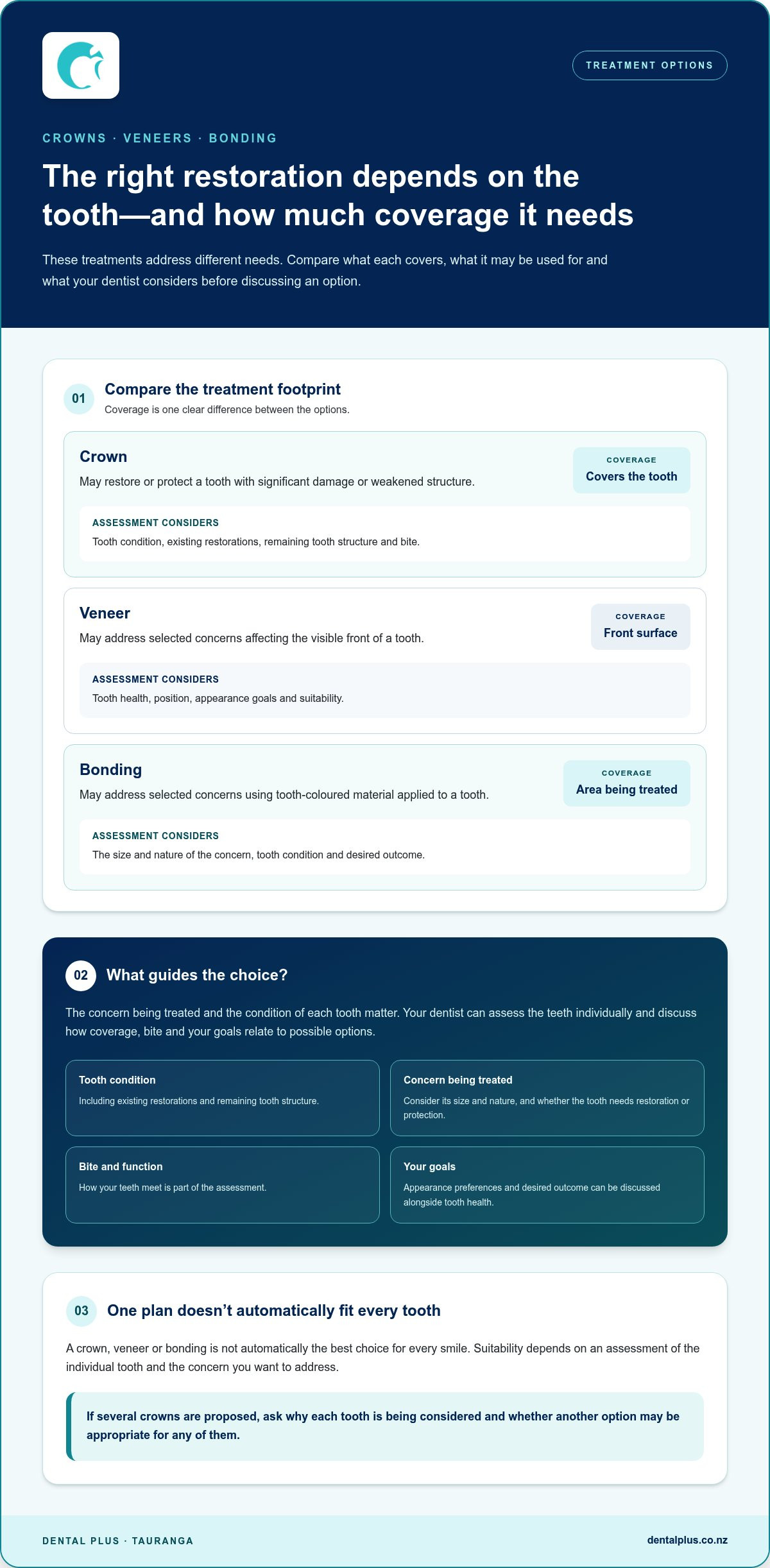
These treatments address different needs, so the best fit depends on the condition of each tooth and what you hope to change. A crown covers a tooth, a veneer covers its front surface, and dental bonding uses tooth-coloured material to address selected concerns. None is automatically the best choice for every smile.
A crown may be discussed to restore a decayed, broken, weak or worn-down tooth. The dentist will assess whether full coverage is appropriate rather than choosing a crown based on appearance alone.
When might crowns be discussed instead of veneers?
The difference in coverage matters: a crown goes around the tooth, while a veneer covers its front surface. The tooth’s condition and the treatment goal shape the discussion. A tooth needing broader restoration may call for a different approach from one where the concern is limited to its visible surface. An examination is needed to assess suitability for an individual tooth. To explore material considerations, see this zirconia and porcelain crown comparison.
Could bonding be an alternative for some teeth?
Bonding may be considered for selected concerns, but it isn’t a substitute for a crown or veneer in every case. The options differ in purpose and coverage, and the dentist can explain which approaches suit each tooth after assessment. If you’re comparing bonding with veneers, read this dental bonding and veneers comparison.
If 8 crowns are being considered, ask how the options differ for each tooth and what informs the recommendation. A personalised assessment at Dental Plus in Mount Maunganui can help you discuss those choices. Explore Dental Plus dental care.
What should you expect during and after multiple crown treatment?
Treatment involving several crowns is planned around your teeth and individual needs, so the sequence and timing of visits can vary. Depending on the agreed plan, appointments may include preparing the teeth, taking records to make the crowns and fitting them. Temporary crowns may be used in some plans, but they aren’t part of every treatment pathway. Your dentist can explain each stage before treatment begins.
You may notice some sensitivity or discomfort during or after treatment. Experiences differ, so raise any concerns with your dentist rather than assuming they’re a routine part of recovery. If you’re considering 8 crowns, ask how the proposed stages will be arranged and what support or advice you’ll receive between visits.
How can you prepare for crown appointments?
Before treatment, share relevant health history, medicines and any concerns with the dental team. This helps them consider your circumstances and discuss the plan with you. You can also ask what to expect at appointments, how your comfort will be supported and what to do if you feel uneasy during treatment.
Dental Plus offers sedation to support patient comfort where clinically appropriate. It may not suit every person or situation, so discuss your preferences and circumstances with the dentist as part of planning. Clear communication can help you feel more prepared and understand the choices available.
What care may crowns need afterwards?
Crowns still need regular care. Brush carefully and clean between your teeth using an approach recommended by your dental team. Keep up with routine dental reviews so your dentist can assess your oral health and restorations as part of ongoing care.
If discomfort continues or changes, or you notice a concern with a crown, seek personalised advice from your dentist. Avoid relying on a general timeline for how long a crown should last. Maintenance, oral health, bite and other individual factors can all matter, so your dentist is best placed to advise on your situation.
Before treatment, make sure you understand the proposed stages, aftercare guidance and who to speak with about concerns. For a personalised discussion about crown treatment and comfort options, book a crown assessment with Dental Plus.
Planning eight crowns with Dental Plus in Tauranga
A proposed plan for eight crowns is best understood tooth by tooth. The number alone doesn’t explain why each restoration is being considered or whether the same approach is right for every tooth. At Dental Plus’s Mount Maunganui clinic, a personalised assessment and discussion can connect the condition of each tooth with your priorities for comfort, function and appearance.
What questions can help you understand your proposed plan?
It’s reasonable to ask for a clear explanation before deciding how to proceed. You might discuss:
What is the clinical purpose of a crown for each tooth being considered?
Are there other suitable options for any of those teeth, and what are the differences?
What materials are being considered, and why are they appropriate for my situation?
What appointments and aftercare should I expect, and what risks are relevant to me?
Share what matters most to you, whether that’s comfort during treatment, how your teeth function or particular appearance goals. This keeps the conversation grounded in your needs while your dentist explains the clinical considerations and suitable options for each tooth.
How can you take the next step locally?
For people in Mount Maunganui and Tauranga, arranging an assessment is a practical way to understand whether crowns may suit their teeth. A personalised plan follows an examination and discussion, so it can reflect the findings rather than assume that eight crowns are necessary or appropriate for everyone. Use the appointment to talk through your questions and understand the proposed approach before making decisions.
Qcard and Afterpay are available as payment options at Dental Plus. They may offer payment flexibility, though individual circumstances and provider terms apply. You can discuss these options alongside your treatment plan, while keeping the priority on understanding what each tooth needs.
If you’re considering crown treatment, take the next step with a personalised discussion at the Mount Maunganui clinic. Book a consultation with Dental Plus.
Take the next step with a personalised crown plan
Considering 8 crowns doesn’t mean every tooth needs the same treatment or that crowns are automatically the right choice. An assessment looks at the condition and function of each tooth, then helps you compare suitable options such as crowns, veneers or bonding. Understanding the purpose of each proposed restoration can help you decide what feels right for your oral health and goals.
Dental Plus in Mount Maunganui, Tauranga, provides crowns and veneers, with Digital Smile Design available for smile planning. Sedation is available to support comfort where appropriate, and Qcard and Afterpay are payment options. Your dentist can discuss what may suit your circumstances as part of a personalised plan.
Ready to explore your options? Book a personalised crown consultation with Dental Plus. A clear conversation is a positive first step towards making an informed decision about your smile.
Frequently Asked Questions
Why would someone need 8 dental crowns?
A dentist may discuss 8 crowns if several teeth need restoration or protection, but each crown should have an individual clinical reason. Teeth can differ in condition, existing restorations and remaining structure, so the plan isn’t based on a number alone. An examination also considers your bite and goals. Crowns may be one option for some teeth, while another approach or no crown may be appropriate for others.
Can you get 8 crowns at once?
Whether several crowns can be treated in one appointment depends on your teeth, the treatment plan and your individual needs. Some plans may involve staged appointments rather than fitting every crown in one visit. Your dentist can explain the proposed sequence, what each appointment involves and whether temporary crowns form part of your plan. Discuss how the schedule may fit your circumstances before treatment begins.
Are 8 crowns painful?
Experiences vary, so it isn’t possible to promise that treatment will be completely pain-free. Your dentist can explain what preparation and fitting may involve, how comfort will be managed and discuss any concerns beforehand. Temporary sensitivity or discomfort can occur, but tell your dentist if symptoms worry you or persist. Dental Plus offers sedation for patient comfort where clinically appropriate, though it may not suit everyone.
How long do dental crowns last?
There isn’t one lifespan that applies to every crown. How long a crown lasts can depend on factors such as oral hygiene, bite, the condition of the tooth and everyday habits. Regular brushing, cleaning between teeth and attending recommended dental reviews help your dentist monitor your oral health and restorations. Ask your dentist what care is appropriate for your crowns and seek advice if one feels loose, uncomfortable or damaged.
Are crowns better than veneers or bonding?
No option is universally better. Crowns, veneers and bonding suit different clinical situations. A crown covers a tooth, a veneer covers its front surface, and bonding is applied to selected areas. Which option may be appropriate depends on the tooth’s condition, the concern being addressed and your goals. Your dentist can assess each tooth and explain the potential options, including relevant benefits and limitations, before you decide on a treatment plan.
Can eight crowns improve the appearance of my smile?
Eight crowns may form part of a plan that addresses appearance, but the number alone doesn’t predict how your smile will look. Crowns may be recommended for restorative reasons, aesthetic goals or both, and tooth health and bite function matter too. Discuss what you’d like to change with your dentist. Digital Smile Design at Dental Plus can support smile planning and discussion, but a visualisation doesn’t guarantee a particular treatment result.
What should I ask before agreeing to multiple crowns?
Ask what purpose each proposed crown serves and whether alternatives may suit any of the teeth. You can also discuss the material being considered, appointment sequence, preparation, aftercare and risks relevant to your circumstances. Share your priorities for comfort, function and appearance, and ask how the plan accounts for them. A clear explanation helps you understand the reasoning and make an informed decision with your dentist.


Comments